
About Steve Conway
Lived 1920 – 1952 (aged 31). Steve Conway was a British singer.
Steve Conway (born Walter James Groom; 12 October 1920 – 19 April 1952) was a British singer who rose to fame in the 1940s, in the period following the end of the Second World War. Known for romantic ballads, he made dozens of recordings for EMI's Columbia label, appeared regularly on BBC Radio and toured the UK, before his career was cut short by his early death, aged 31, resulting from a heart condition. He has been described as "Britain's first post-war male heart-throb, a masculine equivalent of Vera Lynn in his sincerity and clear diction."
Early life Steve Conway was the eldest of five children born to Walter James Groom, a labourer, and Florence Groom (née Maddams) in Bethnal Green in east London, in 1920.
Upon leaving school aged 14, Groom undertook poorly-paid manual work, initially making deliveries on a tricycle for an embroidery firm. He then worked at a shoe factory as a machinist, where his habit of singing on the shop floor made him unpopular with the foreman. Following an argument over this, Groom was sacked when he punched the foreman. Groom also worked as a porter at Billingsgate Fish Market.
Whilst still a teenager, a turning point in Groom's life came when he met Lilian Butcher, a local East End girl who worked in a textile factory near where he was living. It has been said that Butcher "was the woman who inspired profound devotion in him and infused his singing with such romantic power." During World War II, Butcher worked in a munitions factory; when Groom attempted to enlist in the Royal Navy, he was declared unfit for service, owing to a heart condition which had developed from his earlier rheumatic fever, and damaged his coronary valves. He was not told to seek treatment, and continued working. Groom appeared with Reg Morgan in a "Meet the Composer" section of the show.
Groom, at the time employed by the brewers Mann, Crossman and Pullin, where he cleaned out the vats, was told by Morgan that he would never get anywhere in showbusiness whilst he remained working full-time there. Morgan offered Groom a contract for £6 a week if he left the brewery; Groom accepted, and gave in his notice.
Fame As a relatively inexperienced stage performer, Conway toured Mecca dance halls, and in late 1945, sang with the well-known bandleader Ambrose at Ciro's nightclub in London's West End. Whilst Conway was there, Princess Marina, the Duchess of Kent visited the club and asked him to sing "Laura". In all, Conway recorded nearly 100 titles, and worked with the up-and-coming producer Norman Newell, achieving success with Newell's own song "My Thanks To You". Although the UK Singles Chart was not compiled and published until November 1952, after Conway's recording career had ended, research published in 2013 has shown that 23 of his 78s would have sold enough to register on a Top 30 chart. His biggest-selling titles are reported to have been "I Can't Begin to Tell You" and "Good Luck, Good Health, God Bless You" (the latter with the Hastings Girls Choir), both of which would have been placed at No. 3 in the weekly charts.
The only contemporary music charts published in Britain during Conway's career compiled sales of sheet music. Many of the songs which featured in this chart were recorded by Conway at the time of their success, including "April Showers", "I'll Make Up For Everything", "When You Were Sweet Sixteen", "The Wedding of Lilli Marlene", "My Foolish Heart", "Daddy's Little Girl", "Mona Lisa" (with The Stargazers), "A Dream is a Wish Your Heart Makes", "Autumn Leaves" and "Too Young". Conway was also the only British artist to record "Time After Time" when it was new; the song has since become a jazz standard.
Appraisal Described as "a ballad singer with a smooth, straightforward delivery", Conway's voice drew comparisons with the late Al Bowlly, who had died in 1941. Lew Stone, for whose band Bowlly had been a singer, considered employing Conway if he had reformed his dance band after the war. Contemporary reviews made the comparison to Bowlly, but Conway's wife claimed that neither she or her husband had heard of Bowlly until Conway received a fan letter stating "you must be Al Bowlly's ghost". Memory Lane magazine later wrote of Conway, "His mellow voice had a wonderful and effortless range. His smooth yet thrilling voice was warm, rich and relaxed with perfect pitch and depth."
Conway's death was widely reported in both the musical and national press. On Friday 25 April at 2.30pm, he was cremated at Golders Green Crematorium, with a congregation of around 100, including "bandleaders, vocalists, musicians, recording executives, music publishers, song writers, artistes, agents, managers and reporters", Melody Maker reporter Chris Hayes later remembered. "There were about 75 floral tributes", Hayes added, noting that they ranged "from simple little bouquets from fans, to elaborate wreathes from wealthy stars. The most touching came from his heartbroken daughter and was in the shape of a miniature chair inscribed Daddy's Little Girl, a poignant memory of his hit song." At the time of his death, Conway's daughter Janice was eight years old.
Since the early 1960s, there have been a number of Steve Conway LP and CD compilation albums issued collecting his recordings. These have continued to be released into the 2010s.
Don’t just read it —
keep it.
Full-length biographies made to live with: read them, listen on the way to work, watch them tonight.
- E-book
- Audio
- Video
Instant download · yours to keep · every purchase keeps this site free
Important facts
People in Steve Conway's life
Named in this biography and alive at the same time


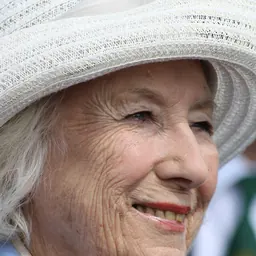





Related people
Same field, nearest in time
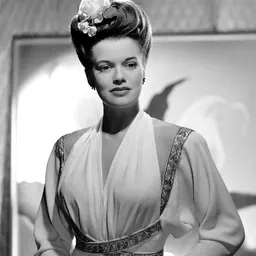


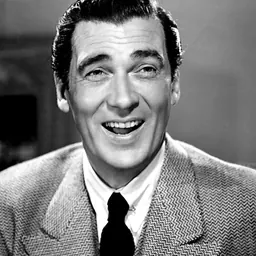

Contemporaries
People whose lives overlapped Steve Conway's




Frequently asked questions
Who was Steve Conway?
English singer
When was Steve Conway born?
Steve Conway was born on 12 October 1920 in London Borough of Hackney.
When did Steve Conway die?
Steve Conway died on 19 April 1952 in London.
What was Steve Conway's occupation?
Steve Conway was a singer.
What nationality was Steve Conway?
Steve Conway was British.
Sources & further reading
· DBpedia: Steve Conway (singer)
Cite this page
APA: Biography.guide. (2026). Steve Conway. https://biography.guide/steve-conway-singer/
MLA: "Steve Conway." Biography.guide, https://biography.guide/steve-conway-singer/.
Chicago: "Steve Conway." Biography.guide. https://biography.guide/steve-conway-singer/.
Data last updated: 2026-09-20 · Spot an error? Report a correction.
Page generated 2026-09-27 05:23 UTC