
About Stephen Payne
Born 1960. Stephen Payne is a British engineer.
Stephen Michael Payne is a British naval architect. He has worked on the designs of approximately 40 passenger ships for the Carnival Corporation, including the Cunard ocean liner . He is an independent maritime consultant and is an educational advocate for engineering careers.
Background and education Stephen Michael Payne was born in London, England circa 1960. He was educated in the local council schools including the Catford Boys School, where two of its teachers would have a key role in shaping his career. His interest in ocean liners began at age 5 when the BBC children's television program Blue Peter featured a tour of the . He would later state that he was immediately captivated by the ship. His interest in ships intensified during a 1969 family visit to the then new in Southampton where he also observed the , on one of her last transatlantic crossings, arriving in port. In 1972 the program's magazine described the destruction by fire of the ex-Queen Elizabeth in Hong Kong harbor and ended with the statement “…nothing like her will ever be built again.” With encouragement from a Catford English teacher Payne wrote a letter of complaint to the program arguing that they were wrong, another ship to rival her would indeed be built and he would design it. The program applauded his ambition but cautioned him not to be discouraged if it never happened.
When the time came for him to consider university studies however his career counselors discouraged Payne from any engineering career as it was then seen as having limited job prospects. They advised him to instead study chemistry and he enrolled at Imperial College London. After one year of study he met with his former physics teacher from Catford who agreed that Payne had been badly advised, and helped him obtain funding to transfer to the University of Southampton's Ship Science program. While there, he also enrolled in the University Royal Naval Unit (URNU) to experience how ships responded at sea. After graduating in 1984 with a B.Sc.(Hons) in ship science, he accepted a position at Marconi Radar. His role was to advise the company on aspects of ship motion and ship design.
His first assignment was to assess stability of the MS Holiday. His next major project was the design of Holland America Line's new flagship MS Rotterdam VI where he was project manager. Payne designed the new ship with twin funnels, a tribute to the 1959 SS Rotterdam V. Following completion of the Rotterdam, Payne was project manager for the and the ships. QM2 has a breakwater adopted from the and split engine rooms to avoid having a single point of failure. "The bridge, the mast, and the funnel are all loosely based on the Queen Elizabeth 2 and I felt it particularly important to echo some of the similarities between that ship and this one to create the lineage progression." On three occasions Carnival's board halted the project as they did not consider it commercially viable. Payne refined the design and instituted several innovations to justify the new liner's construction cost. He placed the new ship's public spaces near the water line. This allowed for premium fare balcony (rather than porthole) cabins to be placed in the hull yet high enough to have a margin of protection from the sea conditions of the north Atlantic. Payne also created more revenue-producing interior space by removing one engine room from the initial design and instead using gas turbines at the base of the funnel. Podded propulsion, rather than shaft drives, was used to free up even more interior space and offered greater fuel efficiency and maneuverability. Spectacular public rooms, restricted to only first class passengers on the great twentieth century liners, were open to all passengers.
During the design phase of Queen Mary 2 Payne was appointed a member of a safety Innovation Group for the UK Maritime and Coastguard Agency. His next major project was to lead the design team for the Seabourn Cruise Line Odyssey-class ships which entered service starting in 2009. Carnival's later newbuild contracts would stipulate podded propulsion as they offered fuel savings and superior maneuverability compared to traditional shaft drives. Payne would later state, "I have yet to meet a ship's master who is familiar with pods that doesn't prefer them to shafts, rudders and stern thrusters."
In 2010, Payne left Carnival and became a founding member of the consultancy PFJ-Maritime Consulting Ltd. passenger vessel safety, future developments for shipping propulsion, He is also an industry consultant for the emergence of Asian shipyards for ship building and refurbishment. Payne also consulted with the Ministry of Defense during the development of the s.
In 2021 Payne revealed the design of a new flagship to replace the royal yacht , which was decommissioned in 1997. In November 2022 the UK government officially terminated the project.
Engineering advocacy As a result of the media attention given to Queen Mary 2 and his role as lead designer, Payne received correspondence from students who asked about engineering careers. They were encountering many of the same biases as he himself had received thirty years earlier: that it was a profession in decline and without a promising future. To help address this persistent attitude, Payne and some colleagues founded the Future Engineers initiative. prior to its merger with Crestwood College. In 2003 he was invited to deliver the MacMillan Memorial Lecture to the Institution of Engineers and Shipbuilders in Scotland. He chose the subject "Genesis of a Queen". He was a member of the Board of Trustees of the Webb Institute (Glen Cove, New York) from 2011 to 2020. Between 2012 and 2016 Payne was President of The National STEM Skills Passport.
In June 2021 Payne announced his support for the construction of a new National Flagship. Writing for an industry publication, Payne argued that with the retirement of Britannia, "the UK lost a highly effective ambassador for trade promotion and State diplomacy." A new yacht with British design, equipment and innovation "would be an international showcase for all things British Maritime."
Awards and honors In 2004, Payne was awarded the Civil Order of the British Empire (OBE) by Queen Elizabeth II for his service to the shipping industry. He also received professional and academic awards: 2003, given a Gold Blue Peter badge for building the Queen Mary 2 thirty-two years after he complained to Blue Peter for saying that "nothing like her will ever be built again" 2006, elected a Royal Designer for Industry (RDI) for engineering design. 2006, received an honorary Merchant Navy Medal for services to cruise liner design (MNM). 2007, he received an Honorary Doctorate of Science from the University of Southampton. 2007–2010, he served as President of the Royal Institution of Naval Architects (FRINA). 2008, elected a Fellow of the Royal Academy of Engineering (FREng). 2009, elected an Honorary Fellow of the Institution of Engineering Designers (HonFIED). 2010–2014, served as a Trustee of the Southampton Cultural Development Trust. 2011, the Society of Naval Architects and Marine Engineers awarded him the Vice Admiral Emory S. "Jerry" Land Medal (VADM) for Outstanding Accomplishment in the Marine Field. 2015, awarded an Honorary Doctor of Science degree from the University of Winchester. Payne is a Chartered Engineer (CEng) [Permanent Dead Link]
Don’t just read it —
keep it.
Full-length biographies made to live with: read them, listen on the way to work, watch them tonight.
- E-book
- Audio
- Video
Instant download · yours to keep · every purchase keeps this site free
Important facts
People in Stephen Payne's life
Named in this biography and alive at the same time
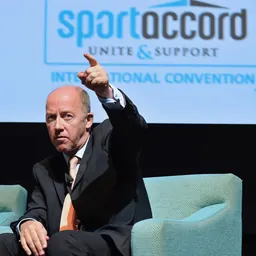

Related people
Same field, nearest in time
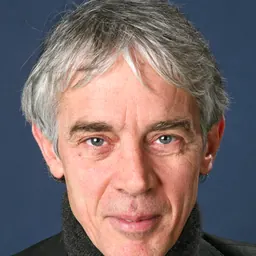
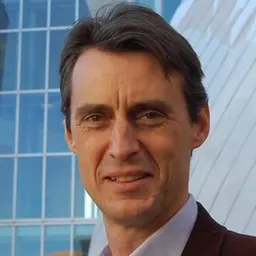



Contemporaries
People whose lives overlapped Stephen Payne's



Frequently asked questions
Who is Stephen Payne?
British naval architect
When was Stephen Payne born?
Stephen Payne was born in 1960 in Greater London.
What is Stephen Payne's occupation?
Stephen Payne is an engineer.
What nationality is Stephen Payne?
Stephen Payne is British.
Sources & further reading
· DBpedia: Stephen Payne (naval architect)
Cite this page
APA: Biography.guide. (2026). Stephen Payne. https://biography.guide/stephen-payne-engineer/
MLA: "Stephen Payne." Biography.guide, https://biography.guide/stephen-payne-engineer/.
Chicago: "Stephen Payne." Biography.guide. https://biography.guide/stephen-payne-engineer/.
Data last updated: 2026-09-26 · Spot an error? Report a correction.
Page generated 2026-09-27 05:14 UTC