
About Stephen Lushington
Lived 1803 – 1877 (aged 73). Stephen Lushington was a naval officer.
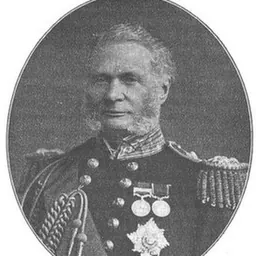
Admiral Sir Stephen Lushington GCB (12 December 1803 – 28 May 1877) was an officer in the Royal Navy who served during the Crimean War. Long and distinguished service in the Mediterranean brought him honours and rewards.
Lushington was born into a gentry family, the son of a baronet, while his uncle was a judge and a member of parliament. Stephen entered the navy shortly after the end of the Napoleonic Wars, and after serving under a number of officers in far-flung locations like the Mediterranean and the South American coast, rose through the ranks. He was particularly active against pirates in the Aegean Sea and was promoted to lieutenant after a number of boat actions. He returned to the Mediterranean at his new rank and saw action at the Battle of Navarino, where the British were allied with the Russians against the Ottoman forces. Lushington came to the attention of Admiral Sir Edward Codrington, the British commander in chief, and was soon promoted to his own command, that of a bomb vessel. He distinguished himself while supporting French operations in the Morea expedition, and received French and Greek honours for his part in attack on an Ottoman position, as well as the professional approbation of the French naval commander.
Though promoted to post captain, Lushington went on to spend ten years without a ship. Returning to service in 1839, he went out to the West Indies, but had to return home due to illness. He went on to command more ships in the Mediterranean, and was there when the Crimean War broke out. Operating this time against the Russians and in alliance with the Ottomans, Lushington took command of the naval brigade and won further honours. He was promoted to flag rank and received honours from the French and Ottomans, as well as from the British government. He rose to admiral during his last years, served as lieutenant-governor of Greenwich Hospital, and died in 1877 a Knight Grand Cross of the Bath and with a collection of foreign honours.
Background and early life
Stephen Lushington was born on 12 December 1803, the second son of Sir Henry Lushington, 2nd Baronet, and his wife, Fanny Maria. Fanny was the eldest daughter of Matthew Lewis, under-secretary at war. Stephen's uncle was Dr Stephen Lushington, a renowned legal expert, judge and member of parliament. The younger Stephen Lushington embarked on a naval career, joining the 36-gun on 17 October 1816 under Captain James Whitley Deans Dundas. His promotion was followed by an appointment to the 18-gun sloop under Commander Edward Richard Williams on 5 February 1825. Zebra was at this time fitting out for the Mediterranean, and sometime after his arrival there, on 7 December 1825, he transferred to the 48-gun under Captain Gawen William Hamilton. Rigny himself wrote "Je me plais à reconnaître le active, et cordiale assistance, que vous ainsi que les officiers et marines sous vos ordres, nous ont donnée, soit avant, soit depuis mon arrivée ici, et particulièrement, dans le journée, d'hier, ou les cannons de la Blonde, et le service de la bombarde du Capitaine Lushington, ont tant contribué à abréger le resistance du chateau de Morée." A long period of unemployment followed, he was ashore for nearly ten years before finally appointed to take command of the 26-gun on 19 January 1839, and sail her to the West Indies. Fanny Duberly recorded of Lushington that "I like him because he is clever, energetic & resolute and I am not afraid of him when he chooses to say disagreeable personalities which he sometimes likes to do to shew off his sharpness." He went on to be Commander-in-Chief, South East Coast of America Station in 1858.
Lushington does not appear to have had further active service, but was lieutenant-governor of Greenwich Hospital between 1862 and 1865, an appointment that denied him further promotions. When he relinquished the post, he was at once promoted to vice-admiral on 1 October 1865, with his seniority backdated to when he first took it up, between April and October 1862.
Lady Lushington died in 1875, and Admiral Sir Stephen Lushington died two years later, on 28 May 1877 at Oak Lodge, Thornton Heath, Surrey.
Don’t just read it —
keep it.
Full-length biographies made to live with: read them, listen on the way to work, watch them tonight.
- E-book
- Audio
- Video
Instant download · yours to keep · every purchase keeps this site free
Important facts
People in Stephen Lushington's life
Named in this biography and alive at the same time

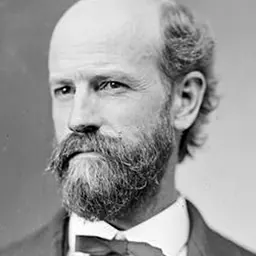
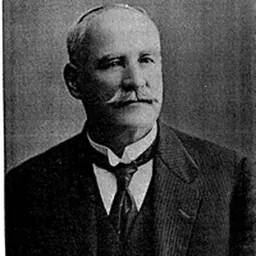


Related people
Same field, nearest in time

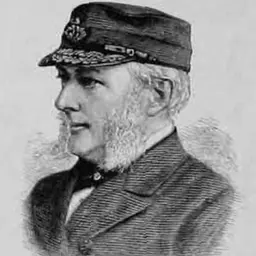

Contemporaries
People whose lives overlapped Stephen Lushington's





Frequently asked questions
Who was Stephen Lushington?
British Royal Navy officer (1803-1877)
When was Stephen Lushington born?
Stephen Lushington was born on 12 December 1803.
When did Stephen Lushington die?
Stephen Lushington died on 28 May 1877.
What was Stephen Lushington's occupation?
Stephen Lushington was a naval officer.
Sources & further reading
· Wikipedia: Stephen Lushington
· DBpedia: Stephen Lushington (Royal Navy officer)
Cite this page
APA: Biography.guide. (2026). Stephen Lushington. https://biography.guide/stephen-lushington-naval-officer/
MLA: "Stephen Lushington." Biography.guide, https://biography.guide/stephen-lushington-naval-officer/.
Chicago: "Stephen Lushington." Biography.guide. https://biography.guide/stephen-lushington-naval-officer/.
Data last updated: 2026-09-20 · Spot an error? Report a correction.
Page generated 2026-09-27 05:14 UTC