
About Stephen Leacock
Lived 1869 – 1944 (aged 74). Stephen Leacock was a Canadian and British economist, writer, political scientist, humorist, short story writer and politician.
Stephen Butler Leacock (30 December 1869 – 28 March 1944) was a Canadian teacher, political scientist, writer, and humourist. From 1915 to 1925, he was the best-known English-speaking humourist in the world.
Early life Stephen Leacock was born on 30 December 1869 in Swanmore, a village near Southampton in Southern England. He was the third of the eleven children born to (Walter) Peter Leacock (1834-1940), who was born and grew up at Oak Hill on the Isle of Wight, an estate that his grandfather had purchased after returning from Madeira where his family had made a fortune out of plantations and Leacock's Madeira wine, founded in 1760. Stephen's mother, Agnes, was born at Soberton, the youngest daughter by his second wife (Caroline Linton Palmer) of the Rev. Stephen Butler, of Bury Lodge, the Butler estate that overlooked the village of Hambledon, Hampshire. Stephen Butler (for whom Leacock was named), was the maternal grandson of Admiral James Richard Dacres and a brother of Sir Thomas Dacres Butler, Usher of the Black Rod. Leacock's mother was the half-sister of Major Thomas Adair Butler, who won the Victoria Cross at the siege and capture of Lucknow in India.
Peter's father, Thomas Murdock Leacock J.P., had already conceived plans eventually to send his son out to the colonies, but when he discovered that at age eighteen Peter had married Agnes Butler without his permission, almost immediately he shipped them out to South Africa where he had bought them a farm. The farm in South Africa failed and Stephen's parents returned to Hampshire, where he was born. When Stephen was six, the family moved to Canada, where they settled on a farm near the village of Sutton, Ontario, and the shores of Lake Simcoe. Their farm in the township of Georgina was also unsuccessful, and the family was kept afloat by money sent from Leacock's paternal grandfather. Stephen's father, Peter, became an alcoholic; in the fall of 1878, Peter travelled west to Manitoba with his brother E.P. Leacock (the subject of Stephen's book My Remarkable Uncle, published in 1942), leaving behind Agnes and the children.
Stephen Leacock, always of obvious intelligence, was sent by his grandfather to the elite private school of Upper Canada College in Toronto, also attended by his older brothers, where he was top of the class and was chosen as head boy. Leacock graduated in 1887, and returned home to find that his father had returned from Manitoba. Soon after, his father left the family again and never returned. while other sources indicate that he moved to Nova Scotia and changed his name to Lewis. and in opposition to expanding Canadian immigration beyond Anglo-Saxons near the close of World War II. He was a staunch champion of the British Empire and the Imperial Federation Movement and went on lecture tours to further the cause. Despite his conservatism, he was a staunch advocate of social welfare legislation and wealth redistribution. He is considered today by some a complicated and controversial historical figure for his views and writings. He was a longtime believer in the superiority of the English and could be racist towards blacks and Indigenous peoples.
Although Prime Minister R. B. Bennett asked him to be a candidate for the 1935 Dominion election, Leacock declined the invitation. He did stump for local Conservative candidates at his summer home.
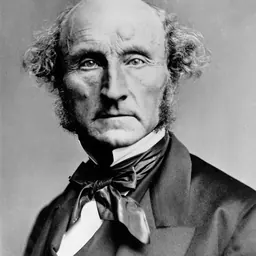
Leacock is mostly forgotten as an economist; "What was for many years a virtually final judgement of Leacock's scholarly work was pronounced by Harold Innis in a 1938 lecture at the University of Toronto. That lecture, which was intended to pay tribute to Leacock as one of the founders of Canadian social studies, was eventually published as his obituary in 1944 in the Canadian Journal of Economics and Political Science. Innis glossed over Leacock's economics in the article and largely dismissed his humorous writings. For a number of years, Leacock used John Stuart Mill's text, Principles of Political Economy, in his course at McGill entitled Elements of Political Economy. According to one source, Leacock's light-hearted and increasingly superficial approach with his political science writings ensured that they are largely forgotten by the public and in academic circles.
Literary life
Early in his career, Leacock turned to fiction, humour, and short reports to supplement (and ultimately exceed) his regular income. His stories, first published in magazines in Canada and the United States and later in novel form, became extremely popular around the world. From 1915 to 1925, Leacock was the most popular humourist in the English-speaking world.
A humourist particularly admired by Leacock was Robert Benchley from New York. Leacock opened correspondence with Benchley, encouraging him in his work and importuning him to compile his work into a book. Benchley did so in 1922, and acknowledged Leacock's encouragement.
Near the end of his life, the US comedian Jack Benny recounted how he had been introduced to Leacock's writing by Groucho Marx when they were both young vaudeville comedians. Benny acknowledged Leacock's influence and, fifty years after first reading him, still considered Leacock one of his favourite comic writers. He was puzzled as to why Leacock's work was no longer well known in the United States.
During the summer months, Leacock lived at Old Brewery Bay, his summer estate in Orillia, across Lake Simcoe from where he was raised and also bordering Lake Couchiching. A working farm, Old Brewery Bay is now a museum and National Historic Site of Canada. Gossip provided by the local barber, Jefferson Short, provided Leacock with the material which would become Sunshine Sketches of a Little Town (1912), set in the thinly-disguised Mariposa.
Leacock was awarded the Royal Society of Canada's Lorne Pierce Medal in 1937, nominally for his academic work.
Memorial Medal for Humour The Stephen Leacock Associates is a foundation chartered to preserve the literary legacy of Stephen Leacock, and oversee the annual award of the Stephen Leacock Memorial Medal for Humour. It is a prestigious honour, given to encourage Canadian humour writing and awarded for the best at Canadian humour writing. The foundation was instituted in 1946 and awarded the first Leacock Medal in 1947. The presentation occurs in June each year at the Stephen Leacock Award Dinner, at the Geneva Park Conference Centre in Orillia, Ontario. Stephen Leacock Public School in Ottawa, a theatre in Keswick, Ontario, and a school Stephen Leacock Collegiate Institute in Toronto.
Adaptations Two Leacock short stories have been adapted as National Film Board of Canada animated shorts by Gerald Potterton: My Financial Career and The Awful Fate of Melpomenus Jones. Sunshine Sketches, based on Sunshine Sketches of a Little Town, aired on CBC Television in 1952–1953; it was the first Canadian broadcast of an English-language dramatic series, as it debuted on the first night that television was broadcast in Toronto. In 2012, a screen adaptation based on Sunshine Sketches of a Little Town was aired on CBC Television to celebrate both the 75th anniversary of the CBC and the 100th anniversary of Leacock's original collection of short stories. The recent screen adaptation featured Gordon Pinsent as a mature Leacock. In the summer of 2018, a live musical theatre adaptation by Craig Cassils and Robin Richardson based on Sunshine Sketches of a Little Town premiered at the Saskatchewan Festival of Words and the RuBarb TheatreFest in Moose Jaw, Saskatchewan.
Canadian stage actor John Stark was most noted for An Evening with Stephen Leacock, a long-running one-man show. An album of his show, released on Tapestry Records in 1982, received a Juno Award nomination for Comedy Album of the Year at the Juno Awards of 1982. Stark also later produced a television film adaptation of Sunshine Sketches of a Little Town, as well as a stage musical based on Leacock's short story "The Great Election".
Don’t just read it —
keep it.
Full-length biographies made to live with: read them, listen on the way to work, watch them tonight.
- E-book
- Audio
- Video
Instant download · yours to keep · every purchase keeps this site free
Important facts
People in Stephen Leacock's life
Named in this biography and alive at the same time





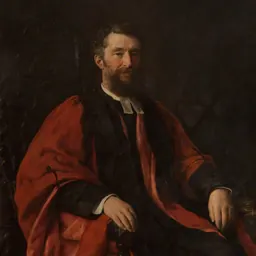
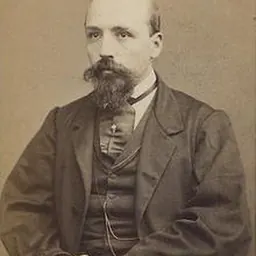
Related people
Same field, nearest in time


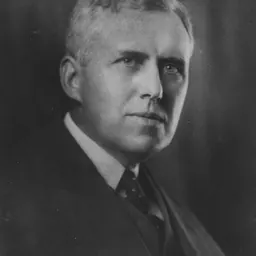
Contemporaries
People whose lives overlapped Stephen Leacock's



Frequently asked questions
Who was Stephen Leacock?
Canadian writer and economist (1869–1944)
When was Stephen Leacock born?
Stephen Leacock was born on 30 December 1869 in Hampshire.
When did Stephen Leacock die?
Stephen Leacock died on 28 March 1944 in Toronto.
What was Stephen Leacock's occupation?
Stephen Leacock was an economist, writer, political scientist, humorist, short story writer and politician.
What nationality was Stephen Leacock?
Stephen Leacock was Canadian and British.
Sources & further reading
Cite this page
APA: Biography.guide. (2026). Stephen Leacock. https://biography.guide/stephen-leacock/
MLA: "Stephen Leacock." Biography.guide, https://biography.guide/stephen-leacock/.
Chicago: "Stephen Leacock." Biography.guide. https://biography.guide/stephen-leacock/.
Data last updated: 2026-09-20 · Spot an error? Report a correction.
Page generated 2026-09-27 05:28 UTC