
About Stephen Fuchs
Lived 1908 – 2000 (aged 91). Stephen Fuchs was an Austrian anthropologist.
Stephen Fuchs (April 30, 1908 – January 17, 2000) was an Austrian Catholic priest, missionary, and anthropologist who researched the ethnology and prehistory of India. After obtaining a Ph.D. in ethnology and Indology from the University of Vienna in 1950, Fuchs moved to India where he assisted in founding the Department of Anthropology at St. Xavier's College in Bombay. After a brief imprisonment for being misidentified as a German missionary by the British government during World War II, Fuchs founded the Indian Branch of the , later renamed the Institute of Indian Culture. Fuchs, because of health concerns, moved to Austria in 1996 and died at the age of 91 in Mödling, Austria.
In his research, Fuchs conducted field studies in Central India. He focused particularly on the customs and beliefs of modern Indian tribes. Originally when he moved to India, he researched solely the social and cultural customs of modern-day central Indian tribes. After founding the Institute of Indian Culture, Fuchs researched the cultures of ancient India, back to India's original inhabitants.
Early life and education Fuchs was born on 30 April 1908 at Bruck an der Mur in Styria, Austria. Later, his family moved to Graz, where he studied at the advanced mission high school of the Society of the Divine Word (SVD) from 1922 to 1927. He joined the SVD's in 1927, and studied philosophy at St. Augustine in Bonn, Germany from 1927 to 1930, and theology at St. Gabriel in Mödling, Austria from 1930 to 1934. In Mödling, he took linguistics classes from Wilhelm Schmidt who taught ethnology and linguistics at the seminary of St. Gabriel. It was after coming in contact with Schmidt that he decided to become an anthropologist.
Later in 1934, he was ordained and appointed by the SVD's to one of its missions that was opened in 1932 in Indore, (in the modern Madhya Pradesh), in India. There, he learned English, Hindi, and the local dialects of Madhya Pradesh, before carrying out studies and fieldwork in central India.
Research Along with being an anthropologist, Fuchs was a Catholic priest and missionary. Fuchs saw himself predominately as a scientist and a researcher. Bernd Pflug writes, "It is hard to say who was the more dominant in Fuchs—the missionary or the scholar? There is evidence for both, but looking at his anthropological research as a whole over more than six decades, it seems plausible to argue that the scholar in Fuchs had always the upper hand though this hand was tied to the task of mission." Fuchs believed that he could combine his "missionary work with scholarly contributions to early Indian civilisation". He spent several decades undertaking studies in India on the country's ethnology and prehistory. The tribal and "small-scale communities" of India were the primary focus of his research in central India. He did anthropological research on the "earliest inhabitants of India" to elucidate "the prehistory of the 'primitives or aborigines' and the early history of the 'high' cultures of India". and was a visiting scholar of anthropology and philosophy of India at the University of San Carlos in the Philippines between 1961 and 1962. Fuchs had argued that the idea of a savior or messiah exists not only in the Biblical Christian thought, but it has persistently surfaced in the Indian religious movements and occurrences through historical and mythological persons of note, e.g. Vaishnavism.
Fuchs researched the ancient history of India, particularly the Aryans, Dravidians and India's autochthonous peoples, the aborigines who, according to him, represented India's earliest populace. His anthropological research on the earliest populace of India led him to cast light on the prehistory and early history of India's aborigines and "high" cultures, respectively. He believed that to ascertain the origination of the practice of untouchability, the Indologists must "penetrate deeply enough" in the history of the peoples who have had ascendancy in India.
Written work Fuchs' The Origin of Man and His Culture (1963) was reviewed by Harumi Befu of the University of Michigan who raised concerns over and questioned Fuchs' knowledge of paleontology, racial classification, and the advances in genetics. Befu further noted that Fuchs offered "only stages and no mechanism or process of evolution from one stage to another." Fuchs, however, drew some praise from R. K. Mutatkar for his unbiased approach towards the "discussion of the theory of anthropology" despite taking in the "Indian material"; though, Mutatkar noted that Fuchs attempted to offer "too much" information in a single book, and as a consequence, several key topics got inadequate coverage.
Fuchs' Rebellious Prophets: A Study of Messianic Movements in Indian Religions (1965) was assessed by Kenelm Burridge and Owen Lynch. The Korkus of the Vindhya Hills (1988) was a volume having Fuchs' research on the "geographical environment and material culture", history, economy, and belief structure of the Korkus. University of Delhi's Sudha Gupta noted that Fuchs had done fieldwork among the tribal people of Vindhya hills region for over 20 years. Christoph von Fürer-Haimendorf viewed his research as a "meticulous analysis" of the subject matter.
The Children of Hari (1950) Fuchs' The Children of Hari: A Study of the Nimar Balahis in the Central Provinces of India was a monographic anthropological–sociological study on the Balahi people, particularly, of the Nimar district of Madhya Pradesh. John Henry Hutton noted that though the book was published under the patronage of the University of Vienna and was a part of the Wiener Beiträge zur Kulturgeschichte und Linguistik, it was free from the "theoretical bias which [had] come to be associated with the Vienna School". He saw the book as the "most detailed and painstakingly factual account" of the Balahis. W. Norman Brown stated that, for the most part, Fuchs's study largely focused on the culture of Balahis and noted that Fuchs' coverage of their racial, historical, and geographical background was "too brief". Kingsley Davis noted that he provided an "aptly illustrated" description of the "life-stages", "material culture", "social organizations", and magical and religious beliefs of the Balahis, but "without much theoretical interpretation". David G. Mandelbaum stated that the purpose of Fuchs' work was "primarily descriptive" and that he made few "historical and analytical" comments in the book. He stated that Fuchs illustrated the "fundamental principles of the classic caste system" in "rich detail", but also highlighted some areas of his work where Fuchs appeared unconvincing.
The Aboriginal Tribes of India (1973–74) In The Aboriginal Tribes of India, Fuchs examined different inward migrations to India including the arrival of Aryans. In the book, he presented research on India's "prehistoric races" of the early, middle and late Stone Age; the Indus Valley civilization; and the "post Harappan" era. and also from India's Andaman and Nicobar Islands.
Edward J. Jay of California State University, Hayward stated that the book was "encyclopedic" in nature and was based largely upon sources from 19th and early 20th century and cited very few recent studies. Giving an example of Fuchs' lack of archaeological analysis of a subject matter in his study of the middle Stone Age's races, Jay stated that a number of his conclusions were "conjectural" in nature. (Assessed the edition of the book which was published at New York in the US in 1977 by St.) Martin's Press. (Assessed the edition of the book which was published at New Delhi in India by Inter-India Publications as part of the Tribal Studies of India series.) According to Gabriella Eichinger Ferro-Luzzi, Fuchs provided "convincing evidence" of the migrations of the "Dravida-speaking tribes" in the middle of the first millennium CE from India's southern regions to Odisha, Madhya Pradesh, and Bihar. She stated that Fuch's research was of significance for cross-cultural studies.
At the Bottom of Indian Society (1981) Fuchs' At the Bottom of Indian Society: The Harijan and Other Low Castes was a companion volume of his previous book The Aboriginal Tribes of India, and it was an outcome of library research on India's all Harijans. Fuchs investigated the origin of untouchability and hypothesized that it has its origins in the migrations of Dravidians and Aryans to India. He gave a description of "Harijans and other low castes" in the light of his findings. Fuchs propounded that, "...untouchability is probably an ancient social trait from animal breeding culture which was brought to India by the Aryans and also the Dravidians." Fuchs did not view "ritual purity and impurity" as the underlying principles for the social condition of the untouchables and imposition of untouchability on them as suggested by Louis Dumont, rather he suggested that they were artisans and laborers in the "highly-developed complex farming culture" they had, but their social stature got disparaged due to their pecuniary dependence on the cultivators who maintained a higher social standing.
Reviewing Fuchs' research, G. E. Ferro-Luzzi noted the Fuchs examined "all the numerous criteria for lowness" and instability of the Harijans and the people from other lower castes in the Indian social stratum. Yoshio Sugimoto questioned Fuchs' categorization of various tribes, castes, communities, and social classes under the umbrella terms like "Untouchables", "Harijan castes", and "Harijan and other low castes". Sugimoto wrote, "we are therefore in the dark as to which term he uses to refer to the category in general."
Books
Selected papers
Don’t just read it —
keep it.
Full-length biographies made to live with: read them, listen on the way to work, watch them tonight.
- E-book
- Audio
- Video
Instant download · yours to keep · every purchase keeps this site free
Important facts
People in Stephen Fuchs's life
Named in this biography and alive at the same time





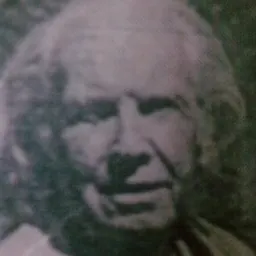


Related people
Same field, nearest in time


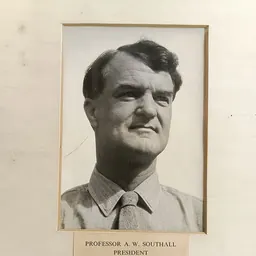
Contemporaries
People whose lives overlapped Stephen Fuchs's

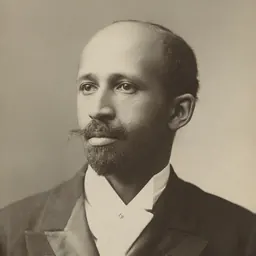
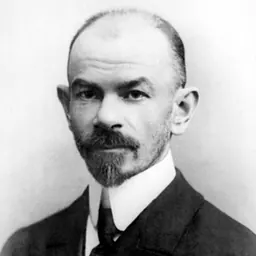
Frequently asked questions
Who was Stephen Fuchs?
Austrian anthropologist (1908-2000)
When was Stephen Fuchs born?
Stephen Fuchs was born on 30 April 1908 in Bruck an der Mur.
When did Stephen Fuchs die?
Stephen Fuchs died on 17 January 2000 in Mödling.
What was Stephen Fuchs's occupation?
Stephen Fuchs was an anthropologist.
What nationality was Stephen Fuchs?
Stephen Fuchs was Austrian.
Sources & further reading
Cite this page
APA: Biography.guide. (2026). Stephen Fuchs. https://biography.guide/stephen-fuchs/
MLA: "Stephen Fuchs." Biography.guide, https://biography.guide/stephen-fuchs/.
Chicago: "Stephen Fuchs." Biography.guide. https://biography.guide/stephen-fuchs/.
Data last updated: 2026-09-20 · Spot an error? Report a correction.
Page generated 2026-09-27 05:33 UTC