
Stephen Douglas Sturton
English medical missionary
About Stephen Douglas Sturton
Lived 1896 – 1970 (aged 74).
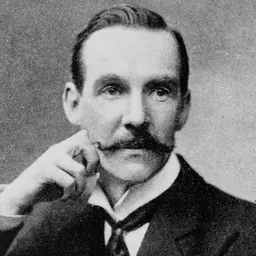
Stephen Douglas Sturton (1896 - 1970) was an English medical missionary. He worked in Hangzhou, China and was the last of the Church Missionary Society's English missionaries to leave the country. Sturton was a missionary during China's war times, when he worked to protect his hospital, set up refugee camps, and worked on the front line to save wounded soldiers. He received medals for his work and at one point treated General Chiang Kai-Shek. Eventually, Sturton was captured by the Japanese and taken to two concentration camps. After being freed he returned as president of the C.M.S. Hospital, now the Second Affiliated Hospital Zhejiang University School of Medicine. He details his experiences up to being freed from Fengtai Camp in his book From Mission Hospital to Concentration Camp.
Early life and education Stephen Douglas Sturton was born on September 12, 1896, in Cambridge, England. His parents, Richard Sturton and Mary Emma raised the family of 8 in a Calvinistic Baptist household, although he later joined the Church of England in 1920. He spent his time playing cricket matches, traveling to Sidney College Farm, and sailing.
Sturton's family has a history of missionary work, as 11 members of his family, mostly from his mother's side, were missionaries. 8 of these family members worked in China and 4 of these were with the CMS, which Sturton later joined. His youngest brother, Clement, also became a medical missionary before dying in 1936 in a riding accident. Sturton first became interested in China and overseas missions at age 8 when members of the China Inland Mission came to stay with the Sturton family. On January 7, 1923, she gave birth to their first daughter and on October 14, 1925, she gave birth to their second daughter.
Sturton met his second wife, Olive Gwendolin Clouston Fisk, while he was a college student. The two attended constituent colleges of the University of Cambridge, Sturton at Emmanuel College and Clouston at Girton College. They later reconnected after the death of their spouses and were married on June 23, 1962. They were married until Clouston's death in 1966.
Sturton had his first experience with missionary work when his hospital sent him to Jamaica and South America to be a medical attendant. After he came back, he went to his hospital's chapel where he realized that “God had definitely called [him] to the mission-field.” Then, after talking with a missionary from the C.M.S. hospital in Hangchow who had returned home, Sturton decided that he would journey to Hangchow.
At the end of 1932, Sturton took his second leave of absence and returned to England. He spent his time working in the Biochemistry lab at Cambridge and doing work on behalf of the C.M.S. The unit opened refugee camps for civilians and treated soldiers in the C.M.S. Hospital. After the Chinese army retreated and Japan entered the village, the Red Cross camps had an estimated 17,000 people.
Sturton also spent his time visiting nearby towns where fighting took place, treating people, and rescuing refugees.
Sturton was later moved to the Fengtai Camp, and in 1945, he was released when American Flying Fortresses found the prisoners. After being released, Sturton rejoined the Hangchow Hospital as Director after it was reclaimed by the C.M.S.
Soon after, he traveled to the Hong Kong Sanitorium and Hospital in Happy Valley where he worked as a medical practitioner. Here, he was the head of the Department of Radiology. In Hong Kong, he was also a member of the Anticancer Society and Leprosy Mission.
In December 2019, during the 150th-anniversary celebration of the hospital Sturton was once president of, Sturton's grandsons were given a Letter of Gratitude from the Foreign Affairs Office of Hangzhou Municipal People's Government. The letter, written to Sturton, says “You are so great a man who has done your part in the battlegrounds with a humanitarian spirit, and you are in our eyes a “just and righteous man” to the city of Hangzhou.”
The National Government of China awarded Sturton a Medal of Honor in the 1930s for saving the lives of more than 1,000 Chinese soldiers during the war with Japan, including the lives of soldiers from the 88th Division from Hangchow.
Don’t just read it —
keep it.
Full-length biographies made to live with: read them, listen on the way to work, watch them tonight.
- E-book
- Audio
- Video
Instant download · yours to keep · every purchase keeps this site free
Important facts
Contemporaries
People whose lives overlapped Stephen Douglas Sturton's





Frequently asked questions
Who was Stephen Douglas Sturton?
English medical missionary
When was Stephen Douglas Sturton born?
Stephen Douglas Sturton was born on 12 September 1896.
When did Stephen Douglas Sturton die?
Stephen Douglas Sturton died on 28 September 1970.
Sources & further reading
· Wikipedia: Stephen Douglas Sturton
· DBpedia: Stephen Douglas Sturton
Cite this page
APA: Biography.guide. (2026). Stephen Douglas Sturton. https://biography.guide/stephen-douglas-sturton/
MLA: "Stephen Douglas Sturton." Biography.guide, https://biography.guide/stephen-douglas-sturton/.
Chicago: "Stephen Douglas Sturton." Biography.guide. https://biography.guide/stephen-douglas-sturton/.
Data last updated: 2026-09-20 · Spot an error? Report a correction.
Page generated 2026-09-27 05:20 UTC