
About Stefan Stambolov
Lived 1854 – 1895 (aged 41). Stefan Stambolov was a Bulgarian politician, journalist, poet, opinion journalist, translator and head of government.
Stefan Nikolov Stambolov (; 31 January 1854 OS – 19 July 1895) was a Bulgarian politician, journalist, revolutionary, and poet who served as Prime Minister and regent. He is considered one of the most important and popular "Founders of Modern Bulgaria", and is sometimes referred to as "the Bulgarian Bismarck". In 1875 and 1876 he took part in the preparation for the Stara Zagora uprising, as well as the April Uprising. Stambolov was, after Stanko Todorov, Boyko Borisov and Todor Zhivkov, one of the country's longest-serving prime ministers. Criticised for his dictatorial methods, he was among the initiators of economic and cultural progress in Bulgaria before the time of the Balkan Wars.
He was killed in the center of Sofia by a plot from the Supreme Macedonian-Adrianople Committee (SMAC), including Naum Tyufekchiev, for his support for the Ottoman Empire, his dictatorial methods and his repression of the SMAC.
Early years A statue of Stefan N. Stambolov in his birthplace Veliko TurnovoStefan Nikolov Stambolov was born in Veliko Tarnovo. His father took part in the "Velchova Zavera" plot against Turkish rule in 1835. Stambolov grew up around prominent revolutionists like Hristo Ivanov, the priest Matey Preobrazhenski, and Hristo Karaminkov. He began his education in his home town, but later (1870–1872) studied at the Seminary in Odessa. In 1878 he was for a short period of time a teacher in his home town, and later he went to Romania. He joined the Bulgarian Revolutionary Central Committee (BRCC). After the death of BRCC founder Vassil Levski, Stambolov was chosen as his successor. He was the leader of the unsuccessful uprising in Stara Zagora in 1875 and of the Turnovo revolutionary committee in the great uprising of April 1876. After the Treaty of Berlin, he was a leader of the 1878–1879 Kresna–Razlog uprising.
Political career Stambolov was involved in political discussions as early as the time of the first Bulgarian parliament: the "Founding Assembly" of 1879. After 1880 he became the vice-chairman and later the chairman of the Narodno Subranie (the Bulgarian parliament). In 1885, he helped bring about the union of Bulgaria and Eastern Rumelia. On , officers aligned with Russia overthrew Prince Alexander in a coup d'état. Stambolov led a counter-coup on 28 August which removed the provisional government, and he assumed the position of regent. Russian hostility, however, barred the restoration of Alexander, who abdicated on 8 September.
Regency At the age of 32, Stambolov found himself in the highly unusual position of being simultaneously a government minister, president, and regent for an absent monarch. Stambolov's style of governing during his regency was observed as being increasingly authoritarian. But this was, to some extent, a reaction to the grave difficulties arising from his peculiar position. Indeed, the regency has been described as marking the beginning of the tragic years of Stambolov's life.
According to a close friend, Stambolov was "almost inclined to resign the honours [of serving as regent], together with the dangers of his position, and retire to his beloved Turnovo." But he stayed on, recognizing that there was no other suitable candidate, and that if he did not lead, then Bulgaria's sovereignty would likely be lost.
Through Stambolov's efforts, a successor to Alexander was found in Ferdinand of Saxe-Coburg-Gotha, who was proclaimed Knyaz ("Ruling Prince") of autonomous Bulgaria on 7 July 1887 and crowned on 14 August 1887. However, it is known that Stambolov initially supported Carol I of Romania and that he intended to establish a union with the country. Russian opposition forced Carol I to reject the offer. Stambolov also requested to the Ottoman Empire a dual Bulgarian-Turkish state.
Prime Minister With Ferdinand's accession to the throne, Stambolov retired as regent, and became Prime Minister. He served for seven years (1887–1894).
Stambolov was a nationalist; as a politician, he strengthened the country's diplomacy, its economy, and the general political power of the state.
In 1891, he was targeted by some members of SMAC for his authoritarian methods and support for the Ottoman Empire. The brother of Naum Tyufekchiev, Dencho was captured, tortured, and died in custody, but Naum managed to escape to Serbia and then to Odesa. He was sentenced to death in absentia.
Even though he managed to survive this attack, he was left gravely injured and needed to be hospitalized. Although he experienced a slight improvement in his condition on the 16th, he ultimately succumbed to his injuries three days later, on the 18th. until the Bulgarian lev was replaced by the Euro.
Don’t just read it —
keep it.
Full-length biographies made to live with: read them, listen on the way to work, watch them tonight.
- E-book
- Audio
- Video
Instant download · yours to keep · every purchase keeps this site free
Important facts
People in Stefan Stambolov's life
Named in this biography and alive at the same time
Related people
Same field, nearest in time



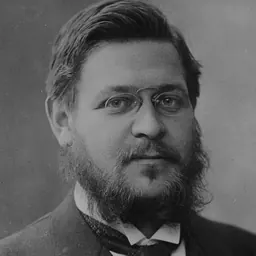
Contemporaries
People whose lives overlapped Stefan Stambolov's

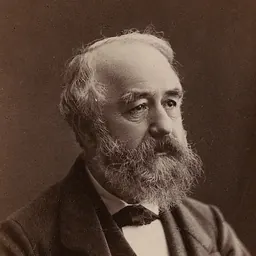
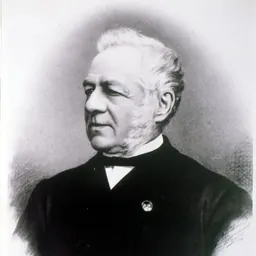
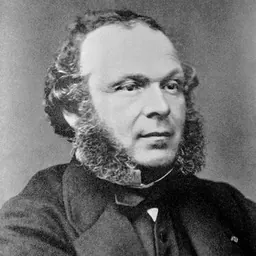


Frequently asked questions
Who was Stefan Stambolov?
Prime Minister of Bulgaria (1854-1895)
When was Stefan Stambolov born?
Stefan Stambolov was born on 12 February 1854 in Veliko Tarnovo.
When did Stefan Stambolov die?
Stefan Stambolov died on 18 July 1895 in Sofia.
What was Stefan Stambolov's occupation?
Stefan Stambolov was a politician, journalist, poet, opinion journalist, translator and head of government.
What nationality was Stefan Stambolov?
Stefan Stambolov was Bulgarian.
Sources & further reading
Cite this page
APA: Biography.guide. (2026). Stefan Stambolov. https://biography.guide/stefan-stambolov/
MLA: "Stefan Stambolov." Biography.guide, https://biography.guide/stefan-stambolov/.
Chicago: "Stefan Stambolov." Biography.guide. https://biography.guide/stefan-stambolov/.
Data last updated: 2026-09-20 · Spot an error? Report a correction.
Page generated 2026-09-27 05:22 UTC