
Stefan Großmann
Austrian journalist, author and theater critic
About Stefan Großmann
Lived 1875 – 1935 (aged 59). Stefan Großmann was an Austrian screenwriter, journalist, writer, opinion journalist, editing staff and theatre manager.
Stefan Großmann (18 May 1875 – 3 January 1935) was a Viennese writer who became one of the most prominent left-wing liberal journalists of his generation. He was the founder and during its first seven years the producer of the respected political weekly journal Das Tage-Buch.
Life Provenance and early years Born in the city's central Wollzeile district, Stefan Großmann described himself as the "son of impoverished Viennese citizens". Leopold Großmann (1836-1901), his father had been in business, but had lost his money and his will to work in the economic crash of the 1870s. His mother, born Sophie Brummel (1845-1916), used what remained of the family money to invest in a tea shop. Later she opened a liquor kiosk near the Prater, the park and amusement centre on the south-eastern side of Vienna. Großmann was expected to serve the customers during the early morning shift, before he went to school. He later reflected that although these early starts might have been detrimental to his school performance, the direct contact they gave him with "ordinary workers" and the staff from the adjacent Carltheater had a defining impact on the rest of his life. "A curious mixture of political conspiracy, social resentment, and joyous "song 'n dance" prevailed here between four and seven each morning ... I would never have had the natural relationship with simple people which has remained with me all my life without those early morning hours working in the schnapps kiosk. I would never have learned affinity with the workers from books, and I would never have been able to grasp the bizarre mechanisation of erotic life with such clarity were it not for the "joy bringers", exhausted from their night work, chattering on the benches while I brought the girls their vanilla liquers.""Eine merkwürdige Mischung von politischem Verschwörertum, sozialer Erbitterung und musikseliger Tanzfreudigkeit herrschte hier zwischen vier und sieben Uhr morgens ... Niemals hätte ich jene natürliche Beziehung zu den einfachen Leuten, die mir mein ganzes Leben lang treu geblieben ist, ohne diese Morgenstunden im Schnapsladen erreichen können. Niemals hätte ich die Verbundenheit mit den Arbeitern aus Büchern lernen, und nie hätte ich den Irrsinn der Mechanisierung des erotischen Lebens so deutlich fassen können als damals, als diese vom Nachttrabe erschöpften Freudenmädchen bescheiden sich auf das Bänkchen hockten, wohin ich ihnen Vanillelikör brachte" When he was eighteen he moved to Paris where he remained for two years, supporting himself with translation work and by trading in second-hand books. He followed the unfolding Dreyfus affair and the speeches of the time delivered in Paris by the young socialist leader Jean Jaurès with fascination and close attention.
Young journalist His father's deteriorating health persuaded Großmann to return to Vienna after two years. He found himself promising his father that would take on a "proper job" (einen "bürgerlichen Beruf"). For the next two years he worked in an office as an insurance actuary. During this period he also published his first journalistic contributions in "Die Zukunft" ("The Future"), a radical labour weekly news sheet. He was only twenty when he had his first experience of a "press trial", but it ended in an acquittal. He moved across to Brussels but remained there only for a few months before returning "home" to Vienna.
Popular theatre A remarkable career switch came in 1906 when Stefan Großmann founded a new theater, the "Freie Volksbühne für die Wiener Arbeiter" ("Free popular theatre for Viennese workers"), consciously modelled on the Volksbühne theatre in Berlin. Großmann undertook the project with the backing of the increasingly self-confident Social Democratic Workers' Party (SDAPÖ - as the Social Democratic Party was then known). (SDAPÖ backing did not extend to financial support, however.
By 1911 the architect Oskar Kaufmann had been commissioned to design a new theatre for the company. He and Großmann collaborated closely on the design of the "classless" theatre building, which would be built without galleries and loggias. However, by the time the theatre opened, in 1914, the building had been sold. The Wiener Stadttheater was completed featuring a traditional "renaissance stage", and without reference to the socialist egalitarian precepts of the original design, remodelled after 1918 and quickly becoming, in the words of one dismissive commentator, the venue for "wholesome" operetta productions. In 1913 the company had been forced to sell the still unfinished building to the politically well-connected architectural firm of Fellner & Helmer, which is charged in some quarters with having "successfully sabotaged the entire project".
From editor to publisher There was nothing random in choosing Berlin. He already had a strong journalistic reputation in the German capital, thanks to his regular contributions to the Berlin theatre magazine "Schaubühne" and, in the past, to Max Harden's Vienna based anarcho-socialist "Die Zukunft" ("The Future"). Großmann had good contacts with a number of influential media figures in the city, including the proprietor of "Schaubühne" Siegfried Jacobsohn, and did not have to wait long for offers of work from Berlin publishers. Franz Ullstein managed to secure his services for the "Vossische Zeitung", although his precise duties with the newspaper were not immediately clear. After several months "trying out" different departments he finally expressed a wish to work as a foreign correspondent in France, England and the United States of America. The outbreak of war in July 1914 meant that his foreign posting never extended beyond a brief stay in France during the early summer of that year. He was then posted for six months to Vienna, after which he took on the editorship of the Vossische Zeitung's Feuilleton section. He stayed with the Feuilleton job till the war ended. During the early part of the First World War Stefan Großmann was one of very few journalists not to join in the insane enthusiasm that erupted across Europe. "War fever" was conspicuously absent from his journalism. In 1928 Großmann's declining health forced him to retire from his management responsibilities at Tage-Buch, and these now passed fully to his younger co-proprietor. In 1933 Schwarzschild led the small Tage-Buch team into a Paris exile, where the journal continued to be published till 1940. Two years later he published his autobiography, "Ich war begeistert" (loosely "I was enthused"). During the early 1930s he also made a return to the world of theatre, working as a dramatist with Franz Hessel to stage productions at the Berlin Volksbühne theatre and then, opening on Christmas Day 1931 at the Berlin Großes Schauspielhausin, an "updated version" of The Rape of the Sabine Women.
In January 1933 the Nazis took power and lost no time in transforming Germany into a one-party dictatorship. Riding the traditional populist pillars of hatred and hope, the new government used the security services to target political opponents, starting with those who had eloquently derided and mocked them when in opposition. And they trained their sights on those they identified as Jews. In March 1933 Nazi paramilitaries arrived with the police at Stefan Großmann's home at Geltow, just outside Berlin. Their orders were to arrest him and send him for "internment". However, he was plainly very ill, which caused them to ignore the arrest order and "spare" him. They did, however, issue an order of their own, that Großmann should leave Germany.
Don’t just read it —
keep it.
Full-length biographies made to live with: read them, listen on the way to work, watch them tonight.
- E-book
- Audio
- Video
Instant download · yours to keep · every purchase keeps this site free
Important facts
People in Stefan Großmann's life
Named in this biography and alive at the same time



Related people
Same field, nearest in time


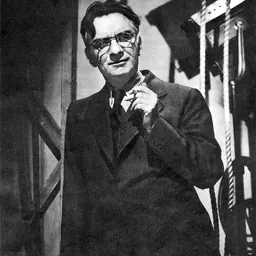
Contemporaries
People whose lives overlapped Stefan Großmann's

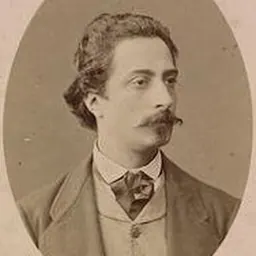

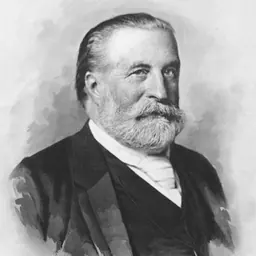
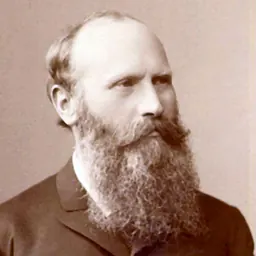
Frequently asked questions
Who was Stefan Großmann?
Austrian journalist, author and theater critic (1875-1935)
When was Stefan Großmann born?
Stefan Großmann was born on 18 May 1875 in Vienna.
When did Stefan Großmann die?
Stefan Großmann died on 3 January 1935 in Vienna.
What was Stefan Großmann's occupation?
Stefan Großmann was a screenwriter, journalist, writer, opinion journalist, editing staff and theatre manager.
What nationality was Stefan Großmann?
Stefan Großmann was Austrian.
Sources & further reading
Cite this page
APA: Biography.guide. (2026). Stefan Großmann. https://biography.guide/stefan-grossmann/
MLA: "Stefan Großmann." Biography.guide, https://biography.guide/stefan-grossmann/.
Chicago: "Stefan Großmann." Biography.guide. https://biography.guide/stefan-grossmann/.
Data last updated: 2026-09-20 · Spot an error? Report a correction.
Page generated 2026-09-27 05:14 UTC