
About Stefan Bobrowski
Lived 1840 – 1863 (aged 23). Stefan Bobrowski was a Polish and Russian politician.
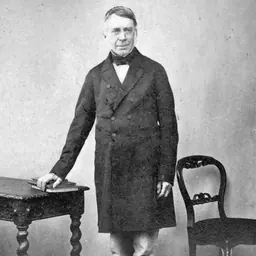
Stefan Bobrowski (17 January 1840 – 12 April 1863) was a Polish politician and activist for Polish independence. He participated in the January 1863 Uprising as one of the leaders of its "Red" faction and as a member of that faction's Central National Committee (Komitet Centralny Narodowy), and of the Provisional National Government (Tymczasowy Rząd Narodowy).
To rally peasants to the cause, he advocated land reform and an end to serfdom, while at the same time trying to ensure support from the szlachta (nobility). He also tried to establish links with potential revolutionaries within Russia who opposed their country's tsar.
Bobrowski died in 1863 in a pistol duel with a member of the "White" faction, Count Adam Grabowski. He had agreed to the duel though he was sure to lose due to his extreme near-sightedness.
Stefan Bobrowski was an uncle to English-language novelist Joseph Conrad,
Early life Bobrowski was born to a Polish szlachta family in Terechowa near Berdyczów, which at the time was part of the Russian Empire (now in Ukraine). In 1852 he attended a gymnasium in Nemyriv and two years later in Saint Petersburg. In 1856 he began attending Saint Petersburg State University and studying Philosophy. During this time he established contacts with radical Russian and Polish students. In 1860 he abandoned his studies and moved to Kiev, where, while pretending to be a student, he engaged himself in political activism and joined the Triple Society (Związek Trojnicki); the name was a reference to the three parts of the Polish–Lithuanian Commonwealth which had been taken by Russia in the Partitions of Poland but not included in Congress Poland (Volhynia, Podolia and the Kiev area). The purpose of the society was to promote an end to serfdom without compensation to the landlords in the three areas and attracting the peasants to the cause of Polish independence. However, ultimately, Polish and Ukrainian members of the society disagreed on the question of Polish and Ukrainian statehood and language, and its founder, Volodymyr Antonovych left the organization, and was replaced on the ruling committee by Bobrowski. Bobrowski organized an illegal print shop in Kiev Pechersk Lavra and oversaw the publication of the society's two newspapers Odrodzenie (Rebirth) and Wielkorus (Great-Ruthenian). The Tsarist police found the print shop and closed it down in 1862, while Bobrowski avoided capture because the police mistakenly arrested another student with the same surname "Bobrowski" (who was shortly released). Stefan Bobrowski escaped to Romania. The authorities kept the case open until 1871, eight years after his death, when they finally closed it due to the "continued absence of the accused".
January 1863 Uprising In 1862 the Central National Committee (Komitet Centralny Narodowy, KCN) was formed in Warsaw, whose purpose was to prepare for an upcoming insurrection against Russia. Bobrowski joined it and served as its representative abroad. He traveled to Moldavia, where he checked on the formation of a Polish Legion which was supposed to enter Poland upon the outbreak of hostilities to support the insurrection. He also most likely traveled to Moscow, where he met with representatives of the secret Russian organization Zemlia i Volia, which had similar aims with regard to ending serfdom and also opposed the Tsar. He also returned to Kiev, where he subordinated the Triple Society to the KCN.
On 1 January 1863 Bobrowski came to Warsaw, where he was made a member of the Central Committee of the KCN. On 3 January he voted for the outbreak of the uprising, despite the fact that he did not believe in its success. In October 1862 the KCN had issued a statement that an insurrection was necessary in the face of a coming forced conscription into the Tsarist army, and Bobrowski with his vote was supporting the official line. The KCN also chose Ludwik Mierosławski as temporary dictator of the insurrection, despite opposition from Bobrowski.
After a lack of success on the battlefield, and personal clashes with one of the Uprising's generals, Marian Langiewicz, Mierosławski resigned his dictatorship and left Poland for Paris. At that point the Central Committee, prodded by Bobrowski, decided against the appointment of another dictator. However, on 10 March 1863 Langiewicz, influenced and misinformed by the White faction, in particular by Count Adam Grabowski, self-proclaimed as the Uprising's new dictator and took over a portion of the Committee's funds, which he used for arms purchases. Faced with such a fait accompli and wishing to avoid in-fighting among the insurrectionists, Bobrowski reluctantly affirmed and supported Langiewicz. Since Langiewicz was essentially a nominee of the "White" faction, the Red-dominated Committee insisted that as dictator he appoint advisers from its ranks and attempted to circumscribe his power to solely military matters.
Despite a successful military operation at Chroberz (notable for the charge by the Zouves of Death under the command of French-born officer François Rochebrune), after the Battle of Grochowiska Langiewicz came to believe that the cause was lost; and in late March 1863, a few weeks after having been made dictator, he crossed into Austria, where he was interned. It is doubtful whether Bobrowski could even see his opponent. Grabowski shot him directly in the heart, and Bobrowski died on the spot.
Julian Łukaszewski, the Committee's representative in the Prussian partition, writing shortly after, called the duel an incident of "cold-blooded" and "barbaric" murder.
A memorial stone marks the site of the duel.
Don’t just read it —
keep it.
Full-length biographies made to live with: read them, listen on the way to work, watch them tonight.
- E-book
- Audio
- Video
Instant download · yours to keep · every purchase keeps this site free
Important facts
People in Stefan Bobrowski's life
Named in this biography and alive at the same time

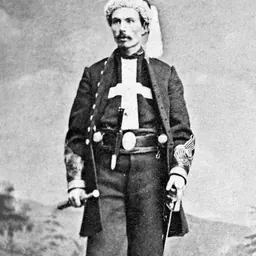
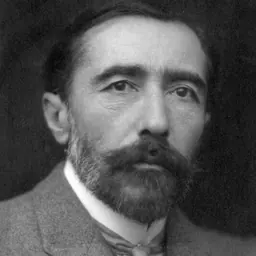


Related people
Same field, nearest in time






Contemporaries
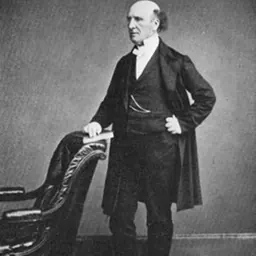
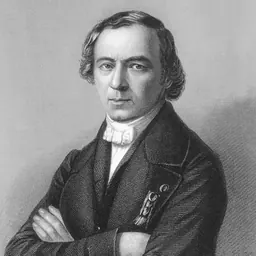
People whose lives overlapped Stefan Bobrowski's


Frequently asked questions
Who was Stefan Bobrowski?
Polish politician (1840–1863)
When was Stefan Bobrowski born?
Stefan Bobrowski was born on 17 January 1840 in Terekhove.
When did Stefan Bobrowski die?
Stefan Bobrowski died on 12 April 1863 in Gmina Rawicz.
What was Stefan Bobrowski's occupation?
Stefan Bobrowski was a politician.
What nationality was Stefan Bobrowski?
Stefan Bobrowski was Polish and Russian.
Sources & further reading
Cite this page
APA: Biography.guide. (2026). Stefan Bobrowski. https://biography.guide/stefan-bobrowski/
MLA: "Stefan Bobrowski." Biography.guide, https://biography.guide/stefan-bobrowski/.
Chicago: "Stefan Bobrowski." Biography.guide. https://biography.guide/stefan-bobrowski/.
Data last updated: 2026-09-20 · Spot an error? Report a correction.
Page generated 2026-09-27 05:21 UTC