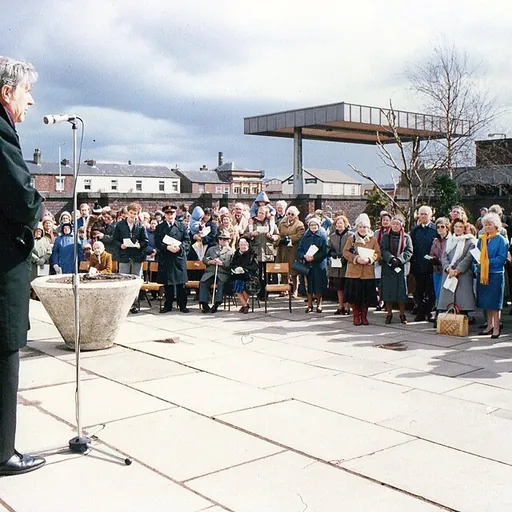
About Stanley Booth-Clibborn
Lived 1924 – 1996 (aged 71). Stanley Booth-Clibborn was a British politician.
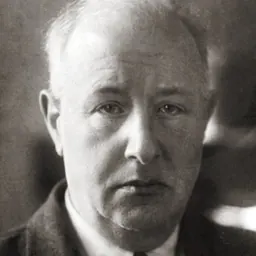
Stanley Eric Francis Booth-Clibborn (20 October 1924 – 6 March 1996) was a British Anglican bishop in the late 20th century. He was Bishop of Manchester from 1979 to 1992. He was well known during his episcopal ministry for his outspoken political views and interventions on behalf of the poor.
Booth-Clibborn was the great-grandson of William Booth, the founder of The Salvation Army. He was educated at Highgate School. He was called up to the British Army during World War II, and served in the Royal Artillery and the Royal Indian Artillery. Having returned to England after five years military service, he studied history at Oriel College, Oxford, and then trained for the priesthood at Westcott House, Cambridge.
Booth-Clibborn was ordained in the Church of England. He served two curacies in the Diocese of Sheffield in the first half of the 1950s. In 1956, he emigrated to Kenya where he worked for the Christian Council of Kenya, and then for a newspaper. In 1967, he returned to England and was Priest-in-Charge of a group of inner-city churches in Lincoln. Then, from 1970 to 1979, he was Vicar of the Church of St Mary the Great, Cambridge; Great St Mary's is the university church of the University of Cambridge.
In 1978, it was announced that Booth-Clibborn would be the next Bishop of Manchester, the diocesan bishop of the Diocese of Manchester in the north of England. The following year, he was consecrated a bishop and took up the post. In 1985, he joined the House of Lords as a Lord Spiritual. He retired from full-time ministry in 1992.
Early life and education Booth-Clibborn was born on 20 October 1924 in London, England. His father, John Eric Booth-Clibborn, was a Church of England clergyman. He graduated from the University of Oxford with a second-class Bachelor of Arts degree in 1951. In 1950, he entered Westcott House, Cambridge, an Anglican theological college in the Liberal Catholic tradition. There, he spent the next two years training for the priesthood. He spent two years serving in India during which he was attached to the Royal Indian Artillery.
Ordained ministry
Booth-Clibborn was ordained in the Church of England as a deacon in 1952 and as a priest in 1953. In a letter begging him to accept the appointment, Bishop John Robinson stated "Do accept – we are scraping the bottom of the barrel". This was one of the first appointments made by the newly created Crown Appointments Commission.
In November 1992, Booth-Clibborn stepped down as Bishop of Manchester and retired from full-time ministry.
Later life
In June 1994, it was reported that while in Uganda Booth-Clibborn had been shot in the leg by attackers who demanded money.
On 6 March 1996, Booth-Clibborn died in Edinburgh, Scotland, at the age 71. He had been suffering from an infection that occurred following a hernia operation. On 12 March, he was cremated following a private funeral.
His ashes are buried in a grave in Morningside Cemetery, Edinburgh in the south-west section.
Family On 15 February 1958, Booth-Clibborn married Anne Forrester. Anne would later become Deputy Chair of the charity Christian Aid. He was regarded as a "dangerous radical" by supporters of the Thatcher government. On 18 December 1980, he appeared on the BBC's Question Time. In 1987, he wrote a letter to The Independent speaking out against credit cards and accusing financial institutions of "selling debt". In 1988, during a debate about the Local Government Act, he spoke out against Section 28 (which banned the promotion of homosexuality) saying "Many peers should surely be well aware of the dangers of encouraging prejudice". Also in 1988, during a speech in the House of Lords, he described the million-pound salaries of some company chairmen as "obscene" especially when compared to the £5000 paid to a trainee nurse: he stated it is "utterly wrong and misguided thinking to imagine that one can have a nation which is spiritually healthy when one has large numbers of millionaires".
Religious Booth-Clibborn trained for the priesthood at a Liberal Anglo-Catholic theological college.
Booth-Clibborn was a supporter of the ordination of women. His leadership of MOW helped establish it as a national organisation. He was awarded an honorary Doctor of Divinity degree by the University of Manchester in 1994.
Don’t just read it —
keep it.
Full-length biographies made to live with: read them, listen on the way to work, watch them tonight.
- E-book
- Audio
- Video
Instant download · yours to keep · every purchase keeps this site free
Important facts
People in Stanley Booth-Clibborn's life
Named in this biography and alive at the same time




Related people
Same field, nearest in time



Contemporaries
People whose lives overlapped Stanley Booth-Clibborn's



Frequently asked questions
Who was Stanley Booth-Clibborn?
British bishop (1924-1996)
When was Stanley Booth-Clibborn born?
Stanley Booth-Clibborn was born on 20 October 1924 in London.
When did Stanley Booth-Clibborn die?
Stanley Booth-Clibborn died on 6 March 1996 in Edinburgh.
What was Stanley Booth-Clibborn's occupation?
Stanley Booth-Clibborn was a politician.
What nationality was Stanley Booth-Clibborn?
Stanley Booth-Clibborn was British.
Sources & further reading
· Wikipedia: Stanley Booth-Clibborn
· DBpedia: Stanley Booth-Clibborn
Cite this page
APA: Biography.guide. (2026). Stanley Booth-Clibborn. https://biography.guide/stanley-booth-clibborn/
MLA: "Stanley Booth-Clibborn." Biography.guide, https://biography.guide/stanley-booth-clibborn/.
Chicago: "Stanley Booth-Clibborn." Biography.guide. https://biography.guide/stanley-booth-clibborn/.
Data last updated: 2026-09-23 · Spot an error? Report a correction.
Portrait: Wikimedia Commons · author & licence
Page generated 2026-09-27 05:05 UTC