
About Stanisław Kot
Lived 1885 – 1975 (aged 90). Stanisław Kot was a Polish historian, diplomat and politician.
Stanisław Kot (22 October 188526 December 1975) was a Polish historian and politician. A native of the Austrian partition of Poland, early in life he was attracted to the cause of Polish independence. As a professor of the Jagiellonian University (1920–1933), he held the chair of the History of Culture. His principal expertise was in the politics, ideologies, education, and literature of the 16th- and 17th-century Polish–Lithuanian Commonwealth. He is particularly known for his contributions to the study of the Reformation in Poland.
As a Second Polish Republic politician, he was a member of the People's Party; and, during World War II, he held several posts in the Polish Government in Exile, including those of Minister of the Interior (1940–1941), Minister of State (1942–1943), and Minister of Information (1943–1944). He also served, during the war, as Polish ambassador to the Soviet Union (1941–1942); and shortly after the war, as Polish ambassador to Italy (1945–1947).
In 1947, in the wake of the communist takeover of Poland, he became a political refugee, living in France and later in the United Kingdom, where he was the leader of the People's Party in exile.
Early life and education Kot was born into a peasant family in Ruda, in the Austrian-partition Galicia region of Austro-Hungary. His father Marcin, a leading citizen of the village, could read and write, and was involved in the patriotic movement of Lesser Poland, the historic region to which Ruda belonged. Kot attended elementary school in Czarna and Sędziszów and gymnasium in Rzeszów,
In 1904 he matriculated in law at Lwów University, best known for publishing the book series, (The National Library), which continues to the present; up to the outbreak of World War II, he oversaw the publication of 177 volumes. His opposition to the antisemitism then common among Polish chauvinists has been attributed to the political activism that he had begun in his student days.
In 1919 Kot published a biography of Modrzewski which, as of 1999, was still considered the most exhaustive and reliable work on the subject.
From 1921 until 1939 he edited the quarterly, Reformacja w Polsce (The Reformation in Poland), which he had established; it was published by the Society for Research into the History of the Reformation. His studies of Polish emigrations to Western Europe and to cities in France, Germany, and Italy were trailblazing. In 1933, when the Sanation government controlled by Józef Piłsudski was mistreating political prisoners at the Brześć fortress, Kot was a principal organizer of a protest by university professors. In the spring of 1940, meeting with representatives of British Jewry in France, Kot criticized the bulk of Poland's Jews for failing to assimilate into Polish society and suggested that, after the war, most Jews would have to leave Poland. From October 1940 to August 1941 Kot was Minister of the Interior. Despite his attempts, he failed to secure the release of some, including Polish-Jewish Bund and Second International executive-committee members Viktor Alter and Henryk Ehrlich. He objected to the creation of a separate Jewish Legion within the Anders Army – a question that divided the Jewish community itself. thumb After Kot's tour of duty as Poland's ambassador to the Soviet Union, until 1943 he served as Polish Minister of State in the Near East, where substantial Polish armed forces were stationed. In that communiqué, the Polish government asked for a Red Cross investigation. This was rejected by Stalin, who used the fact that the Germans had also requested such an investigation as "proof" of a Polish-German conspiracy, and turned it into a pretext for breaking off Polish-Soviet diplomatic relations. After Prime Minister Sikorski's death on 4 July 1943 at Gibraltar, President Władysław Raczkiewicz asked Stanisław Mikołajczyk, who had been acting Prime Minister in General Sikorski's absence, to form a government. Kot retained his post as Minister of Information in Mikolajczyk's cabinet until 1944. He died in London, England, on 26 December 1975, soon after turning 90.
Legacy Peter Brock and write: "Like a long line of historians beginning in antiquity, Stanisław Kot was both a writer of history and a politician who helped to shape events. Whereas in his scholarly writings he preserved a calm impartiality, with any polemical thrust usually concealed from the reader's view, Kot from his [secondary]-school days emerged as 'a passionate politician, evoking strong emotions and partisan prejudices'."
Polish communist-era historiography described him as a reactionary leader of the extreme nationalist right, even calling him "the greatest enemy of communism and of the revolutionary currents of worker-peasant collaboration." Lucyna Hurło writes that "his works in the... history of education, culture, literature, and [the R]eformation and Antitrinitarianism exemplify [scholarly] reliability." Brock and Pietrzyk have assessed him to be a "historian of major stature". Wojciech Roszkowski and summarized his life: "He left a vast scholarly legacy in the history of education and history of culture, including particularly the history of the Reformation." Conference materials were published in a 2001 book of the same title, whose cover note described Kot as "undeniably a great scholar and politician". In 2000 published a biography of Kot, Stanisław Kot 1885-1975. Biografia polityczna (Stanisław Kot 1885-1975: A Political Biography). Janusz Tazbir wrote in a review of Rutkowski's book that he himself was working on a biography of Kot the scholar, but Tazbir had not finished it before his 2016 death.
Selected bibliography 1910: Szkoła lewartowska: z dziejów szkolnictwa ariańskiego w Polsce (The Lewartów School in the History of Arian Schools in Poland). History of Poland's Cultural Relations with other Countries. 1919: Andrzej Frycz Modrzewski 1924: Historia wychowania (The History of Education), 2 vols.; 2nd revised edition, 1933/34. 1932: Ideologia polityczna i społeczna braci polskich zwanych arianami (1957 English translation by E.M. Wilbur: Socinianism in Poland: the Social and Political Ideas of the Polish Brethren, Called Arians). 1958: Chyliński's Lithuanian Bible: Origin and Historical Background, Poznań, Poznańskie Towarzystwo Przyjaciół Nauk: Komisja Filologiczna, 1958, 25 pages.
Don’t just read it —
keep it.
Full-length biographies made to live with: read them, listen on the way to work, watch them tonight.
- E-book
- Audio
- Video
Instant download · yours to keep · every purchase keeps this site free
Important facts
People in Stanisław Kot's life
Named in this biography and alive at the same time
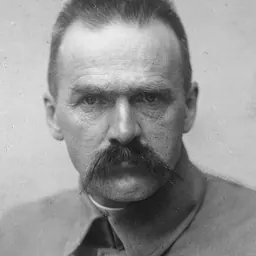


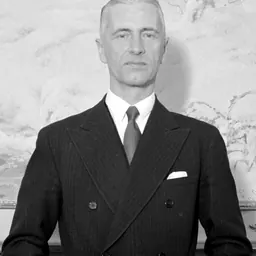

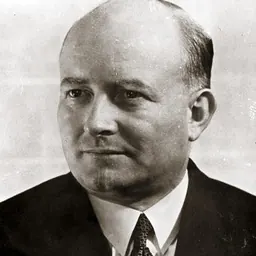
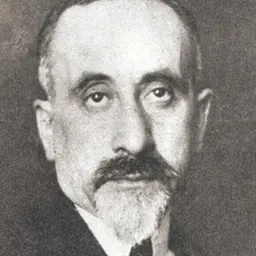
Related people
Same field, nearest in time

Contemporaries
People whose lives overlapped Stanisław Kot's



Frequently asked questions
Who was Stanisław Kot?
Polish historian (1885-1975)
When was Stanisław Kot born?
Stanisław Kot was born on 22 October 1885 in Ruda.
When did Stanisław Kot die?
Stanisław Kot died on 26 December 1975 in London.
What was Stanisław Kot's occupation?
Stanisław Kot was a historian, diplomat and politician.
What nationality was Stanisław Kot?
Stanisław Kot was Polish.
Sources & further reading
Cite this page
APA: Biography.guide. (2026). Stanisław Kot. https://biography.guide/stanislaw-kot/
MLA: "Stanisław Kot." Biography.guide, https://biography.guide/stanislaw-kot/.
Chicago: "Stanisław Kot." Biography.guide. https://biography.guide/stanislaw-kot/.
Data last updated: 2026-09-26 · Spot an error? Report a correction.
Page generated 2026-09-27 05:16 UTC