
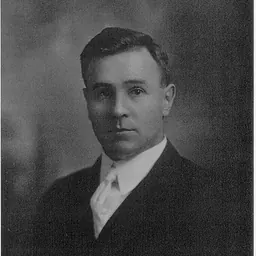
Stanislaw Gonerka
Polish serial killer
About Stanislaw Gonerka
Lived 1927 – 1987 (aged 59). Stanislaw Gonerka was a butcher.
Move to Sweden In 1958, Gonerka moved to Sweden. While working as a butcher, he was convicted of several crimes, including aggravated theft and drunk driving. After visiting a dance restaurant, the 47-year-old Stanislaw Gonerka killed Radosz and subsequently dismembered her body.
On the afternoon of 24 August, some children playing near a garbage container at Sorgenfrivägen 47 in Östra Sorgenfri, Malmö, discovered two human thighs wrapped in plastic. The day before, several children had claimed to have found body parts in the container, but their parents dismissed their accounts. Eventually, some parents became suspicious and contacted the police at around 3:30 PM. The package containing the body parts was bloody, but the rest of the container was clean. According to the forensic examiner, the dismemberment had been performed "skillfully." The limbs had been severed from the body at the kneecap up to the femoral neck. In his apartment, the police found the torso and arms of the body. The lower legs were also found in a container. When Radosz stopped moving, he became worried, and when he felt her pulse was absent, he realized she was dead. Gonerka was deeply shaken by the events and could not fully explain why he dismembered her.
On 28 August 1974, Chief Public Prosecutor Åke Sandberg submitted a detention request for Gonerka to the Malmö District Court. He was initially suspected of aggravated assault and gross causing of death by negligence (grovt vållande till annans död). During further interrogations, Gonerka revised some of his statements. For example, he admitted that he had beaten Radosz more severely than he had previously indicated and acknowledged that they had fought a full-blown brawl. However, he maintained that Radosz's death was the result of an accident.
Trial and verdict On 18 October 1974, the main hearing began. At that time, a comprehensive psychiatric evaluation was ordered, which was completed in February 1975, after which the trial commenced at Malmö District Court. The prosecutor's primary charge was murder, with an alternative charge of gross causing of death by negligence (grovt vållande till annans död). On 11 March 1975, he was sentenced by Malmö District Court to institutional psychiatric care (sluten psykiatrisk vård) for aggravated assault and causing of death by negligence.
Hospital time and new crimes In the spring of 1977, Gonerka was declared wanted after escaping during a leave of absence from in Växjö. Gonerka had been granted permission to visit relatives in Poland. He did not return to the forensic psychiatric facility but was arrested a few months later for new crimes in Poland. A few years earlier, he had obtained Swedish citizenship, and the Polish police put him on a ferry to Ystad without informing Swedish authorities that a murderer was on his way. Norinder ran a small guesthouse in Ystad, and Andersson was a close friend who often visited and helped her with various tasks. She lived in an apartment just a few hundred meters from the guesthouse. On 13 August the police in Ystad received an anonymous report. A woman, who did not want to reveal her name, claimed she hadn't seen her good friend Norinder for several days and was now concerned that something might have happened to her. That same evening, the police conducted a search of her apartment. They also entered Andersson's apartment, as he was also missing. Since there was no evidence of anything unusual, further action was delayed.
On 15 August the police conducted another search of the apartments, as neither of the two had been seen. They also began contacting their relatives. At around 11:00 AM on 16 August, the police received a tip from a neighbor of Arthur Andersson, stating that an unknown man was in Andersson's apartment. The police immediately went to the location to question him. When they arrived, the man tried to flee but was apprehended. He explained his rush by claiming to be the second mate on the Polish ferry Skandinavia, which was due to depart at noon. A quick check, however, revealed that the Skandinavia was not in port, so the police began questioning him more closely. Eventually, he admitted that he knew Arthur Andersson and that on 11 August, he had been with him and Norinder at a party in an outbuilding. When the police searched the outbuilding, they discovered the two missing individuals. They were dead, and bloodstains indicated that they had been killed violently. At the time of his arrest, Gonerka had Andersson's keys, a postal savings bank book (which contained one crown), and a porcelain figurine in his pockets. During the first interrogation on 16 August, it was revealed that he had arrived in Ystad on 26 July. He denied the murders but admitted to having once had coffee with the retired Andersson.
Trial and verdict On 14 November 1977, the Ystad District Court found Gonerka guilty of murder. He was sentenced to continued institutional psychiatric care (sluten psykiatrisk vård). The day after Catrine da Costa's dismembered body was found, the police received a tip about Gonerka. He had no alibi for the murder.
Over the years, several tips came into the police regarding Gonerka, but the interest in him was almost nonexistent.
Death Stanislaw Gonerka died on 20 February 1987, three years after da Costa's death, and was buried on 12 March 1987, at in Botkyrka Municipality, south of Stockholm.
Gonerka's DNA In an application to the Chancellor of Justice in October 2007, complaints were made about the police's handling of the preliminary investigation into the suspected murder of Catrine da Costa. The complaint specifically concerned the DNA analysis conducted on the hairs found on the towel discovered near Catrine da Costa's body. One of the four investigative leads involved mitochondrial DNA testing of the hairs on the towel, comparing them to Gonerka's. In order to accommodate the public, efforts were made to obtain material from Gonerka through the pathologist at the Karolinska Hospital in Huddinge. However, the response was that a court order was required. On 12 February 2009, the chief public prosecutor at the Västerort Local Public Prosecution Office (Västerorts åklagarkammare) in Stockholm decided not to request a search warrant from the district court for the Karolinska University Laboratory, where a tissue sample from Gonerka was stored.
After a review was requested, the deputy director of public prosecution at the Development Centre (Utvecklingscentrum) in Gothenburg decided on 23 March 2009, not to change the chief prosecutor's decision. On 20 April 2009, the Prosecutor-General of Sweden, Anders Perklev, decided to take over the leadership of the investigation, changing the previous decision. According to the prosecutor-general, there were grounds to issue a search warrant to obtain the tissue sample in order to clarify whether a trace could be linked to Gonerka.
The prosecutor-general transferred the case and the leadership of the investigation to the chief public prosecutor at the Södertörn Local Public Prosecution Office (Södertörns åklagarkammare) in Stockholm. The prosecutor applied to the for a search warrant at the Karolinska University Laboratory in Huddinge to gain access to the samples. The district court granted the request on 30 April 2009. However, following an appeal by the hospital, the Svea Court of Appeal overturned the district court's decision on 22 May 2009, and rejected the prosecutor's request for a search warrant.
The Court of Appeal rejected the prosecutor's request to seize a tissue sample in the investigation into Catrine da Costa's death. While the prosecutor referred to strong public interest, they were unable to present concrete circumstances that would demonstrate that the action would advance the investigation, strengthen or weaken suspicions against any individual, or have significant relevance to the case. The Court of Appeal ruled that the prosecutor had not provided sufficient legal grounds for the compulsory measure, and that the reasons did not outweigh the intrusion the measure would involve. As a result, the district court's decision was amended, and the request was denied.
The preliminary investigation into the suspected murder of Catrine da Costa was closed on 1 July 2009, due to the statute of limitations.
Don’t just read it —
keep it.
Full-length biographies made to live with: read them, listen on the way to work, watch them tonight.
- E-book
- Audio
- Video
Instant download · yours to keep · every purchase keeps this site free
Important facts
People in Stanislaw Gonerka's life
Named in this biography and alive at the same time

Related people
Same field, nearest in time




Contemporaries
People whose lives overlapped Stanislaw Gonerka's


Frequently asked questions
Who was Stanislaw Gonerka?
Polish serial killer
When was Stanislaw Gonerka born?
Stanislaw Gonerka was born on 7 June 1927.
When did Stanislaw Gonerka die?
Stanislaw Gonerka died on 20 February 1987.
What was Stanislaw Gonerka's occupation?
Stanislaw Gonerka was a butcher.
Sources & further reading
· Wikipedia: Stanislaw Gonerka
Cite this page
APA: Biography.guide. (2026). Stanislaw Gonerka. https://biography.guide/stanislaw-gonerka/
MLA: "Stanislaw Gonerka." Biography.guide, https://biography.guide/stanislaw-gonerka/.
Chicago: "Stanislaw Gonerka." Biography.guide. https://biography.guide/stanislaw-gonerka/.
Data last updated: 2026-09-20 · Spot an error? Report a correction.
Page generated 2026-09-27 05:32 UTC