
About Stanislav Shatalin
Lived 1934 – 1997 (aged 62). Stanislav Shatalin was a Russian economist.
Stanislav Sergeyevich Shatalin (; 24 August 1934 – 3 March 1997) was a Soviet and Russian economist. A corresponding member of the Academy of Sciences of the Soviet Union from 1974 and an academic from 1987, Shatalin played an important role in economic reforms shortly before and following the dissolution of the Soviet Union, when he promoted the policies of decentralisation and privatisation in an effort to improve productivity. Although he was the primary author of the ambitious 500 Days Programme and an early supporter of Russian economic reforms, he was soon sidelined by younger, more radical economists who sought even further reforms than Shatalin.
Early life and career Stanislav Sergeyevich Shatalin was born on 24 August 1934, in the village of Detskoye Selo in the Russian Soviet Federative Socialist Republic's Leningrad Oblast. The village is today known as Pushkin, and forms a municipal town of the city of Saint Petersburg. He was born into a family of prominent communists; his father, , would later become Second Secretary of the Party Committee of Kalinin Oblast, and his uncle, , became a member of the Central Committee of the Communist Party of the Soviet Union in 1953.
Stanislav began studying at the Moscow Power Engineering Institute following his graduation, but transferred two years later to the Faculty of Economics at Moscow State University. There, he was taught by Leonid Kantorovich, who would later be awarded the Nobel Memorial Prize in Economic Sciences, and he graduated in 1958 with a specialisation in political economics. Following his graduation, Shatalin worked at the , quickly moving from a junior researcher to director of one of the institute's sectors. He defended his Candidate of Sciences dissertation in 1964, and four years later was among a team of economists awarded the USSR State Prize.
Academy of Sciences of the Soviet Union Beginning in 1965, Shatalin was employed at the Central Economic Mathematical Institute, under the Academy of Sciences of the Soviet Union. This was followed by him becoming a corresponding member of the Academy of Sciences of the Soviet Union in 1974, and eventually an academic of the academy in 1987. Shatalin also worked at , or VNIISI, (now the Institute of Systemic Analysis of the Russian Academy of Sciences) from 1976 to 1986, studying socioeconomic topics and the role of state planning on social development. Though his research was seen as problematic by the Soviet government, it did not stop his rise to the status of academic in 1987. As a result, Soviet leader Mikhail Gorbachev sought the advice of Shatalin and several other liberal economists to devise an economic plan. The end result was what would later become known as the 500 Days Programme. Despite opposition from government voices such as Nikolai Ryzhkov, Shatalin's programme was adopted in September 1990, leading The New York Times to later remark that "Mr. Shatalin became famous almost overnight" as a result of the reforms.
Shatalin's economic plan was regarded as radical for its time; it called for rapid privatisation, economic decentralisation, and privatisation, eventually envisioning the Soviet Union's reformation into more of an economic union than a political union. The programme called for 70% of Soviet industry and an even larger percentage of agriculture to be privatised, as well as the privatisation of the service and commerce sectors effectively in entirety. It also argued that workers should be given the right to salary negotiation, unprofitable businesses closed, and the complete abolition of price controls. Shatalin supported his position by arguing that,
An essentially anti-popular policy was pursued for a long period: a rich state with a poor people. The state concentrated in its hands enormous resources, virtually the entire ownership of means of production. Resources were spent thoughtlessly on gigantic and inefficient projects, on building up military might and on foreign policy adventures with an ideological underpinning, although all this has long been beyond our means. — Shatalin, Izvestia, 4 September 1990 sought to enact some of his reforms. However, Shatalin was politically sidelined by younger and more radical co-authors of the 500 Days Programme, such as Grigory Yavlinsky, who supported measures like shock therapy. As Russia's economy declined under Yeltsin, Shatalin expressed opposition to his rule. In response, he was attacked by Yegor Gaidar, Russian Prime Minister and a former student of Shatalin.
Shatalin died on 3 March 1997 from undisclosed causes. At the time of his death, which was revealed by the Russian Academy of Sciences, he was 62 years old, and he had previously spent several years in and out of hospitals, going back to before the 500 Days Programme.
Don’t just read it —
keep it.
Full-length biographies made to live with: read them, listen on the way to work, watch them tonight.
- E-book
- Audio
- Video
Instant download · yours to keep · every purchase keeps this site free
Important facts
People in Stanislav Shatalin's life
Named in this biography and alive at the same time

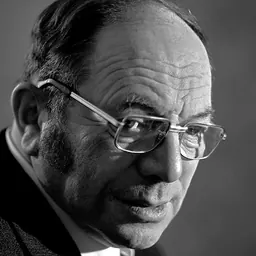
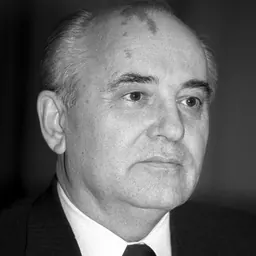

Related people
Same field, nearest in time



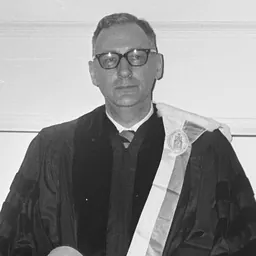
Contemporaries
People whose lives overlapped Stanislav Shatalin's





Frequently asked questions
Who was Stanislav Shatalin?
Russian economist (1934–1997)
When was Stanislav Shatalin born?
Stanislav Shatalin was born on 24 August 1934 in Pushkin.
When did Stanislav Shatalin die?
Stanislav Shatalin died on 3 March 1997 in Moscow.
What was Stanislav Shatalin's occupation?
Stanislav Shatalin was an economist.
What nationality was Stanislav Shatalin?
Stanislav Shatalin was Russian.
Sources & further reading
· Wikipedia: Stanislav Shatalin
Cite this page
APA: Biography.guide. (2026). Stanislav Shatalin. https://biography.guide/stanislav-shatalin/
MLA: "Stanislav Shatalin." Biography.guide, https://biography.guide/stanislav-shatalin/.
Chicago: "Stanislav Shatalin." Biography.guide. https://biography.guide/stanislav-shatalin/.
Data last updated: 2026-09-25 · Spot an error? Report a correction.
Page generated 2026-09-27 05:12 UTC