
About Stanislaus Hoga
Lived 1791 – 1860 (aged 68–69). Stanislaus Hoga was a Polish translator.
Stanislaus Hoga (, surname also as Hoge) born Ezekiel Hoga (1791–1860) was a Hebrew translator, a Jewish convert to Christianity.
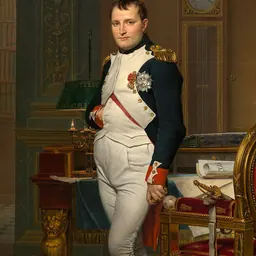
Life Hoga was born into a Hasidic family in the Lublin area, then and for a few years in Poland. his father was the Rabbi there, and a follower of the Lublin Rebbe Jacob Isaac Hurwitz. After rabbinic education, support from Adam Kazimierz Czartoryski made it possible for him to study in Puławy. He became an interpreter for Napoleon's forces in the period 1807 to 1809.
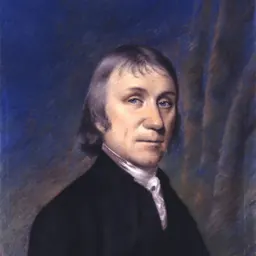
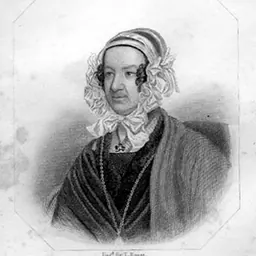
After the war Hoga lived in Warsaw (then part of the Russian Empire). He acted from 1816 as assistant to the Jewish censor Adam Chalmelewski. He was himself appointed to the Jewish Censor Committee in 1818. After that he worked for Luigi Chiarini, of Warsaw University, and became his deputy. Under pressure to be baptised a Christian, he converted in the years after 1822, when he had begun to publish in Hebrew and on Jewish tradition. At this point he dropped his Jewish forename, in favour of the Christian name Stanislaus. The authorities had been alarmed by an inquiry in 1823 into Hasidism in Płock, and the Committee for Religious Affairs was asked for a report. Input to it from Jacob Tugenhold and Hoga helped the conclusions to tend to moderation, Tugenhold being another of the Jewish censorship personnel. On 3 August 1824 Hoga defended Hasidism in a public disputation. He expanded what he found in the writings of John Oxlee to the same effect, and allied himself with the views of Charlotte Elizabeth Tonna; similar sentiments went back to Joseph Priestley and Thomas Witherby. After a number of years the LSPCJ found his critical attitude unacceptable, and they parted company in 1849, by which time he was writing in a hostile fashion in periodicals. Moses Margoliouth then followed Hoga with public criticism of the LSPCJ and Anglicans.
Works Hoga wrote:
Tu chazy czyli Rozmowa o Żydach (1830), dialogue Songs of Zion, a selection of English and German hymns translated into Hebrew (1834; 2d ed., with additions, 1842). In Hebrew, Śefat Briṭanya: A Grammar of the English Language for the Use of Hebrews (London, 1840), and The Controversy of Zion: a Meditation on Judaism and Christianity (1845). In Hebrew translation, Pilgrim's Progress (London, 1844; 2d ed., 1851–52), and Alexander McCaul's Old Paths (1839).
Don’t just read it —
keep it.
Full-length biographies made to live with: read them, listen on the way to work, watch them tonight.
- E-book
- Audio
- Video
Instant download · yours to keep · every purchase keeps this site free
Important facts
People in Stanislaus Hoga's life
Named in this biography and alive at the same time



Related people
Same field, nearest in time


Contemporaries
People whose lives overlapped Stanislaus Hoga's


Frequently asked questions
Who was Stanislaus Hoga?
Polish translator
When was Stanislaus Hoga born?
Stanislaus Hoga was born in 1791.
When did Stanislaus Hoga die?
Stanislaus Hoga died in 1860 in London.
What was Stanislaus Hoga's occupation?
Stanislaus Hoga was a translator.
What nationality was Stanislaus Hoga?
Stanislaus Hoga was Polish.
Sources & further reading
Cite this page
APA: Biography.guide. (2026). Stanislaus Hoga. https://biography.guide/stanislaus-hoga/
MLA: "Stanislaus Hoga." Biography.guide, https://biography.guide/stanislaus-hoga/.
Chicago: "Stanislaus Hoga." Biography.guide. https://biography.guide/stanislaus-hoga/.
Data last updated: 2026-09-20 · Spot an error? Report a correction.
Page generated 2026-09-27 05:28 UTC