
About Standish Hartstonge
Lived 1627 – 1701 (aged 73–74). Standish Hartstonge was a judge.
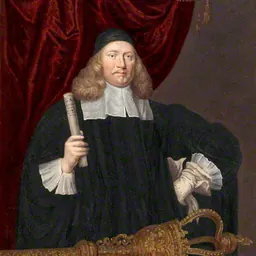
Sir Standish Hartstonge, 1st Baronet (1627–August 1701 ) was an English-born lawyer who had a distinguished career as a judge in Ireland, but was twice removed from office. He was also a very substantial landowner in Ireland and England. His last years were marked by a bitter family dispute with his eldest grandson, who inherited the baronetcy, but not the family estates, which passed to the judge's youngest surviving son.
Background and early career He was born in Norfolk, the eldest son of Francis Hartstonge of Old Catton (which is now a suburb of Norwich). His mother was Elizabeth Standish, eldest daughter and co-heiress of Sir Thomas Standish of Sandon Chapel, Surrey and Bruff, County Limerick, and his wife and cousin Faith Upton, daughter of Hamon Upton. He inherited a considerable fortune from the Standish side of the family, including lands in County Clare.
In his later years, he put up a memorial at St. Peter's Church, Bruff, in honour of his grandfather Sir Thomas Standish, which gives some useful details of his family history. It was largely rebuilt by his grandson.
He entered Middle Temple in 1657 at a relatively late age, and decided to pursue a career in Ireland. He became Recorder of Limerick, and second justice of the provincial court of Munster in 1666. He was the last holder of that office, which was abolished in 1672.
Later career He was appointed third Baron of the Court of Exchequer (Ireland) in 1680. The following year he was made a baronet, which was not an honour usually bestowed on an Irish judge at this time. It was said that the acquisition of the title was due to his independent wealth: in addition to the Bruff estates he acquired property in Hereford and a house at Oxmantown, just outside Dublin. He had a Dublin townhouse was at Little Green, off present-day Capel Street.
He was said to be in favour of a generous measure of religious toleration for Roman Catholics (which at that time often led to the accusation of being a secret Catholic oneself). Nonetheless, he was summarily removed from the Bench by the Catholic King James II in 1686, probably due to the hostility of the new Viceroy, Richard Talbot, 1st Earl of Tyrconnell, who was said to be jealous of his wealth and social standing. They had 11 children, including Francis, Standish, John, Alice and Jane. According to the memorial stone he erected in honour of his grandfather, seven of his children, three sons and four daughters, were alive in 1676.
Elizabeth died in 1663 and is commemorated by a stone plaque in St Mary's Cathedral, Limerick. His second wife was Anne Bramhall, daughter of John Bramhall, Archbishop of Armagh and Elinor Halley, who died in 1682. They had no children. His third wife was Joanna Gwynne Price, daughter of George Gwynne of Llanelwedd, Radnorshire, and his wife Sybil. Joanna was the widow of James Price and sister of Sir Rowland Gwynne, who was MP for Radnorshire, but died in a debtors' prison. She and Standish had one son, Gwynne (born 1685).
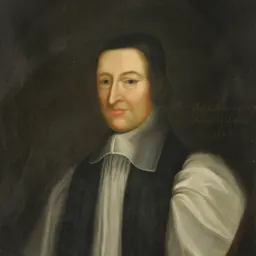
His eldest son Francis died in 1688 and the title passed to Francis's son Sir Standish Hartstonge, 2nd Baronet. and was MP for Kilkenny City from 1695 until his death in 1704. A third son John was Bishop of Ossory 1693–1714, and Bishop of Derry 1714–1717. His daughter Alice married Anthony Maude, member of the Irish House of Commons for Cashel and High Sheriff of Tipperary, and was the mother of Sir Robert Maude, 1st Baronet and of Anne, who married Jerome Ryves, Dean of St Patrick's Cathedral Dublin. Her descendants acquired the titles Viscount Hawarden and Earl de Montalt. His daughter Jane married Arthur Chamberlain Brownlow, MP for County Armagh, and was the mother of William Brownlow, who like his father was MP for Armagh. Later generations of the Brownlow family acquired the title Baron Lurgan.
Sir Standish left the bulk of his estate to his youngest son, Gwynne, a decision which resulted in a long lawsuit between Gwynne and the younger Sir Standish, which eventually went in favour of Gwynne.
Don’t just read it —
keep it.
Full-length biographies made to live with: read them, listen on the way to work, watch them tonight.
- E-book
- Audio
- Video
Instant download · yours to keep · every purchase keeps this site free
Important facts
People in Standish Hartstonge's life
Named in this biography and alive at the same time





Related people
Same field, nearest in time

Contemporaries
People whose lives overlapped Standish Hartstonge's




Frequently asked questions
Who was Standish Hartstonge?
Irish judge
When was Standish Hartstonge born?
Standish Hartstonge was born in 1627.
When did Standish Hartstonge die?
Standish Hartstonge died in 1701.
What was Standish Hartstonge's occupation?
Standish Hartstonge was a judge.
Sources & further reading
· Wikipedia: Standish Hartstonge
· DBpedia: Sir Standish Hartstonge, 1st Baronet
Cite this page
APA: Biography.guide. (2026). Standish Hartstonge. https://biography.guide/standish-hartstonge-judge/
MLA: "Standish Hartstonge." Biography.guide, https://biography.guide/standish-hartstonge-judge/.
Chicago: "Standish Hartstonge." Biography.guide. https://biography.guide/standish-hartstonge-judge/.
Data last updated: 2026-09-20 · Spot an error? Report a correction.
Page generated 2026-09-27 05:05 UTC