
About Spencer Heath
Lived 1876 – 1963 (aged 86–87). Spencer Heath was a philosopher and engineer.
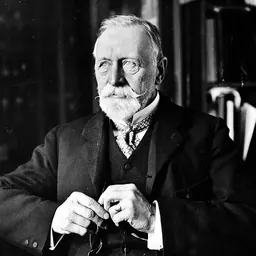
Spencer Heath (January 3, 1876, Vienna, Virginia – October 6, 1963, Leesburg, Virginia) was an American engineer, attorney, inventor, manufacturer, horticulturist, poet, philosopher of science and social thinker. A dissenter from the prevailing Georgist views, he pioneered the theory of proprietary governance and community in his book Citadel, Market and Altar. His grandson, Spencer Heath MacCallum, popularized and expounded on his ideas, most notably in his book The Art of Community.
Life and technical career Heath graduated from the Corcoran Scientific School in Washington, D.C., studying electrical and mechanical engineering. While working for the Navy Department he earned law degrees at National University Law School. In 1898 he married Johanna Maria Holm, a suffragist and friend of Susan B. Anthony. They had three daughters.
As a patent lawyer and engineering consultant his clients included Simon Lake, inventor of the even-keel-submerging submarine, and Emile Berliner, inventor of the flat-disk phonograph record. Heath helped Berliner design and build the first rotary engine blades used in helicopters. Heath founded the American Propeller Manufacturing Company in 1909 and developed and first mass-produced airplane propellers, including 70 percent of the propellers used by Americans in World War I. In 1922 he demonstrated the first engine-powered and controlled, variable and reversible pitch propeller. including research with the aim of establishing the basis for an authentic natural science of society.
Heath wrote: To obviate the essential tyranny (coercion) of political administration the proprietary authority, suitably organized, must extend its jurisdiction, and thus its revenues, by itself supplying police and other community services without coercion, out of its own revenues and properties, and thus raise its own values and voluntary incomes.
Heath's system has been the model for intentional community and "new country" projects such as Werner K. Stiefel's 1970s motel community and “Atlantis” projects.
Heath's grandson Spencer Heath MacCallum held Heath's papers in the Heather Foundation, of which MacCullum was director. Heath was good friends with, and exchanged free market insights with, alternative monetary theorist E. C. Riegel whose papers also are held by the Foundation.
Spencer MacCallum built upon and promoted his grandfather's ideas of proprietary community in his 1970 booklet The Art of Community and many articles, including "The Enterprise of Community: Market Competition, Land, and Environment" (2003) and "Looking Back and Forward" (which describes the influence of his grandfather) and Gus Dizerega's year 2000 book Persuasion, Power, and Polity: A Theory of Democratic Self-Organization. His views on community were discussed in John McClaughrey's 1995 article “Private Idahoes” in Reason Magazine, a chapter of the 2001 book City and Country, called "The Completely Decentralized City: The Case for Benefits Based Public Finance" and Gabriel Joseph Roth's 2006 book, Street Smart: Competition, Entrepreneurship, and the Future of Roads.
Heath's system differs from the standard anarcho-capitalist private defense agency (PDA) model. Heath himself eschewed the term, and did not refer to himself as an anarchist. The PDA model envisions competing security agencies in the same geographical area rather than a proprietary zone.
Citing Spencer MacCallum, economist Edward Stringham discusses how a system composed of many proprietary communities would encourage landlords to provide police in a way that their tenants value most, even if there were one provider of law in a given area. Stringham contrasts that vision with one that focuses on having multiple law enforcement agencies.
Don’t just read it —
keep it.
Full-length biographies made to live with: read them, listen on the way to work, watch them tonight.
- E-book
- Audio
- Video
Instant download · yours to keep · every purchase keeps this site free
Important facts
People in Spencer Heath's life
Named in this biography and alive at the same time




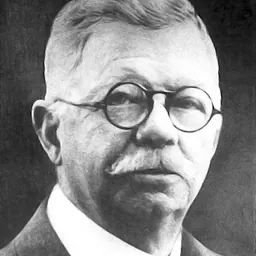

Related people
Same field, nearest in time

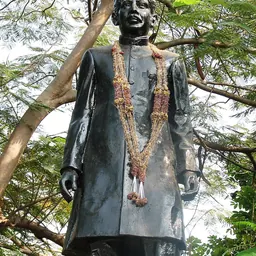



Contemporaries
People whose lives overlapped Spencer Heath's

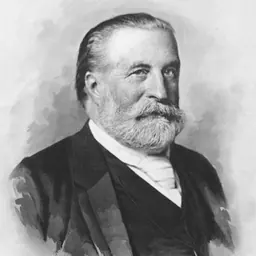
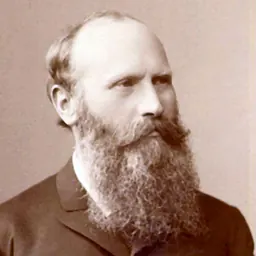
Frequently asked questions
Who was Spencer Heath?
American academic
When was Spencer Heath born?
Spencer Heath was born in 1876.
When did Spencer Heath die?
Spencer Heath died in 1963.
What was Spencer Heath's occupation?
Spencer Heath was a philosopher and engineer.
Sources & further reading
Cite this page
APA: Biography.guide. (2026). Spencer Heath. https://biography.guide/spencer-heath/
MLA: "Spencer Heath." Biography.guide, https://biography.guide/spencer-heath/.
Chicago: "Spencer Heath." Biography.guide. https://biography.guide/spencer-heath/.
Data last updated: 2026-09-20 · Spot an error? Report a correction.
Page generated 2026-09-27 05:00 UTC