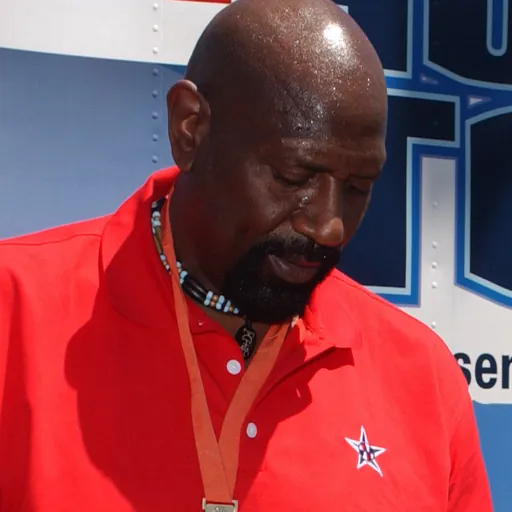
About Spencer Haywood
Born 1949. Spencer Haywood is an American basketball player.
Spencer Haywood (born April 22, 1949) is an American former professional basketball player and Olympic gold medalist. Haywood is a member of the Naismith Memorial Basketball Hall of Fame, being inducted in 2015.
Early life Haywood was born on April 22, 1949, in Silver City, Mississippi. His father died three months before he was born. He had 10 brothers and sisters and grew up in poverty on the Mississippi delta where his family worked as sharecroppers. He was born at home with a midwife, and never received a birth certificate, his name being written in a family bible to record his birth. At the age of 13, he was the main source of income for his family, earning as little as $2 a day picking cotton. residing in the Krainz Woods neighborhood. He attended Pershing High School, playing under coach Will Robinson. In 1966, age 16, at 6 ft, 7 in (2.01 m) and 220 pounds (99.8 kg), he averaged 29 points and 17 rebounds per game for Pershing's basketball team, and was named All-State in basketball. As a senior in 1967, now 6 ft, 8 in (2.03 m) tall, Haywood averaged a quadruple double per game: 25.4 points, 13 rebounds, 14 assists, and 12 blocked shots.
College career and Olympics
Haywood was originally planning to go to the University of Tennessee, but with the help of coach Robinson, instead attended Trinidad State Junior College in Trinidad, Colorado.
In the turmoil of the times, he attended a meeting before the Olympics started, that included Dr. Martin Luther King, as well as Tommie Smith, John Carlos, Lee Evans and Dr. Harry Edwards (who spearheaded the boycott effort and urged some African-American athletes to make statements during the games, though this was not expected of 19-year olds Haywood and George Foreman).
Haywood was the leading scorer on the gold medal-winning team at 16.1 points per game, and he set a Team USA field goal percentage record of .719. His record 145 points in the Olympic tournament stood until 2012 (when Kevin Durant scored 155 points; but who also had a three-point shot available unlike the 1968 games). He was named an All-American. The school retired his No. 45 in 2015. The American Basketball Association (ABA) had a similar rule, but league executive Mike Storen came up with the idea for a hardship exemption. With his mother raising 10 children while picking cotton at $2 per day in Mississippi, Haywood met the criteria. He joined the Denver Rockets after they selected him in the ABA draft.
Professional career ABA rookie season In his 1969–70 rookie season, Haywood led the ABA in both scoring at 30.0 points per game and rebounding at 19.5 rebounds per game, while leading the Rockets to the ABA's Western Division Title. In the playoffs, Denver defeated the Washington Caps in 7 games in the Western Division Semifinals (Haywood averaging 36.4 points and 19.7 rebounds a game) before falling to the Los Angeles Stars in the division finals, four games to one (Haywood averaging 37 points and 19.8 rebounds a game). He was named both the ABA Rookie of the Year and ABA MVP during the season, and became the youngest ever recipient of the MVP at the age of 21. His 986 field goals made, 1,637 rebounds, and 19.5 rebound per game average are the all-time ABA records for a season. Haywood also won the ABA's 1970 All-Star Game MVP that year after recording 23 points, 19 rebounds, and 7 blocked shots for the West team.
NBA career and Italy In 1970, despite the NBA's eligibility rules, Haywood joined the Seattle SuperSonics. To become eligible, he joined with SuperSonics owner Sam Schulman in launching an antitrust suit against the league (Haywood v. National Basketball Association). The United States District Court for the Central District of California issued a temporary injunction which allowed Haywood to begin play - a decision that was upheld in an in-chambers opinion by U.S. Supreme Court Justice Douglas. The suit and its impact on college basketball and the NBA was the focus of a 2020 book The Spencer Haywood Rule: Battles, Basketball, and the Making of an American Iconoclast, by Marc J. Spears and Gary Washburn. Shortly after the Supreme Court's opinion, the league and Haywood reached an out-of-court settlement which allowed him to stay with the Sonics permanently. After the case, the NBA revised its eligibility rules to allow for exceptions in the case of hardship. The decision allowed a significant number of high school graduates and college attendees to make themselves eligible for the NBA draft without waiting until four years after high school. Through the 2024 season, Haywood holds the following single season records for the Seattle SuperSonics/Oklahoma City Thunder franchise (The SuperSonics became the Oklahoma City Thunder prior to the 2008-09 season. ): 889 2-point field goals (1972-73), 13.4 rebounds per game (1973-74), and 43.4 minutes per game (1971-72); and holds the following single season records for the Seattle SuperSonics only: 29.2 points per game (1972-73). Haywood played in four NBA All-Star Games while with Seattle (1971-75), including a strong 23-point, 11-rebound performance in 1974. He was in the top-10 NBA MVP voting twice (1971-73) and top-20 two other times (1973-75). The 1975-76 Knicks still featured Walt Frazier, Earl Monroe and Bill Bradley, but no longer had Willis Reed or Dave DeBusschere from the 1973 championship team; and even with Haywood (19.9 points and 11.3 rebounds per game), did not make the playoffs. He later teamed with Bob McAdoo, who was traded to the Knicks 20 games into the 1976-77 season, but again the Knicks missed the playoffs. McAdoo led the team in scoring and rebounding, while Haywood averaged 16.5 points and 9 rebounds a game.
Haywood played another full year for the Knicks (1977-78), making the playoffs, but he was only averaging 26.3 minutes per game and had then career lows in scoring and rebounding. He was averaging 20.9 points and 7.8 rebounds per game when the Knicks traded him to the New Orleans Jazz 34 games into the 1978-79 season for Joe Meriweather. He finished the season averaging 24 points and 9.6 rebounds per game for the Jazz, but he would never approach those numbers again.
The next season Haywood played in Italy for Reyer Venezia Mestre (then under the sponsor name "Carrera Reyer Venezia") along with Dražen Dalipagić, before returning to the NBA to play two seasons with the Washington Bullets (1981-83).
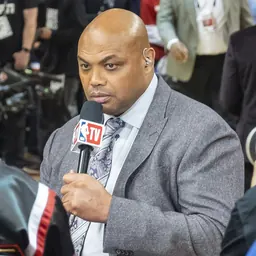
Legacy and honors Haywood was inducted into the Naismith Memorial Basketball Hall of Fame in September 2015. Charles Barkley played an important role in advocating for Haywood's inclusion.
ABA and NBA career statistics
†Denotes seasons in which Haywood's team won an NBA championship*Led the league*ABA record
Regular season
Playoffs
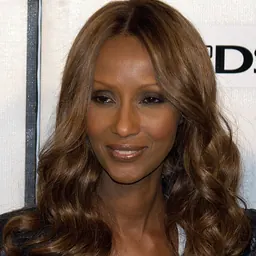
Personal life Haywood currently resides in Las Vegas. He married fashion model Iman in 1977. Their daughter, Zulekha, was born the following year. Haywood remarried in 1990, to Linda (Fay); they were together until her death in 2022. Together, they had three daughters: Courtney Nikkiah, Shaakira, and Isis Chanel. As of early 2024, Haywood had three grandchildren: two grandsons from two of his younger daughters, and a granddaughter from Zulekha named Lavina.
Haywood was lifelong friends with Lonnie Lynn, his teammate on the Denver Rockets, until Lynn's death in 2014. He is the godfather of Lynn's son, rapper Common. and New York (1976–1978, WRVR).
Haywood was featured in the first season of the HBO show, Winning Time: The Rise of the Lakers Dynasty, where he was portrayed by actor Wood Harris.
Don’t just read it —
keep it.
Full-length biographies made to live with: read them, listen on the way to work, watch them tonight.
- E-book
- Audio
- Video
Instant download · yours to keep · every purchase keeps this site free
Important facts
People in Spencer Haywood's life
Named in this biography and alive at the same time





Related people
Same field, nearest in time
Contemporaries
People whose lives overlapped Spencer Haywood's

Frequently asked questions
Who is Spencer Haywood?
American basketball player
When was Spencer Haywood born?
Spencer Haywood was born on 22 April 1949 in Silver City.
What is Spencer Haywood's occupation?
Spencer Haywood is a basketball player.
What nationality is Spencer Haywood?
Spencer Haywood is American.
Sources & further reading
Cite this page
APA: Biography.guide. (2026). Spencer Haywood. https://biography.guide/spencer-haywood/
MLA: "Spencer Haywood." Biography.guide, https://biography.guide/spencer-haywood/.
Chicago: "Spencer Haywood." Biography.guide. https://biography.guide/spencer-haywood/.
Data last updated: 2026-09-22 · Spot an error? Report a correction.
Portrait: Wikimedia Commons · author & licence
Page generated 2026-09-27 05:04 UTC