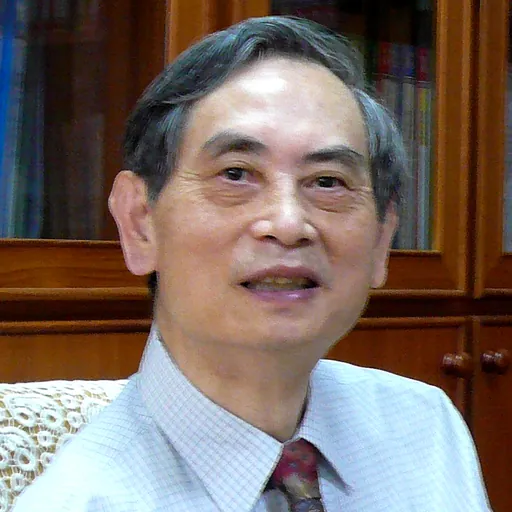
About Sow-Hsin Chen
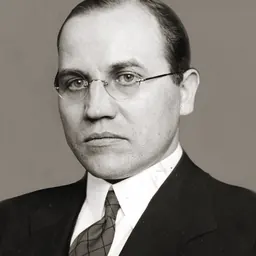
Lived 1935 – 2021 (aged 85–86). Sow-Hsin Chen was a Taiwanese physicist, nuclear physicist and university teacher.
Sow-Hsin Chen (; 1935 – 26 June 2021), was a Taiwanese physicist and a professor emeritus at the Massachusetts Institute of Technology (MIT). He was a recognized pioneer in the research of the dynamic properties of supercooled and interfacial water with the use of neutron scattering techniques. As an educator, he was recognized for his training of young scientists in the use of those same techniques. Regarding hydrogen storage, his research focused on the use of activated carbon to allow hydrogen to be stored at room temperature.
Early life and education Chen was born to a Hoklo Taiwanese family. He received his Bachelor of Science (B.S.) in physics from National Taiwan University in 1956, and his Master of Science (M.S.) in physics from National Tsing Hua University in 1958. He then moved to the U.S. with a fellowship from the International Atomic Energy Agency and obtained a M.S. in nuclear science from the University of Michigan in 1962, and his Ph.D. in physics from McMaster University, Canada, in 1964 under the Nobel laureate Bertram N. Brockhouse.
Chen received his postdoctoral training at the Atomic Energy Research Establishment (AERE) in Harwell, U.K. with Professor Peter A. Egelstaff during 1966–1967. Between 1967 and 1968, he was a research fellow at Harvard University with Nobel laureate Nicolaas Bloembergen before joining the MIT faculty in 1968. "Quantum Theory of Interaction of Radiation with Matter," "Statistical Thermodynamics of Complex Liquids," and "Photons and Neutrons Scattering Spectroscopy in Condensed Matter Physics."
Chen contributed significantly to the development of the technique of the Photon Correlation Spectroscopy (PCS). He constructed the first 128-channel digital photon correlator in the U.S. in 1970 and applied it to investigate critical phenomenon in a binary liquid mixture. This type of digital correlator has since become the basic tool for the modern PCS. He applied PCS to studies of dynamic critical phenomena in binary liquid mixtures; the coexistence of critical phenomena and percolation transition in three-component microemulsions and copolymer micellar solutions; and ergodic to non-ergodic transitions when crossing the kinetic glass transition line of a copolymer micellar system with a short-range attraction.
Since 2004, Chen et al. studied liquid state physics with regard to the structure and dynamics of supercooled water. They studied supercooled confined water by a high-resolution Quasielastic neutron scattering (QENS) technique, and this led to the discovery of the likelihood of a second low-temperature critical point in water in 2005. He was reported in Nature as "A physicist ventures into the no-man's land of water to find the source of its unusual properties" Subsequently, one of his peer-reviewed scientific articles received the 2006 PNAS Editorial Board Cozzarelli Award for its outstanding scientific excellence and originality. In 2006, his group discovered a density minimum in deeply supercooled confined water which further demonstrated the plausibility of the existence of the second critical point in supercooled water.
Recently, his work has been highlighted several times in MIT News.
Other activities Chen was active as an organizer of domestic and over 20 international conferences and symposia as well as the NATO Advanced Study Institutes. He served as chairman of a Gordon Conference on Physics and Chemistry of Water in 1986. He was also active as a consultant to developing countries with regard to their nuclear power development programs. He served as an advisor to the National Science Council and the Institute of Nuclear Energy Research of the Republic of China (ROC), and the Korea Atomic Energy Research Institute (KAERI) of the Republic of Korea on the matter of nuclear power planning and development in the respective countries since 1972. In 2006 and 2008, Chen was the organizer and U.S. Chairman of the first and second Joint Symposia on Neutron Sciences and Technology in China, jointly sponsored by the US National Science Foundation and the Chinese counterpart agencies.
He was a member of numerous national advisory or review committees, including the U.S. National Pulsed Neutron Sources, IPNS/LANSCE at Argonne National Laboratory, the Solid State and Chemical Technology Divisions of Oak Ridge National Laboratory, the U.S. National Science Foundation's Engineering Research Center, the Basic Energy Sciences Division of the Department of Energy, and the Collaborative Instrumentation Block Grant of the National Institutes of Health. Since 2009, he has been a Beamline Advisory Team (BAT) member of National Synchrotron Light Source (NSLS)-II of Brookhaven National Laboratory.
Personal life Chen met Dr. Ching-chih Chen in 1959 while both were studying at the University of Michigan. They married in 1961 and moved to Canada the following summer where he completed his doctorate at McMaster University. Together they raised two daughters and a son. 2000, Messina, Italy; 2005, Florence, Italy; and 2010, Florence, Italy )
Honors and awards Chen was a Fellow of the American Association for the Advancement of Science (1985), the American Physical Society, and the Neutron Scattering Society of America.
Selected honors 2008 - Elected as Academician of Academia Sinica, and Recipient of the 2008 Clifford G. Shull Prize in Neutron Science from the Neutron Scattering Society of America.
1995 - As a Fellow of the Japan Society for the Promotion of Science, he spent a month in Kyoto University in addition to conducting a lecture tour to many Japanese universities and research institutes.
1987-88 - The Alexander von Humboldt Senior Distinguished U.S. Scientist Award, in recognition of scientific achievement in research and teaching, from Germany and the "revisit" award in the summer of 1995.
Don’t just read it —
keep it.
Full-length biographies made to live with: read them, listen on the way to work, watch them tonight.
- E-book
- Audio
- Video
Instant download · yours to keep · every purchase keeps this site free
Important facts
Family & relationships
People in Sow-Hsin Chen's life
Named in this biography and alive at the same time



Related people
Same field, nearest in time



Contemporaries
People whose lives overlapped Sow-Hsin Chen's




Frequently asked questions
Who was Sow-Hsin Chen?
physicist (1935–2021)
When was Sow-Hsin Chen born?
Sow-Hsin Chen was born in 1935 in Chiayi City.
When did Sow-Hsin Chen die?
Sow-Hsin Chen died on 26 June 2021 in West Newton.
What was Sow-Hsin Chen's occupation?
Sow-Hsin Chen was a physicist, nuclear physicist and university teacher.
What nationality was Sow-Hsin Chen?
Sow-Hsin Chen was Taiwanese.
Sources & further reading
Cite this page
APA: Biography.guide. (2026). Sow-Hsin Chen. https://biography.guide/sow-hsin-chen/
MLA: "Sow-Hsin Chen." Biography.guide, https://biography.guide/sow-hsin-chen/.
Chicago: "Sow-Hsin Chen." Biography.guide. https://biography.guide/sow-hsin-chen/.
Data last updated: 2026-09-22 · Spot an error? Report a correction.
Portrait: Wikimedia Commons · author & licence
Page generated 2026-09-27 05:01 UTC