
About Sophie Taeuber-Arp
Lived 1889 – 1943 (aged 53). Sophie Taeuber-Arp was a Swiss, German and French painter, sculptor, architect, dancer, teacher and illustrator.
Sophie Henriette Gertrud Taeuber-Arp (; 19 January 1889 – 14 January 1943) was a Swiss artist, painter, sculptor, textile designer, furniture and interior designer, architect, and dancer.
Born in 1889 in Davos and raised in Trogen, Switzerland, she attended a trade school in St. Gallen and, later, art schools in Germany, before moving back to Switzerland during the First World War. At an exhibition in 1915, she met for the first time the German-French artist Jean Arp,
From 1906 till 1910 she studied textile design at the trade school (Gewerbeschule, today School of Applied Arts) in St. Gallen. She then moved on to the workshop of Wilhelm von Debschitz at his school in Munich, where she studied in 1911 and again in 1913. In between, she studied for a year at the School of Arts and Crafts (Kunstgewerbeschule) in Hamburg. In 1914 World War I started, so she returned to Switzerland. In the same year, she attended the Laban School of Dance in Zürich, and in the summer she joined the artist colony of Monte Verita in Ascona. In 1917, she danced with Suzanne Perrottet, Mary Wigman and others at the Sun Festival organised by Laban in Ascona. From 1916 to 1929, Taeuber was an instructor at the Kunstgewerbeschule Zürich, teaching embroidery and design classes.
Dada
In 1915, at an exhibition at the Tanner Gallery, she met the Dada artist Jean Arp, who had moved to Zürich in 1915 to avoid being drafted by the German Army during the First World War.
Taeuber-Arp taught weaving and other textile arts at the Kunstgewerbeschule Zürich (now Zurich University of the Arts) from 1916 to 1929. Her textile and graphic works from around 1916 through to the 1920s are among the earliest Constructivist works, along with those of Piet Mondrian and Kasimir Malevich. These sophisticated geometric abstractions reflect a subtle understanding of the interplay between colour and form. A year later, she was a co-signer of the Zürich Dada Manifesto. As both a dancer and painter, Taeuber was able to incorporate Dada in her movement for dancing and was described as obscure and awkward.
She also made a number of sculptural works, such as a set of abstract "Dada Heads", including the Tête Dada of turned polychromed wood. With their resemblance to the ubiquitous small stands used by hatmakers, they typified her elegant synthesis of the fine and applied arts.
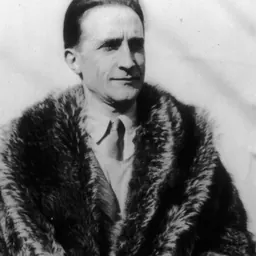
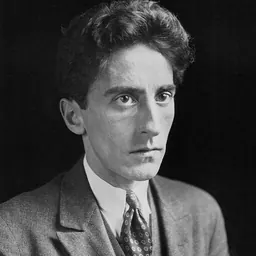
Taeuber-Arp was also a close friend and contemporary of the French-Romanian avant-garde poet, essayist, and artist, Tristan Tzara, one of the central figures of the Dada movement. In 1920, Tzara solicited over four dozen Dadaist artists, among which were Taeuber-Arp, Jean Arp, Jean Cocteau, Marcel Duchamp, and Hannah Höch. Tzara planned to use the contributed text and images to create an anthology of Dada work entitled Dadaglobe. A worldwide release of 10,000 copies was planned, but the project was abandoned when its main backer, Francis Picabia, distanced himself from Tzara in 1921.
The Guardian called her a "radical artist who brought joy to the dada". Though dada has been described as an early form of subversive pop culture likened by some to the punk subculture, critics have said that Taeuber's artworks were not angry but "joyous abstractions", created as part of a movement that has been called revolutionary for its influence challenging the established conventions of art by "playing with blocks and blobs of colour, moving them around randomly, letting patterns emerge by chance, in a kind of visual jazz."
France
Between 1926 and 1928 Taeuber-Arp spent time in Strasbourg, her husband had moved to Strasbourg in order to fulfill the residency requirements for French citizenship. In Strasbourg Taeuber-Arp completed her first architecture and interior design commission. Taeuber-Arp and her husband both took up French citizenship, after which they divided their time between Strasbourg and Paris. There Taeuber-Arp received numerous commissions for interior design projects. She was commissioned to create a radically Constructivist interior for the Café de l'Aubette – a project on which Jean Arp and de Stijl artist Theo van Doesburg eventually joined her as collaborators. In 1927, she co-authored a book entitled Welly Lowell with Blanche Gauchet. Their new home served as a meeting place, bringing together artists and writers like Nelly van Doesburg, Max Ernst, James Joyce, and Meret Oppenheim, among many others. She was an exhibitor at the Salon des surindépendents in Paris between 1929 and 1930.
In the 1930s, she was a member of the group Cercle et Carré, founded by Michel Seuphor and Joaquín Torres García as a standard-bearer of non-figurative art, and its successor, the Abstraction-Création group (1931–34). Taeuber-Arp explored the circle which represented the cosmic metaphor, the form that contains all others. She referred to this period as “ping pictures”. She appears to be the first artist to use polka dots in fine art with works such as the 1934 Dynamic Circles, following in the footsteps of Kazimir Malevich and his 1915 Black Circle.
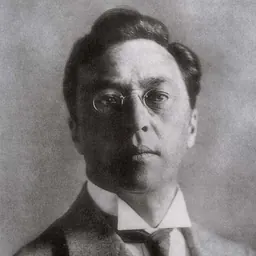
Later in the decade Taeuber-Arp founded a Constructivist review, Plastique (Plastic) in Paris. Her circle of friends included the artists Sonia Delaunay, Robert Delaunay, Wassily Kandinsky, Joan Miró, and Marcel Duchamp.
In 2014, at the Danser sa vie dance and art exhibition at the Centre Georges Pompidou in France, a photograph was displayed of Taeuber-Arp dancing in a highly stylized mask and costume at the Cabaret Voltaire in 1917.
Taeuber-Arp was the only woman on the eighth series of Swiss banknotes; her portrait was on the 50-franc note from 1995 to 2016. Taeuber-Arp and Jean Arp opened in 2007 in a section of the Rolandseck railway station in Germany, re-designed by Richard Meier.
On 19 January 2016, Google created a Google Doodle for Taeuber-Arp to commemorate her 127th birthday. The doodle was made by Mark Holmes.
Exhibitions Taeuber-Arp took part in numerous exhibitions. For example, she was included in the first Carré exhibition at the Galeries 23 (Paris) in 1930, along with other notable early 20th-century modernists. In 1943, Taeuber-Arp was included in Peggy Guggenheim's show Exhibition by 31 Women at the Art of This Century gallery in New York. Many museums around the world have her work in their collections, but in the public consciousness her reputation lagged for many years behind that of her more famous husband. Sophie Taeuber-Arp began to gain substantial recognition only after the Second World War, and her work is now generally accepted as in the first rank of classical modernism. An important milestone was the exhibition of her work at documenta 1 in 1955.
In 1970, an exhibit of Taeuber-Arp's work was shown at the Albert Loeb Gallery in New York City.
Then, in 1981, the Museum of Modern Art (New York) mounted a retrospective of her work that subsequently travelled to the Museum of Contemporary Art (Chicago), the Museum of Fine Arts (Houston), Musée d'art contemporain de Montréal.
In 2020, Hauser & Wirth opened an online exhibition devoted to her work, the first in a series of international exhibitions devoted to her career. In 2021 the Kunstmuseum Basel presented a retrospective entitled Sophie Taeuber-Arp: Living Abstraction. The show traveled to the Tate Modern (15 July – 17 October) and then to the MoMA. Showing over 400 pieces, it was the UK's first retrospective of her work, and, in America, it was the most comprehensive
Taeuber-Arp's work was included in the travelling exhibition Women in Abstraction that started in 2021 at the Centre Pompidou.
Gallery
Don’t just read it —
keep it.
Full-length biographies made to live with: read them, listen on the way to work, watch them tonight.
- E-book
- Audio
- Video
Instant download · yours to keep · every purchase keeps this site free
Important facts
more
Sophie Taeuber, Sophie Henriette Taeuber-Arp, Sophie Henriette Taeuber Arp, Sophie Henriette Arp-Taeuber, Sophie Henriette Taeuber, Sophie Henriette Gertrude Taeuber-Arp, Sophie Henriette Gertrud Taeuber-Arp, Sophie Henriette Gertrud Arp, Sophie Täuber-Arp, nee Taeuber Taeuber -Arp, Taeuber-Arp, Sophie H. Taeuber-ArpFamily & relationships
People in Sophie Taeuber-Arp's life
Named in this biography and alive at the same time



Related people
Same field, nearest in time



Contemporaries
People whose lives overlapped Sophie Taeuber-Arp's


Frequently asked questions
Who was Sophie Taeuber-Arp?
Swiss artist (1889–1943)
When was Sophie Taeuber-Arp born?
Sophie Taeuber-Arp was born on 19 January 1889 in Davos.
When did Sophie Taeuber-Arp die?
Sophie Taeuber-Arp died on 14 January 1943 in Zurich.
What was Sophie Taeuber-Arp's occupation?
Sophie Taeuber-Arp was a painter, sculptor, architect, dancer, teacher and illustrator.
What nationality was Sophie Taeuber-Arp?
Sophie Taeuber-Arp was Swiss, German and French.
Sources & further reading
· Wikipedia: Sophie Taeuber-Arp
Cite this page
APA: Biography.guide. (2026). Sophie Taeuber-Arp. https://biography.guide/sophie-taeuber-arp/
MLA: "Sophie Taeuber-Arp." Biography.guide, https://biography.guide/sophie-taeuber-arp/.
Chicago: "Sophie Taeuber-Arp." Biography.guide. https://biography.guide/sophie-taeuber-arp/.
Data last updated: 2026-09-20 · Spot an error? Report a correction.
Page generated 2026-09-27 05:33 UTC