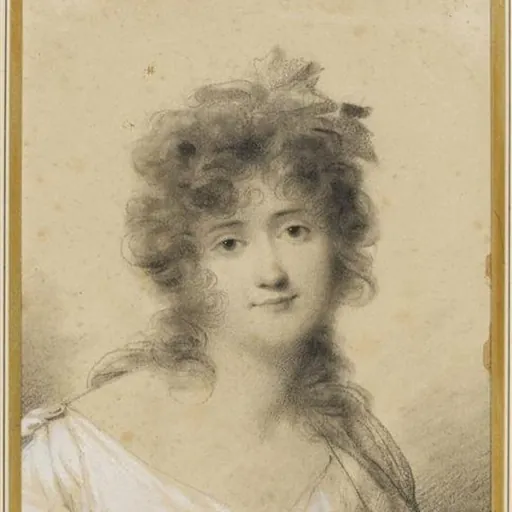
About Sophie Gay
Lived 1776 – 1852 (aged 75). Sophie Gay was a French salonnière, librettist, writer, playwright, novelist and composer.
Marie Françoise Sophie Gay (born Nichault de la Valette; 1 July 1776 – 2 March 1852) was a French author who was born in Paris.
Biography Marie Françoise Sophie Nichault de la Vallette was the child of Francesca Peretti, an Italian woman and of Auguste Antoine Nichault de la Vallette, an entrepreneur who worked for King Louis XVIII.
She was married in 1794 to Gaspard Liottier (or Gaspar Liottier). She divorced in 1799 to marry another, Jean Sigismond Gay (1768–1822), the mayor of Lupigny, originally from Aix-les-Bains and with a close association to the French treasury, under the French First Empire. He was the contrôleur-général for the Ruhr.
She published her first written work in 1802, defending the art of the novel. Delphine by Germaine de Staël, wrote an open letter to the Journal de Paris.
That year her first published work, the novel Laure d’Estell, was anonymously published, on the advice of her publisher Sir Stanislas de Boufflers and Joseph-Alexandre Pierre de Ségur, Viscount of Ségur.
Legacy
Gay was the mother of the writer Delphine de Girardin, and her son-in-law married the chanteuse Sophie Gail.
In 1818 she wrote the libretto for the opéra comique by Regnard, which Sophie Gail set to music. In 1821, she was working on by Alexandre Duval, and a comic opera entitled le Maitre de Chapelle ("Master of the House", not to be confused with Master of the House from Les Misérables (musical)).
In the meantime, Gay was also writing many others comedies and dramas. The comedy ("The widow of the tanner"), was a huge success at the Castellane, but the Duchesse de Châteauroux bombed at the Théâtre de l'Odéon.
She also wrote several "novel novels", , as penny dreadfuls, for La Presse. She also published numerous romantic songs, accompanied on the piano, for which she wrote both the words and music: Maris is perhaps a best example, although she would also write in the elegiac style.
After being widowed, between 1826 and 1827, she took a grand tour to Italy with son.
In the later years of her life, Gay lived at Versailles during the "season". One of her daughters became the Countess O'Donnell, the other, was more famously known by the name of Delphine de Girardin, the wife of Émile de Girardin.
Works Laure d’Estell, par Mme ***; Paris, 1802, 3 vol. in-12; Léonie de Montbreuse, Paris, 1813 et 1823, 2 vol. in-12; La seconde édition n’est pas anonyme. Anatole, Paris, 1815 et 1822, 2 vol. in-12; Les Malheurs d’un Amant heureux, ouvrage traduit de l’anglais, par M***, auteur de plusieurs ouvrages connus; Paris, 1818; reproduit sous le titre : les Malheurs d’un Amant heureux, ou mémoires d’un aide-de-camp de Napoléon écrits par son valet de chambre, Paris, 1823, 3 vol. in-8°; Le Marquis de Pomenars, comédie en un acte et en prose, Paris, Ladvocat, 1820, in-8°; Une Aventure du chevalier de Grammont, comédie en trois actes et en vers, Paris, 1822, in-8°; Marie, ou la pauvre fille, drame en trois actes et en prose, Paris, 1824, in-8°; Théobald, épisode de la guerre de Russie, Paris, 1828, 4 vol. in-12; Le Moqueur amoureux, Paris, 1830, 2 vol. in-8°; Un Mariage sous l’empire, Paris, 1832, 2 vol. in-8°; Scènes du jeune âge, Paris, 1833, 2 vol. in-8°; la Physiologie du Ridicule, Paris, 1833, 2 vol. in-8°; Souvenirs d’une vieille femme, Paris, Michel Lévy frères, 1834, in-8°: extrait des Mémoires de l’auteur; La Duchesse de Châteauroux, Paris, 1834 et 1839, 2 vol. in-8°; Le Chevalier de Canolle, opéra comique en trois actes, music by Hippolyte-Honoré-Joseph Court de Fontmichel; Paris, 1836, in-8°; la Comtesse d’Egmont, Paris, 1836, 2 vol. in-8°; Les Salons célèbres, Paris, Dumont, 1837, 2 vol. in-8°; Marie de Mancini, Paris, 1840, 2 vol. in-8°; Marie-Louise d’Orléans, Paris, 1842, 2 vol. in-8°; la Duchesse de Chateauroux, drame en quatre actes, joué sur le second Théâtre-Français, le 25; Paris, 1844, grand in-8°; Ellénore, Paris, 1844–1846, 4 vol. in-8°; Le joui Frère, Paris, 1845, 3 vol. in 8"; Le Comte de Guiche, Paris, 1845, 3 vol. in-8°; Le Mari confident, Paris, 1849, 2 vol. in-8°; Société du Travail à domicile, discours suivi d’une pétition en vers en faveur de cette œuvre, Versailles, 1849, in-8°. Œuvres complètes de Sophie Gay, Paris, M. Lévy, 1864–1885
Autobiography For an account of her daughter, Delphine Gay, her mother's work of 1834, Souvenirs d'une vieille femme ("memoirs from an old woman. See also Théophile Gautier's Portraits contemporains and Sainte-Beuve's, Causeries du lundi (Monday's chats, essentially).
Her niece was the writer Hortense Allart.
Don’t just read it —
keep it.
Full-length biographies made to live with: read them, listen on the way to work, watch them tonight.
- E-book
- Audio
- Video
Instant download · yours to keep · every purchase keeps this site free
Important facts
more
Sophie Gay (writer)People in Sophie Gay's life
Named in this biography and alive at the same time

Related people
Same field, nearest in time
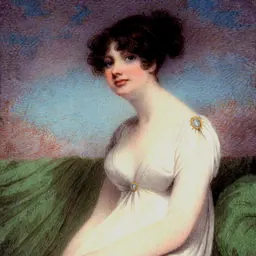
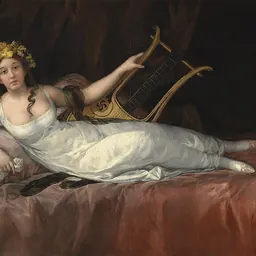
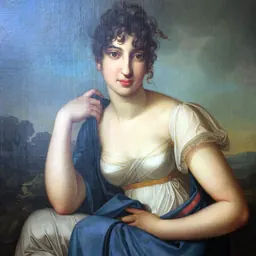


Contemporaries
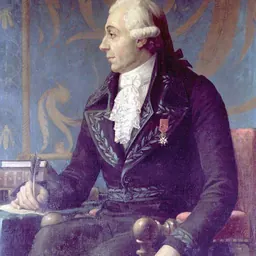
People whose lives overlapped Sophie Gay's


Frequently asked questions
Who was Sophie Gay?
French writer (1776–1852)
When was Sophie Gay born?
Sophie Gay was born on 1 July 1776 in Paris.
When did Sophie Gay die?
Sophie Gay died on 5 March 1852 in former 2nd arrondissement of Paris.
What was Sophie Gay's occupation?
Sophie Gay was a salonnière, librettist, writer, playwright, novelist and composer.
What nationality was Sophie Gay?
Sophie Gay was French.
Sources & further reading
Cite this page
APA: Biography.guide. (2026). Sophie Gay. https://biography.guide/sophie-gay/
MLA: "Sophie Gay." Biography.guide, https://biography.guide/sophie-gay/.
Chicago: "Sophie Gay." Biography.guide. https://biography.guide/sophie-gay/.
Data last updated: 2026-09-22 · Spot an error? Report a correction.
Portrait: Wikimedia Commons · author & licence
Page generated 2026-09-27 05:01 UTC