
About Sonny Brogan
Lived 1907 – 1965 (aged 57). Sonny Brogan was an Irish musician.
Background
Sonny Brogan was born in Dublin, the eldest of three children born to Alicia Brown and Andrew Brogan. On a holiday trip to Kildare as a young boy, he first heard Irish music played on the accordion by his great uncle, Thomas Cleary. His mother, when opening luggage on returning home, found a melodeon hidden there by Sonny who had taken a fancy to it. He was allowed to keep the instrument and taught himself to play it.
Growing up, he attended music classes for piano, and learned how to read basic music notation. He soon found, however that his ear served him better as a teacher, and abandoned "paper music" as he called it. The teacher in question offered to teach Sonny free of charge if he returned, but he declined.
1930s and 1940s
In the 1930s and 1940s, alongside his close friend Bill Harte, he played with the Lough Gill Quartette. Sonny gathered a lot of tunes from Bill Harte, some of which he would write down in tonic sol-fa for the record, and others which he simply memorised. Bill Harte and Sonny Brogan saw the potential for Irish music making in the button accordion pitched B/C and subsequently devised and disseminated the fingering method". One of the tunes Sonny recorded with the Lough Gill Quartette, "Toss the Feathers" (78 rpm His Master's Voice IM948), was his own composition, and he took great pride in playing it on selected occasions.
Sonny went to England briefly in the 1940s, and on his return, George Rowley, a fiddler originally from County Leitrim, and Ned Stapleton, a flute player from Dublin, wrote "Sonny's Return" in his honour. Stapleton originally called it "The Wanderer's Return", but it is more commonly known as "Sonny's Return".
A regular in The Piper's Club in Thomas Street, Dublin, Sonny played alongside John Kelly Sr, Tom Mulligan, Tommy Potts, piper Tommy Reck, Leo Rowsome, Sean Seery and many other traditional musicians of the day. Sonny had his own Céilí Dance Band during the 1940s who played in Barry's Hotel and in the Teachers' Club, Parnell Square, Dublin.
"Sonny Brogan's Mazurka" is a known Irish Mazurka When the accordion player, Tony MacMahon, came to Dublin in 1957, he sought out Sonny Brogan for lessons. Brogan encouraged his students to develop their own individual style and not to copy other players.
Sonny Brogan spent much time with Irish accordion player James Keane in the 1950s and 1960s, and regularly played together with Keane in 'The Fiddlers' club with many other well-known musicians, including John Egan, "Hυgе″ Tom Mulligan, Finbar Furey and Ted Furey, Des O'Connor, John Joe Gannon and John Joe, Patrick Keane Seán Keane and Mick O'Connor.
Sonny also frequented John Kelly's shop at the end of Capel Street, Dublin, usually to discuss the intricacies of tunes, as customers came and went.
1960s
Sonny was one of the original musicians selected by Seán Ó Riada in 1960 to perform music for the play The Song of the Anvil by Bryan MacMahon, and subsequently became one of the original members of Ceoltóirí Chualann.
In 1963, Sonny wrote an article for the folk music journal Ceol,
"Gorman's Reel" and "The Hut in the Bog" were released by RTÉ Funduireacht an Riadaigh, on the triple album Our Musical Heritage (FR003) in 1980.
In May 1964 Senator Edward Kennedy visited Ireland. The Irish Independent of May 30 reports that he made "...an unexpected call on one of Dublin's 'singing pubs' last night and stayed for half an hour listening to Irish ballads including several about the Kennedy's ancestral county of Wexford". He was returning from a reception when the cavalcade drew up outside the licensed premises of Mr. Paddy O'Donoghue, Merrion Row, and lively ballads were played by various musicians including Sonny Brogan on accordion, playing with Ronnie Drew, Barney McKenna and Ciaran Bourke.
John Kelly, the fiddle player, has said that Sonny was the best musician he had ever heard of for his vast knowledge of tunes and the fact that he could remember all the different versions and names of each tune and the history behind them.
Desún MacLiam wrote of him "Is cinnte nach mbéidh a leithéid arí againn" (It is certain we will never have the likes of him again)
Éamon de Buitléar did a special programme on Radio Éireann devoted to Sonny Brogan, on 19 March 1965. Ciarán Mac Mathúna also had often included some of Sonny's recordings in his radio programmes.
Seán Ó Riada published the following tribute following Sonny's death:
Don’t just read it —
keep it.
Full-length biographies made to live with: read them, listen on the way to work, watch them tonight.
- E-book
- Audio
- Video
Instant download · yours to keep · every purchase keeps this site free
Important facts
People in Sonny Brogan's life
Named in this biography and alive at the same time


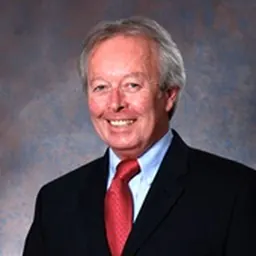
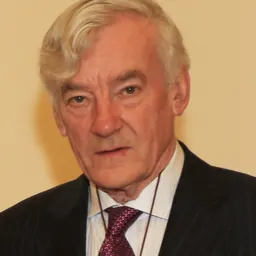

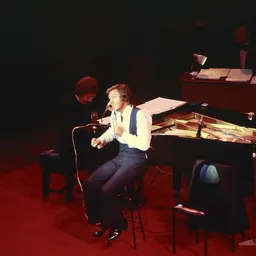
Related people
Same field, nearest in time
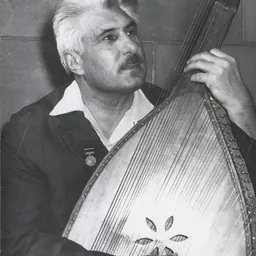


Contemporaries
People whose lives overlapped Sonny Brogan's



Frequently asked questions
Who was Sonny Brogan?
Irish musician (1907–1965)
When was Sonny Brogan born?
Sonny Brogan was born on 4 July 1907 in Dublin.
When did Sonny Brogan die?
Sonny Brogan died on 1 January 1965.
What was Sonny Brogan's occupation?
Sonny Brogan was a musician.
What nationality was Sonny Brogan?
Sonny Brogan was Irish.
Sources & further reading
Cite this page
APA: Biography.guide. (2026). Sonny Brogan. https://biography.guide/sonny-brogan/
MLA: "Sonny Brogan." Biography.guide, https://biography.guide/sonny-brogan/.
Chicago: "Sonny Brogan." Biography.guide. https://biography.guide/sonny-brogan/.
Data last updated: 2026-09-20 · Spot an error? Report a correction.
Page generated 2026-09-27 05:31 UTC