
About Song Qiqiu
Lived 887 – 959 (aged 71–72). Song Qiqiu was a poet.
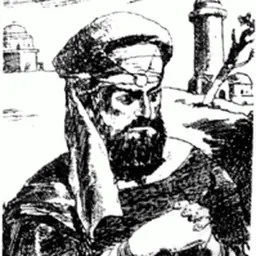
Song Qiqiu (887–959), courtesy name Zisong, formally Duke Chouliao of Chu , was the chief strategist of Emperor Liezu of Southern Tang (Xu Zhigao/Li Bian), the founding emperor of the Chinese Five Dynasties and Ten Kingdoms period state Southern Tang. His strategies were viewed as instrumental in allowing Xu Zhigao to consolidate his power during the latter part of the regency of Xu Wen, Xu Zhigao's adoptive father and regent of Wu, eventually allowing Xu Zhigao to take over the Wu state and take the throne as the emperor of Southern Tang. After the establishment of Southern Tang, Song had a falling out with Emperor Liezu and largely lost his power, but became powerful again during the reign of Emperor Liezu's son Emperor Yuanzong, until he eventually lost the trust of the emperor and committed suicide in 959.
Background Song Qiqiu was born in 887, during the late Tang dynasty. His family had been from Luling (廬陵, in modern Ji'an, Jiangxi) for generations. In his youth, he was studious and ambitious, and was particularly well-learned in strategies.
Song Qiqiu's father Song Cheng , at some point, served as the deputy military governor to the late Tang warlord Zhong Chuan the military governor of Zhennan Circuit (鎮南, headquartered in modern Nanchang, Jiangxi). After Song Cheng's death, Song Qiqiu thus remained at Zhennan and became dependent on Zhong and Zhong's family (apparently including Zhong's son and successor Zhong Kuangshi).
During Hongnong/Wu In 906, Zhennan was conquered by Yang Wo, the ruler of rival Huainan Circuit (淮南, headquartered in modern Yangzhou, Jiangsu). With the Zhongs thus no longer in control, Song Qiqiu became impoverished, and was forced to follow a group of people to head to Huainan proper to try to make a living. He eventually was forced to work for a house of prostitution run by a Lady Wei, apparently at Sheng Prefecture (昇州, in modern Nanjing, Jiangsu). Lady Wei supplied him with money, and he eventually took her as his wife. When, as Song anticipated, the senior general Zhu Jin started an uprising at Guangling in 918 and killed Xu Zhixun, Xu Zhigao was able to cross the river easily and put down the disturbance quickly. With Xu Wen's other biological sons all being young, Xu Wen thus left Xu Zhigao as the junior regent at Guangling, replacing Xu Zhixun.
Xu Zhigao changed from the ways that Xu Zhixun misruled and gained the trust of the people and the officials. Song continued to serve as Xu Zhigao's chief strategist. In particular, it was said that it was Song who advocated a major reduction in the silk tax to encourage the people to produce silk, and that after Xu Zhigao adopted the suggestion, the region between the Yangtze and the Huai River became very wealthy. Xu Zhigao wanted to promote Song to higher position, but Xu Wen disliked Song and left him at a relatively low rank, as an army secretary. Nevertheless, it was said that Xu Zhigao and Song would nightly converse in private at a pavilion by the river, or in a hall with no barriers but with a great furnace, for them to use pokers to write in the ash, thus allowing them to quickly erase whatever they wrote to each other and keep their conversation secret. was Song promoted, eventually to be the deputy minister of defense (兵部侍郎, Bingbu Shilang).
By 933, under Song's advice, Xu Zhigao was considering moving the capital (and the emperor) from Guangling to Jinling. He was also considering seizing the Wu throne and become emperor himself, but as Yang Pu was known to be careful and without fault as an emperor, he was initially intending on waiting for the next Wu emperor to take the throne before seizing imperial title, an intent that Song agreed with. In spring 934, though, when the officer Zhou Zong observed Xu Zhigao complaining about his white facial hair, Zhou, realizing that Xu Zhigao did not want to wait any further, volunteered to go to Guangling himself to hint to Yang Pu that he should yield the throne. When Song realized what Zhou was doing, however, he became resentful that Zhou would take this initiative, and instead took the stand of opposing it, arguing that the time was not appropriate, yet. He further requested that Zhou be executed as an apology to the emperor. As a result, Xu Zhigao demoted Zhou out of the headquarters to serve as the deputy military prefect of Chi Prefecture (池州, in modern Chizhou, Anhui). Later, though, when other officers Li Jianxun and Xu Jie also suggested that Xu Zhigao quickly take the throne, Xu Zhigao summoned Zhou back to headquarters, and thereafter began to distance himself from Song. Indeed, later in the year, Xu Zhigao summoned Song back to Jinling to serve as his deputy in his position as the supreme commander of all circuits, but gave him no real responsibilities. When Song thereafter asked to retire, Xu Zhigao gave him a garden as a gift.
In 936, after Xu Zhigao assumed the greater title as generalissimo, he made Xu Jingtong deputy generalissimo, and made Song and Xu Jie deputies to Xu Jingtong. Song, however, continued to take the stand of opposing the coming imperial transition. When Xu Zhigao had the senior generals Li Decheng (Li Jianxun's father) and Zhou Ben submit petitions for such a transition, to further try to put on a display that this transition was the result of a consensus, Song commented to Li Jianxun, "Your honored father was a great contributor to Taizu [(i.e., all Wu rulers' father Yang Xingmi, whose conquests established the foundation for the Wu state)], and now his reputation is dumped on the ground." Still, around this time, Xu Zhigao did agree to a suggestion of Song's — to establish friendly relations with Khitan, to plan a possible invasion of the Central Plains (then ruled by Later Jin). Xu Zhigao thus sent beautiful women and jewels to Khitan, and Khitan's Emperor Taizong thereafter sent emissaries to Wu as well.
In late 937, Yang Pu did, under Xu Zhigao's pressure, issue an edict yielding the throne to Xu Zhigao, ending Wu. It was said that the only well-known Wu official who did not then sign a petition urging Xu Zhigao to take the throne was Song. Subsequently, Emperor Liezu accepted another suggestion of Song's — that when a Khitan emissary arrived, the emissary was treated with great honors, but as soon as the emissary headed north, back across the Huai River (i.e., now in Later Jin territory), assassins were sent to kill him, so that the killing could be blamed on Later Jin. It was said that this incident did bring frictions between Later Jin and Khitan (whose aid was critical in Later Jin's establishment).
For several months, Song did not meet with the emperor. Emperor Liezu sent Li Jingsui to his mansion to comfort him and promised to make him the military governor of Zhennan, and he thereafter went to meet Emperor Liezu at a banquet. At the banquet, however, they got into an argument, with Emperor Liezu accusing Song of being ungrateful and of comparing the emperor to the vicious King Goujian of Yue, and Song admitting to making such a remark and commenting that the emperor could kill him if the emperor wanted. The next day, Emperor Liezu wrote a personal letter to Song, stating, "You, Zisong, have long known our temper. How can it be the case that when we were young we were so close to each other, but in old age we hate each other?" He subsequently made Song the military governor of Zhennan. Emperor Yuanzong also created him the greater title of Duke of Wei.
Song apparently remained at Zhennan until 951, when Emperor Yuanzong recalled him to Jinling to again serve as Taifu, and also created him the Duke of Chu and gave him the honorary title of military governor of Dongchuan Circuit (東川, headquartered in modern Mianyang, Sichuan, then ruled by Later Shu). Song advocated the strategy of spreading out the Southern Tang forces near the Huai, to try to confuse the Later Zhou forces so that they would not dare to advance deeply into Southern Tang territory, and then cutting off their food supply routes, forcing them to retreat and sue for peace. Emperor Yuanzong, who was fearful of Later Zhou forces, decided to follow Song's strategy. Emperor Yuanzong sent the official Li Deming to Emperor Shizong to sue for peace, which Emperor Shizong refused; upon observing how massive the Later Zhou forces were on this mission, however, Li Deming returned to Jinling and advocated ceding all of the Southern Tang lands north of the Yangtze to Later Zhou, which Emperor Shizong indicated that he would be satisfied with. Song spoke against the proposal heavily, however, and Chen (who had since returned to the imperial government as Emperor Yuanzong's chief of staff) and Chen's deputy Li Zhenggu subsequently accused Li Deming of treason. Emperor Yuanzong executed Li Deming, and that, for the time being, ended hopes of a negotiated peace between Southern Tang and Later Zhou.
Emperor Yuanzong was depressed over the military disasters. Li Zhenggu suggested that he go into seclusion and entrust the state to Song. Li Deming's friend Zhong Mo , who wanted to avenge Li Deming, used this opportunity to accuse Song, Li Zhenggu, and Chen of collaborating to have Song usurp the throne. Further, at this time, Chen had also forged an order from Emperor Shizong (now formally Emperor Yuanzong's sovereign) that the Southern Tang chancellor Yan Xu be put to death. These events convinced Emperor Yuanzong that the Song faction was up to no good. In winter 958, Emperor Yuanzong thus acted, exiling Chen, executing Li Zhenggu, and ordering Song back into retirement at Mount Jiuhua, albeit with his titles still intact. After Song reached Mount Jiuhua in spring 959, Emperor Yuanzong had his mansion securely guarded, only allowing food to be passed through a hole in the wall. Song lamented and believed that this was divine retribution for his suggestion to have Yang Pu's family put under secure guard, and thereafter hanged himself. Emperor Yuanzong gave him the unflattering posthumous name of Chouliao (醜繆, "power-abusing and overvalued").
Notes and references
Spring and Autumn Annals of the Ten Kingdoms , vol. 20. Zizhi Tongjian, vols. 268, 269, 270, 277, 278, 279, 280, 281, 282, 283, 285, 286, 287, 290, 292, 293, 294.
Don’t just read it —
keep it.
Full-length biographies made to live with: read them, listen on the way to work, watch them tonight.
- E-book
- Audio
- Video
Instant download · yours to keep · every purchase keeps this site free
Important facts
People in Song Qiqiu's life
Named in this biography and alive at the same time




Related people
Same field, nearest in time


Contemporaries
People whose lives overlapped Song Qiqiu's

Frequently asked questions
Who was Song Qiqiu?
Southern Tang chancellor, 887-959
When was Song Qiqiu born?
Song Qiqiu was born in 887 in Hong Prefecture, Tang dynasty.
When did Song Qiqiu die?
Song Qiqiu died in 959 in Mount Jiuhua.
What was Song Qiqiu's occupation?
Song Qiqiu was a poet.
What nationality was Song Qiqiu?
Song Qiqiu's recorded nationality: Southern Tang.
Sources & further reading
Cite this page
APA: Biography.guide. (2026). Song Qiqiu. https://biography.guide/song-qiqiu/
MLA: "Song Qiqiu." Biography.guide, https://biography.guide/song-qiqiu/.
Chicago: "Song Qiqiu." Biography.guide. https://biography.guide/song-qiqiu/.
Data last updated: 2026-09-20 · Spot an error? Report a correction.
Page generated 2026-09-27 05:25 UTC