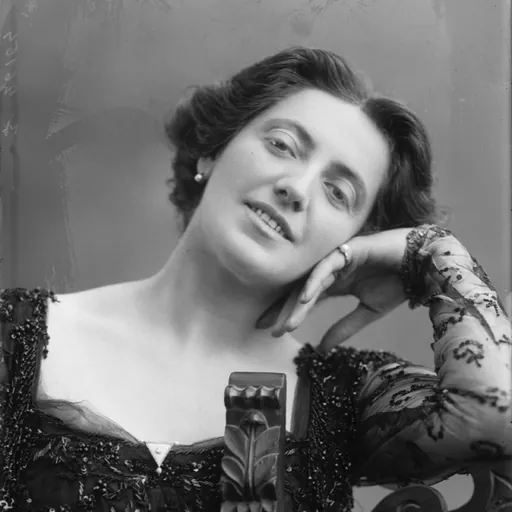
About Solomea Krushelnytska
Lived 1872 – 1952 (aged 80). Solomea Krushelnytska was an Austrian, Italian and Russian opera singer, music educator and pedagogue.
Solomiya Krushelnytska (; – November 16, 1952) was a Ukrainian lyric-dramatic soprano, considered to be one of the brightest opera stars of the first half of the 20th century.
During her life, Krushelnytska was recognized as the most outstanding singer in the world. Among her numerous awards and distinctions, in particular, the title of "Wagner's diva" of the 20th century. She is credited with rescuing Puccini's Madama Butterfly from its failed debut at La Scala. The opera's re-creation in Brescia starring Krushlenytska received widespread acclaim. Singing with her on the same stage was considered an honor for Enrico Caruso, Titta Ruffo, Fedor Chaliapin. Italian composer Giacomo Puccini presented the singer with his portrait with the inscription "The most beautiful and charming Butterfly".
Biography
Early life and education Solomiya Krushelnytska was born in 1872 (although in later documents 1873 and 1876 were also mentioned as her dates of birth), in the village of Bielawińce, Galicia, Austria-Hungary (now Biliavyntsi, Ukraine) and baptized on 23 September of the same year. After several years of moving from village to village, in 1878 her father, a Ukrainian Greek Catholic priest Amvrosii Krushelnytskyi , settled with his large family in the village of Bila on the outskirts of the regional metropolis of Ternopil.
In addition to Solomiya, the noble-born family included her mother, Teodora Maria (née Savchynska, died 1907), five sisters (Olha, Osypa, Hanna, Emilia and Maria) and two brothers (Anton and Volodymyr).
In her memoirs, Solomiya's niece Odarka Bandrivska writes that as a child, the future diva came to learn a fair number of Ukrainian folk songs from the residents of the various villages in which her family had lived.
Studying in Ternopil Solomiya started singing at a young age and received the basics of musical training at the Ternopil Classical Gymnasium, where she took external exams. There she became close to a group of high school students, one of the members of which was Denys Sichynsky, later a famous composer.
In 1883, at the Shevchenko Concert in Ternopil, Solomiya, who sang in the choir of the Ruska Besida society, made her first public performance. At one of the choir's concerts on August 2, 1885, Ivan Franko was present.
In Ternopil Solomiya Krushelnytska encountered theater for the first time. the Lviv theater of the Ruska Besida society, which regularly performed there, included in its repertoire operas by Semen Hulak-Artemovsky and Mykola Lysenko and employed drama actors such as Filomena Lopatynska, Antonina Osipovycheva, Stepan Yanovych, Andriy Muzhyk-Stechynsky, Mykhailo Olshansky, Karolina Klishevska.
Studying at the Lviv Conservatory According to tradition, as a clergyman's daughter Krushelnytska should have married another priest, but noticing her artistic talent, her father allowed her to study music. After her father took out a loan for her travels, Solomiya arrived in Milan where she would study under Fausta Crespi, while living with Bellincioni's mother. It was under Crespi's tutelage that Solomiya transitioned from her previous training as a mezzo-soprano to a lyric-dramatic soprano. For the following 3 years, she would divide her time between Milan and Lviv, returning regularly for engagements with the Lviv Opera in order to pay for her ongoing studies in Italy.
Solomiya would go on to perform in Odesa (1896–1897), Warsaw (1898–1902), St Petersburg (1901–1902), the Paris Grand Opera (1902), Naples (1903–04), Cairo and Alexandria (1904), and Rome (1904–05). In 1920, at the height of her career, she left the opera world, and three years later started concert tours, performing in Western Europe, Canada and the USA. Her knowledge of eight languages allowed her to include in her concert programs songs of many nations. She was a fervent promoter of Ukrainian folk songs and works by Ukrainian composers.
Later life
Prior to the death of her mother Teodora in 1907, Solomiya's family convinced her to purchase a residence in Lviv, to use whenever she returned from touring, and to provide a comfortable living space for the rest of the family, especially for her mother towards the end of her life. In 1903, Solomiya purchased a building located on what is now (named in her honor in 1993), uphill from the campus of Lviv University. Built and designed by Jakub Kroch in 1884, the large building had several floors of living space, initially occupied by members of Krushelnytska's immediate family. Solomiya's brother-in-law Karl Bandriwsky was asked to oversee the management of the building once apartments began be rented out following the departure of her siblings after marriage. With a facade featuring heavy rustication decorated with ornamental statuary of lyrical muses by Leonard Marconi, the building became known as Lviv's Stonehouse of Music ,
In 1982 at the Kyiv Studio of Feature Films named after O. Dovzhenko, director Fialko Oleh Borysovych created a historical and biographical film dedicated to the life and work of Solomiya Krushelnytska - "Return of the Butterfly", based on the novel of the same name by Valeria Vrublevska. The film is based on the real facts of the singer's life and is based on her memories. Solomiya's parts are performed by Gisela Tsipol. The role of Solomiya in the film was played by Yelena Safonova.
In addition, documentaries have been made, including: "Solomiya Krushelnytska" (directed by I. Mudrak, Lviv, "Mist", 1994);
"Solomiya Krushelnytska" (1994, Ukrtelefilm, authors: N. Davydovska, V. Kuznetsov, opera M. Markovsky; musicologist M. Golovashchenko takes part in the film);
"Two Lives of Solomiya" (directed by O. Frolov, Kyiv, "Contact", 1997); prepared a TV show from the series "Names" (2004);
Documentary "Solo-mea" from the series "Game of Fate" (directed by V. Obraz, VIATEL studio, 2008).
In 1995, the premiere of the play "Solomiya Krushelnytska" (author B. Melnychuk, I. Lyakhovsky) took place at the Ternopil Regional Drama Theater (now the Academic Theater). Since 1987, the Solomiya Krushelnytska Competition has been held in Ternopil. Every year an international competition named after Krushelnytska takes place in Lviv; opera festivals have become traditional.
In 1997, the National Bank of Ukraine issued a commemorative coin with a face value of 2 hryvnias, dedicated to the 125th anniversary of the singer's birth.
March 18, 2006 on the stage of the Lviv National Academic Opera and Ballet Theater. S. Krushelnytska hosted the premiere of Myroslav Skoryk's ballet "Return of the Butterfly", based on events from the life of Solomiya Krushelnytska. The ballet uses music by Giacomo Puccini.
1963 a memorial plaque and a memorial museum-manor of Solomiya Krushelnytska were opened in the village of Bila, Ternopil district.
An exhibition dedicated to Krushelnytska functions in the village of Bilyavyntsi, Buchach district.
In 2010 a monument to Krushelnytska was unveiled in Ternopil.
Also in her honor are named 14 huts of the UPU named after Solomiya Krushelnytska.
On October 1, 1989, the music and memorial museum was opened in the singer's apartment. In 1993, the street where she lived in the last years of her life was named after S. Krushelnytska in Lviv.
A street in Darnytskyi district of Kyiv is also named after Solomiya Krushelnytska.
Publications Semotiuk, A.J. (2023), Solomea: Star of Opera's Golden Age, Courageous Heart Productions (Toronto)
Gallery
Don’t just read it —
keep it.
Full-length biographies made to live with: read them, listen on the way to work, watch them tonight.
- E-book
- Audio
- Video
Instant download · yours to keep · every purchase keeps this site free
Important facts
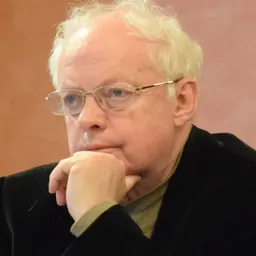
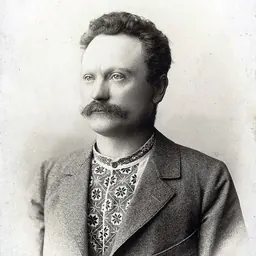
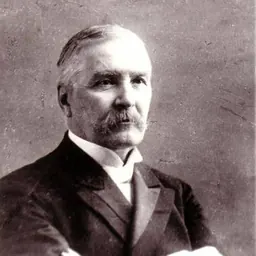
People in Solomea Krushelnytska's life
Named in this biography and alive at the same time




Related people
Same field, nearest in time

Contemporaries
People whose lives overlapped Solomea Krushelnytska's


Frequently asked questions
Who was Solomea Krushelnytska?
Ukrainian opera singer (1872–1952)
When was Solomea Krushelnytska born?
Solomea Krushelnytska was born on 23 September 1872 in Biliavyntsi.
When did Solomea Krushelnytska die?
Solomea Krushelnytska died on 15 November 1952 in Lviv.
What was Solomea Krushelnytska's occupation?
Solomea Krushelnytska was an opera singer, music educator and pedagogue.
What nationality was Solomea Krushelnytska?
Solomea Krushelnytska was Austrian, Italian and Russian.
Sources & further reading
· Wikipedia: Solomea Krushelnytska
· DBpedia: Solomiya Krushelnytska
Cite this page
APA: Biography.guide. (2026). Solomea Krushelnytska. https://biography.guide/solomea-krushelnytska/
MLA: "Solomea Krushelnytska." Biography.guide, https://biography.guide/solomea-krushelnytska/.
Chicago: "Solomea Krushelnytska." Biography.guide. https://biography.guide/solomea-krushelnytska/.
Data last updated: 2026-09-23 · Spot an error? Report a correction.
Portrait: Wikimedia Commons · author & licence
Page generated 2026-09-27 05:07 UTC