
About Sokol Baci
Lived 1837 – 1920 (aged 82–83). Sokol Baci was an Albanian and Turkish politician.
Life
Early life Sokol Baci Ivezaj was the son of Bac, hence his most commonly used name is (Sokol Baci), and he belonged to the Precaj family of the Ivezaj brotherhood in Gruda. The Ivezaj brotherhood claimed they were descendants of Iveza, a son of a certain Vuksan Gela (also spelled Vuksan Gelja), who allegedly came from Suma, below Shkodër.
As a youth, Sokol was taken by the Ottoman authorities to be trained and raised in Istanbul. Due to his intelligence and athletic abilities, Sokol was selected to attend the military academy at the University of Sorbonne in Paris, France. As a result of the many battles he fought for the Ottomans, he was eventually selected, along with five other young men of high standing, for the personal bodyguard of the Sultan.
In 1877, during the Serbo-Turkish and Russo-Turkish wars, while on leave at home, the order came for the disarming of the northern Albanian tribes (the "Malissori"). The Gruda refused to obey, and refusing to be a traitor to his people, he led his clan in battle against Ottoman forces. He became a fugitive and outlaw, in exile in Montenegro, against whom he had earlier fought against in the 1870s. He had entered cooperation through vojvoda Mašo Vrbica, the Interior Minister.
Prince Nicholas of Montenegro recognized him, gave him a house and land, and employed him in the Montenegrin government for northern Albanian affairs. After 1883, Prince Nicholas' diplomacy with the Malissori mainly went through Sokol Baci. A Montenegrin document, dated November 1891, with a list of Herzegovinian and Albanian leaders, showed that Sokol Baci received the largest payment from the Montenegrin government: 540 florins and 967 measures of flour annually for his service. (from Gruda). To Sokol, much respected by the tribesmen, Nikola entrusted the task of inducing the Albanian Catholics to migrate in numbers into Montenegro, promising them that if they would revolt against the Turks their wives and children should have shelter and protection till their land was freed from the Turks, and that they should receive sufficient arms and ammunition. Nikola himself promised independence to the tribesmen.
An interview with Sokol Baci conducted by the Italian Newspaper Corrlere d'Italia, was published in numerous publications in May of 1911 including the Los Angeles Herald and the Evening star of Washington DC. Images of the article were provided by the Library of Congress.
"Albanian Revolution is Directed by Exiled Chief" " Rome, May 7. - "The clerical "Corrlere d'Italla," which is especially well informed about all matters connected with Albania, publishes an Important Interview with the Albanian chief, Sokol Beg Batcho, who has been for several years an exile in Montenegro, where he is now living and from where he is directing the Albanian insurrection. This fine old warrior, who is a familiar figure at Cettinje, formulates the demands of the Albanians as follows: The administrative autonomy of our vilayets which contain an Albanian population under an Albanian or European governor general; European control for a number of years, until the new autonomous province has been placed upon a definite footing; the use of the Albanian language, with Latin characters in all official documents; the expenditure of all sums raised as taxes from the Albanians within Albania itself, and the restriction of military service to the Albanian districts only, so that no Arnaut may be sent to do his term of soldiering in the Yemen, as is now the case."
On June 24, 1911, the Ottoman minister to Montenegro, Saddridin Bey, came to negotiate with the Malissori, and promised an extension of the armistice and an increase of compensation money; Sokol Baci, however, urged the Malissori to not surrender, saying, "Where is the European guarantee?". In 1912, the tribes of Gruda and Hoti were allied with Montenegro, while support also came from the greater parts of the Kastrati and Shkreli tribes, as well as a part of the Kelmendi tribe.
According to Edith Durham, in 1912 Montenegro worked hard to rise the Malissori in exchange for arms and freedom, and they believed Montenegro's claimed intent to 'liberate their brethren'. After the Montenegrin conquest of Scutari (1913), Nicholas I appointed Sokol Baci the commander (vojvoda) and brigadier of Scutari. When congratulated on his appointment, Sokol replied, "He who does not see through the screen, may his eyes fall out!" On May 26, 1913, 130 leaders of the Gruda, Hoti, Kelmendi, Kastrati and Shkreli sent a petition to Cecil Burney in Shkodër against the incorporation of their territories into Montenegro. Sokol broke ties with Nicholas I and lived in Shkodër for the remainder of his life. On November 14, 1918, Luigj Gurakuqi, Anton Harapi and Gjergj Fishta led the leaders of the Hoti and Gruda on a march from Montenegro to Shkodër, where they submitted a memorandum to the French Colonel, Bardy de Fourton. The memorandum was addressed to the Ministers of Foreign Affairs in Washington, London, Paris and Rome requesting that Hoti and Gruda be united with Albania, signed by the chiefs of Gruda, including Sokol's closest cousins, Dede Nika Ivezaj, Zef Martini Ivezaj, Mirash Hasi Ivezaj and Marash Pllumi Ivezaj.
Legacy English traveller and Albanophile, Edith Durham, was on very close terms with Sokol Baci. In her book The Struggle for Scutari, she explained:
Annotations
Don’t just read it —
keep it.
Full-length biographies made to live with: read them, listen on the way to work, watch them tonight.
- E-book
- Audio
- Video
Instant download · yours to keep · every purchase keeps this site free
Important facts
People in Sokol Baci's life
Named in this biography and alive at the same time




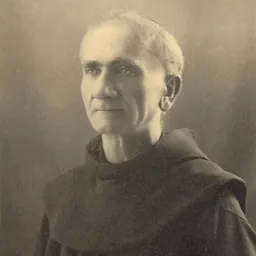
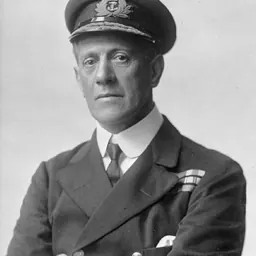
Related people
Same field, nearest in time

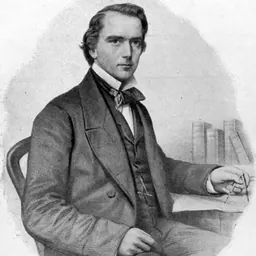




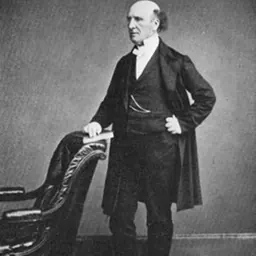
Contemporaries
People whose lives overlapped Sokol Baci's



Frequently asked questions
Who was Sokol Baci?
Albanian rebel against Ottoman rule
When was Sokol Baci born?
Sokol Baci was born in 1837 in Grudë.
When did Sokol Baci die?
Sokol Baci died in 1920 in Shkodër.
What was Sokol Baci's occupation?
Sokol Baci was a politician.
What nationality was Sokol Baci?
Sokol Baci was Albanian and Turkish.
Sources & further reading
Cite this page
APA: Biography.guide. (2026). Sokol Baci. https://biography.guide/sokol-baci/
MLA: "Sokol Baci." Biography.guide, https://biography.guide/sokol-baci/.
Chicago: "Sokol Baci." Biography.guide. https://biography.guide/sokol-baci/.
Data last updated: 2026-09-20 · Spot an error? Report a correction.
Page generated 2026-09-27 05:28 UTC