
About Gjergj Fishta
Lived 1871 – 1940 (aged 69). Gjergj Fishta was an Albanian and Turkish poet, politician, writer, journalist, translator and diplomat.
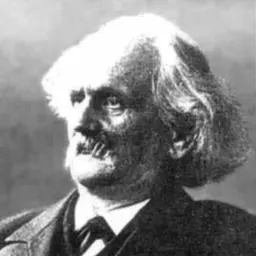
Gjergj Fishta (; 23 October 187130 December 1940) was an Albanian Franciscan friar, poet, educator, rilindas, politician, translator and writer. He is regarded as one of the most influential Albanian writers of the 20th century, particularly for his epic masterpiece Lahuta e Malcís, and as the editor of two of the most authoritative magazines after Albania's independence, Posta e Shqypniës and Hylli i Dritës.
Fishta was the chairman of the Congress of Manastir, which sanctioned the official Albanian alphabet, and he was part of the Albanian delegation to the Versailles Conference in 1919. In 1921, he was a member of the Albanian parliament and eventually became the deputy chairman. Later on, during the 1920s and the 1930s, he was among the most influential cultural and literary figures in Albania. After the Communist regime came to power, his literary oeuvre had been taken out of circulation until the fall of communism in the early 1990s. In recognition of his vast contributions to Albanian literature, he is also known as the "Albanian Homer". which is a village located in the Zadrima region. His parents were Ndok and Prenda Kaçi, and he was the youngest of three brothers and one sister. The parish priest of Troshan - Marian Pizzochini of Palmanova - asked Gjergj's parents to make him a friar. At the expense of the parishioner, Zef went to the Franciscan school in Shkodër until 1880, which is when Troshan's College began its activity. After completing his initial education in the Franciscan colleges of Troshan and Shkodër in 1886, Fishta was sent by the Franciscan Order to Bosnia, where he came into close contact with classical Latin and modern West European literary traditions.
By 1902, Fishta became the director of every Franciscan school in northern Albania, and he replaced Italian with Albanian as the language of instruction. In 1907, Fishta founded the first Albanian public library in the city of Shkodër, alongside fellow Albanian activist Shtjefën Gjeçovi. Fishta participated in the Congress of Manastir, which was held in the city of Manastir in 1908 with the intention of standardising the Albanian alphabet.
Later career In 1913, Fishta founded the monthly Hylli i Drites, one of the most important cultural periodicals in Albania prior to 1944, and during 1916–1919, he edited the biweekly Posta e Shqypnis (The herald of Albania) in Shkodër.
In 1921, Fishta was elected to the Albanian parliament as a representative of Shkodër, and in August of that year was made vice president of the assembly. Fishta attended numerous Balkan conferences, such as in Athens in 1930, in Sofia in 1931, and in Bucharest in 1932. However, he eventually withdrew from public life and devoted his remaining years to his literary works as well as the Franciscan order, where he held the office of provincial of the Albanian Franciscans from 1935 to 1938. He spent the later years of his life in seclusion at the Franciscan monastery of Gjuhadol in Shkodër.
Fishta authored 37 literary publications during his lifetime, and he was particularly notable for his work as a lyric and satirical poet.
Fishta's lyric verse is regarded to be his best; these works include the collections Vierrsha i perspirteshem t'kthyem shcyp ('Spiritual Verse Translated into Albanian', 1906); Mrizi i zâneve ('Noonday Rest of the Zanas', 1913); Vallja e Parrizit ('The Dance of Paradise', 1925), and the satirical volumes Anxat e Parnasit ('The Wasps of Parnassus', 1907) and Gomari i Babatasit ('Babatasi's Ass', 1923). According to Arshi Pipa, Fishta's satirical works are modulated after the Bejte tradition of Shkodër, which he elevated to a literary level.
The literature of Shkodra produced by Catholic Albanian clergymen entered a golden age during the first decades of the 20th century, and this blossoming of Gheg Culture is largely credited to Fishta, who was universally recognised as Albania's national poet at the outbreak of World War II.
The story begins with skirmishes between Albanian highlanders from the Hoti tribe and the Montenegrins who had attacked them, capturing the heroic acts of figures such as Oso Kuka. The main section of the work consists of the cantos VI-XVV, which focuses on the League of Prizren between 1878 and 1880 and covers numerous battles, duels and folkloric elements. The final cantos focus on the Young Turk Revolution, the general uprisings in northern Albania, the Balkan Wars and the Albanian declaration of independence. According to Fishta himself, the hero of The Highland Lute is the Albanian nation. after the recent massacres and expulsions of Albanians by their Slavic neighbours.
The majority of The Highland Lute was composed between 1902 and 1909, but it was refined and amended by Fishta until the original 30 cantos were published in Shkodër in 1937 to mark the 25th anniversary of Albania's independence. The Highland Lute is the first major contribution to global literature written in the Albanian-language.
From other countries:
Don’t just read it —
keep it.
Full-length biographies made to live with: read them, listen on the way to work, watch them tonight.
- E-book
- Audio
- Video
Instant download · yours to keep · every purchase keeps this site free
Important facts
People in Gjergj Fishta's life
Named in this biography and alive at the same time


Related people
Same field, nearest in time
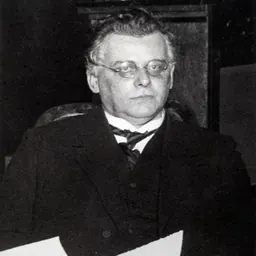
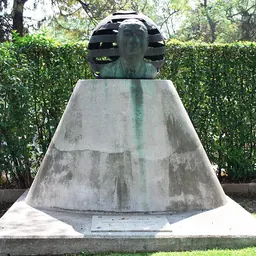
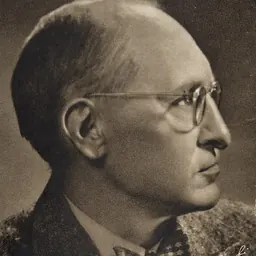
Contemporaries
People whose lives overlapped Gjergj Fishta's
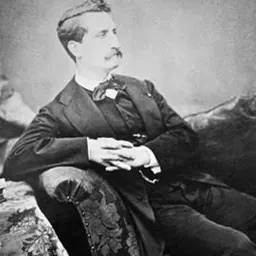



Frequently asked questions
Who was Gjergj Fishta?
Albanian writer (1871-1940)
When was Gjergj Fishta born?
Gjergj Fishta was born on 23 October 1871 in Fishtë.
When did Gjergj Fishta die?
Gjergj Fishta died on 30 December 1940 in Shkodër.
What was Gjergj Fishta's occupation?
Gjergj Fishta was a poet, politician, writer, journalist, translator and diplomat.
What nationality was Gjergj Fishta?
Gjergj Fishta was Albanian and Turkish.
Sources & further reading
Cite this page
APA: Biography.guide. (2026). Gjergj Fishta. https://biography.guide/gjergj-fishta/
MLA: "Gjergj Fishta." Biography.guide, https://biography.guide/gjergj-fishta/.
Chicago: "Gjergj Fishta." Biography.guide. https://biography.guide/gjergj-fishta/.
Data last updated: 2026-09-20 · Spot an error? Report a correction.
Page generated 2026-09-27 05:34 UTC