
Soghomon Tehlirian
Armenian who assassinated convicted war criminal Talaat Pasha
About Soghomon Tehlirian
Lived 1896 – 1960 (aged 64). Soghomon Tehlirian was a Turkish and American vigilante, known for Assassination of Talaat Pasha.
Soghomon Tehlirian (; April 2, 1896 – May 23, 1960) was an Armenian revolutionary and soldier who killed Talaat Pasha, the former Grand Vizier of the Ottoman Empire, in Berlin on March 15, 1921. He was entrusted to carry out the assassination after having earlier killed Harutian Mgrditichian, who had worked for the Ottoman secret police and helped compile the list of Armenian intellectuals who were deported on April 24, 1915.
Talaat 's killing was a part of Operation Nemesis, a revenge plan by the Armenian Revolutionary Federation against members of the Ottoman Imperial Government responsible for the Armenian genocide during World War I. Talaat Pasha had been convicted and sentenced to death in absentia in the Turkish courts-martial of 1919–20, and was viewed as the main orchestrator of the genocide. After a two-day trial Tehlirian was found not guilty by a German court, and freed.
Tehlirian is considered a national hero by Armenians.
Life Soghomon Tehlirian was born on April 2, 1896, in the village of Bagarich (Բագառիճ; present-day Çadırkaya, Tercan, Turkey), in the Erzurum vilayet of the Ottoman Empire. He was raised in Erzincan.
Tehlirian's father left for Serbia to secure the family's planned move to the country.
Genocide
He was in Valjevo, Serbia, in June 1914. In the fall of that year, Tehlirian made his way to Russia and joined the army to serve in a volunteer unit on the Caucasus Front against the Turks.
According to History's Great Untold Stories: Larger than Life Characters & Dramatic Events that Changed the World, in June 1915, the Ottoman local police ordered the deportation of all the Armenians in Erzinjan. Tehlirian's mother, three sisters, his sister's husband, his two brothers, and a two-year-old niece were deported. All told, Tehlirian lost 85 family members to the Armenian Genocide.
In 2016 Tehlirian's son, who spoke to The Independent but did not reveal his name, stated that Tehlirian's mother and Vasken, his older brother, died in the genocide – the latter was studying medicine and living in Beirut – but that Tehlirian did not have a sister, that his father was fighting in the war in Russia, and that his other two brothers were in Serbia.
Assassination of Talaat Pasha
After the war, Tehlirian went to Constantinople , where he killed Harutian Mgrditichian, who had worked for the Ottoman secret police and helped compile the list of Armenian intellectuals who were deported on April 24, 1915. Meanwhile, Operation Nemesis was being set up to assassinate leaders responsible for the Armenian genocide and Tehlirian's killing of Mgrditichian convinced Nemesis operatives to entrust him with the killing of Talat Pasha. In mid-1920, the Nemesis organization paid for Tehlirian to travel to the United States, where Garo briefed him that the death sentences pronounced against the major perpetrators had not been carried out, and that the killers continued their anti-Armenian activities from exile. That fall, the Turkish nationalist movement invaded Armenia. Tehlirian received the photographs of seven leading CUP leaders, whose whereabouts Nemesis was tracking, and departed for Europe, going first to Paris. In Geneva, he obtained a visa to go to Berlin as a mechanical engineering student, leaving on December 2.
Tehlirian's main target was Talaat Pasha, who was a member of the military triumvirate known as the "Three Pashas" who controlled the Ottoman Empire. He was the former Minister of the Interior and Grand Vizier (an office equivalent to that of a prime minister), and was noted for his prominent role in the Armenian Genocide. Talaat had been sentenced to death in absentia by an Istanbul court in 1919. He had fled to Germany, a former ally of the Ottoman Empire which did not extradite him to Turkey. As soon Tehlirian found Talaat Pasha's address on 4 Hardenbergstraße, in Berlin's Charlottenburg district, he rented an apartment near his house so that he could study his everyday routine.
Tehlirian shadowed Talaat as he left his house on Hardenbergstraße on the morning of March 15, 1921. He crossed the street to view him from the opposite sidewalk, then crossed it once more to walk past him to confirm his identity. He then turned around and pointed his gun to shoot him in the nape of the neck. Talaat was felled with a single 9mm parabellum round from a Luger P08 pistol. The assassination took place in broad daylight and led to the German police immediately arresting Tehlirian, who had been told by his handlers, Armen Garo and Shahan Natalie, not to run from the crime scene. During the trial, Tehlirian's dream was described as follows:
It took the jury slightly over an hour to render a verdict of "not guilty." image2 = Soghomon Tehlirian Monument Fresno CA March 20 2022.jpg alt2 = caption2 = The renovated Soghomon Tehlirian monument in 2022. As of February 2025, the cemetery's website still listed the incorrect birthdate.
After the assassination, Tehlirian moved to Cleveland in the United States. She was 15 when they first met in 1917.
Tehlirian died in 1960 of a cerebral hemorrhage, Historian Hans-Lukas Kieser states "Assassination perpetuated the sick relationship of a victim in quest of revenge with a perpetrator entrenched in defiant denial, instead of humble courage for the truth and redress."
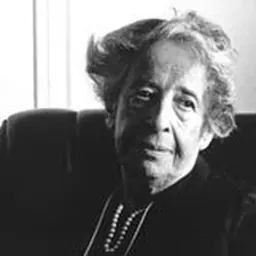
Political theorist Hannah Arendt, in her 1963 book Eichmann in Jerusalem, compares Tehlirian to Sholem Schwarzbard, who assassinated Ukrainian statesman Symon Petliura in Paris in 1925 for what Schwarzbard believed to be Petlyura's culpability in the anti-Jewish pogroms in Ukraine. Arendt suggests that each man "insisted on being tried", in order "to show the world through court procedure what crimes against his people had been committed and gone unpunished".
he one in the center of the play, on whom all eyes are fastened, is now the true hero, while at the same time the trial character of the proceedings is safeguarded, because it is not "a spectacle with prearranged results" but contains that element of "irreducible risk" which... is an indispensable factor in all criminal trials. Also, the J'accuse, so indispensable from the viewpoint of the victim, sounds, of course, much more convincing in the mouth of a man who has been forced to take the law into his own hands than in the voice of a government-appointed agent who risks nothing. And yet... it is more than doubtful that this solution would have been justifiable in Eichmann's case, and it is obvious that it would have been altogether unjustifiable if carried out by government agents. The point in favor of Schwartzbard and Tehlirian was that each was a member of an ethnic group that did not possess its own state and legal system, that there was no tribunal in the world to which either group could have brought its victims.
In 2017 a square in Marseille, France, was named after him. Music The song Գինի լից, Gini lits ("Pour the wine"), is a well-known revolutionary song, which commemorates and glorifies the assassination of Talaat by Tehlirian. It has been recorded in a variety of versions and is known by heart by many Armenians. The version by Sahak Sahakyan also has a music video. The first stanza of the song goes: The Armenians' horror shook the world, The Turkish throne fell to the ground, Let me tell you about the death of Talaat. Pour the wine, dear friend, pour the wine, Drink it nicely; drink it with delight.
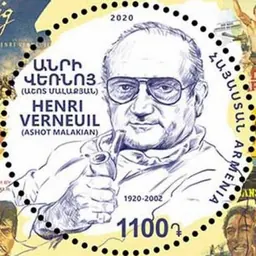
Film The 1982 American film Assignment Berlin, directed by Hrayr Toukhanian, chronicles Talaat Pasha's assassination in Berlin. The 1986 Turkish film ("Blood on the Wall") adapts Tehlirian's trial. The 1991 French film Mayrig by Henri Verneuil depicts Talaat's assassination and Tehlirian's trial. The 2020 short film The Attempt, directed by Daniel Despart, depicts Tehlirian's assassination of Talaat Pasha.
Don’t just read it —
keep it.
Full-length biographies made to live with: read them, listen on the way to work, watch them tonight.
- E-book
- Audio
- Video
Instant download · yours to keep · every purchase keeps this site free
Important facts
People in Soghomon Tehlirian's life
Named in this biography and alive at the same time


Related people
Same field, nearest in time

Contemporaries
People whose lives overlapped Soghomon Tehlirian's





Frequently asked questions
Who was Soghomon Tehlirian?
Armenian who assassinated convicted war criminal Talaat Pasha (1896–1960)
When was Soghomon Tehlirian born?
Soghomon Tehlirian was born on 2 April 1896 in Çadırkaya.
When did Soghomon Tehlirian die?
Soghomon Tehlirian died on 23 May 1960 in San Francisco.
What was Soghomon Tehlirian's occupation?
Soghomon Tehlirian was a vigilante.
What was Soghomon Tehlirian known for?
Soghomon Tehlirian was known for Assassination of Talaat Pasha.
What nationality was Soghomon Tehlirian?
Soghomon Tehlirian was Turkish and American.
Sources & further reading
· Wikipedia: Soghomon Tehlirian
Cite this page
APA: Biography.guide. (2026). Soghomon Tehlirian. https://biography.guide/soghomon-tehlirian/
MLA: "Soghomon Tehlirian." Biography.guide, https://biography.guide/soghomon-tehlirian/.
Chicago: "Soghomon Tehlirian." Biography.guide. https://biography.guide/soghomon-tehlirian/.
Data last updated: 2026-09-20 · Spot an error? Report a correction.
Page generated 2026-09-27 05:17 UTC