
Snana
Dakota woman also known as Maggie Brass
About Snana
Lived 1839 – 1908 (aged 68–69).
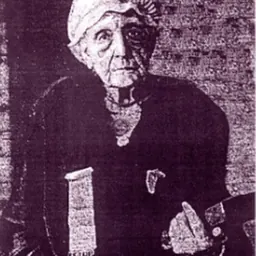
Snana (c. 1839–1908), also known as Maggie Brass, was a Mdewakanton Dakota woman who rescued and protected a fourteen-year-old German girl, Mary Schwandt, after she was taken captive during the Dakota War of 1862. She was reunited with Mary Schwandt Schmidt in 1894, leading to a feature article in the St. Paul Pioneer Press. Snana’s narrative of the war, “Narration of a Friendly Sioux,” was edited by historian Return Ira Holcombe and published in 1901.
Early life, education, and religion Snana was born in Mendota in 1839. Her Dakota name, Snana, is translated as “Tinkling” or "Ringing Sound."
Both she and her mother, Wamnuka (Barleycorn), were members of the Kaposia band of Mdewakanton Dakota. While she was growing up, Snana lived for a time with her "mixed-blood" relatives, including Mary Brown and Jennie Robertson, and also boarded for a time with the family of Dr. Thomas Smith Williamson. Snana later credited the Williamson family for teaching her to embrace Christianity.
From 1849 to 1852, Snana attended Williamson's Presbyterian mission school at Kaposia village, where she learned to read and write.
In late 1853, Snana and her mother moved with other Mdewakantons to the Lower Sioux Indian Reservation. Maggie was grieving when she found out about the initial attacks in the Dakota War of 1862 ordered by Chief Little Crow, leader of her band. Mary Schwandt would later explain that before Maggie and her mother stepped in to "buy" her from her captor, a young Dakota man named Mazzaboomdu (Blows on Iron), she was convinced that he intended to shoot her "for sport." However, she would then tell Mary to change out of her Indian clothes every time they heard rumors that the American soldiers were coming. However, Good Thunder joined the Sibley expedition as a scout, and Maggie was given permission to move to Faribault, Minnesota.
Sensing a scoop, Return Ira Holcombe wrote an article about the two women in the Pioneer Press, and also pushed for Maggie to provide her own story.
Faithful Indians' Monument
Maggie Brass died on April 24, 1908. After her death, Snana’s name was added to the Faithful Indians’ Monument, in a space that had been reserved for it. The monument is located in Morton, Minnesota near the Birch Coulee Monument.
The monument had been raised in 1899 to recognize “full-blood Sioux Indians” who had been “unbrokenly loyal and who had saved the life of at least one white person.” Snana was chosen as one of six Dakota "heroes" to be honored by the Minnesota Valley Historical Society, which was led by Charles D. Gilfillan as president and Return I. Holcombe as historiographer.
Don’t just read it —
keep it.
Full-length biographies made to live with: read them, listen on the way to work, watch them tonight.
- E-book
- Audio
- Video
Instant download · yours to keep · every purchase keeps this site free
Important facts
People in Snana's life
Named in this biography and alive at the same time

Contemporaries
People whose lives overlapped Snana's



Frequently asked questions
Who was Snana?
Dakota woman also known as Maggie Brass
When was Snana born?
Snana was born in 1839 in Mendota, Minnesota.
When did Snana die?
Snana died in 1908 in Nebraska.
Sources & further reading
Cite this page
APA: Biography.guide. (2026). Snana. https://biography.guide/snana/
MLA: "Snana." Biography.guide, https://biography.guide/snana/.
Chicago: "Snana." Biography.guide. https://biography.guide/snana/.
Data last updated: 2026-09-22 · Spot an error? Report a correction.
Page generated 2026-09-27 05:26 UTC