
Slava Zaitsev
Soviet and Russian fashion designer, painter and graphic artist, teacher, professor
About Slava Zaitsev
Lived 1938 – 2023 (aged 85). Slava Zaitsev was a Russian costume designer, dressmaker, presenter, pedagogue, scenographer and television presenter.
Vyacheslav Mikhailovich Zaitsev (; 2 March 1938 – 30 April 2023) was a Russian fashion designer, painter, graphic artist, and theatrical costume designer. He was considered to be one of the most prominent fashion designers of the Soviet Union, and had been compared to Christian Dior and Yves Saint Laurent.
Zaitsev first came to prominence in the 1960s, when he was featured in the magazine Paris Match and dubbed the "Red Dior" by the French media. By the 1990s, he had designed outfits for Russian politicians and foreign celebrities. His style was influenced by traditional Russian and Slavic designs, featuring shawls and quilted jackets, and several of his designs were intended for "larger" women. The Hermitage Museum has an extensive collection of his designs on exhibition.
Early life Zaitsev was born on 2 March 1938 in Ivanovo to Mikhail Yakovlevich Zaitsev and Maria Ivanovna Zaitseva. His father was a victim of the repressions of Joseph Stalin and was incarcerated in one of Stalin's camps, and his mother was a cleaner and laundress. From 1945 to 1952, he studied at Secondary School No. 22 in Ivanovo. As his father was deemed by the State to be an enemy of the people, Zaitsev was denied the opportunity to study at an industrial academy, a theatrical school, and a pilot training school.
Career
Career in the Soviet Union
During the Soviet era, clothing was dominated by Zaitsev and Valentin Yudashkin, and he was compared to other world-renowned fashion designers such as Christian Lacroix, Christian Dior, and Yves Saint Laurent, however, under the communist regime, the only country outside of the USSR where Zaitsev was able to work was Czechoslovakia. Alexandre Vassiliev, a Russian-born, Paris-based fashion historian and designer, stated that "f he had had a chance to show his collections abroad he would have been most possibly a world-famed brand."
In March 1965, Zaitsev became the chief designer at the All-Union Fashion House (Dom modeley) on Kuznetsky Most. He authored two books in 1980, Such Changeable Fashion and This Multifaceted World of Fashion , which were republished in Bulgaria and Czechoslovakia in 1983. Zaitsev met with Thierry Mugler in 1985 in Moscow, and the French couturier photographed Zaitsev's fashions for an article in Paris Match.
Raisa Gorbachyova wore Zaitsev creations when she made what The New York Times described as a "perestroika splash" in the 1980s. Zaitsev fashions were displayed at Expo '85 in Tsukuba, Japan, although it was not until 1986 that he was able to visit a capitalist country when he displayed some of his works in the Soviet pavilion at Expo 86 in Vancouver, British Columbia, Canada.
A member of the Communist Party of the Soviet Union, Zaitsev affirmed his belief in the Soviet Union and the future of communism, including the communist ideals of a workers' paradise. The New York Times reported that by the 1980s, he became disillusioned with the Party. Zaitsev told the newspaper that at mandatory party meetings he "began to defend the right to be free, as it says in the Communist charter. They constantly tried to distract me, not to let me get in. I'd be stuck in the elevator or I'd be sent off to some other event." This disillusionment led to Zaitsev quitting the party in the late 1980s. The contract was the first commercial consumer venture signed between the two countries. In October 1987 he showed his collection at the iconic Waldorf-Astoria in New York City, which critics called overwrought, out-of-date and reminiscent of Western fashion from several seasons earlier. Undiscouraged, Zaitsev said that he planned to return with a "pared-down, sexier collection". He returned to New York City in 1988 where he designed costumes for the musical revue Sophisticated Ladies, based on the music of Duke Ellington. The following year in March, Maison de Couture named Zaitsev as "Man of the Year in the World of Fashion"
In September 1989, Zaitsev showed his collections in West Germany for the first time under the theme "Fashion and Music Revue '90", and in December 1989 he won first prize at "Five Top Fashion Designers in the World–90" in Tokyo, Japan, where he was competing against Donna Karan, Claude Montana, Hanae Mori and Byblos.
Career in post-Soviet Russia Whilst during the Soviet era Zaitsev's work was funded by the Soviet government, which as a state employee he earned the maximum of 1,000 roubles per month, after the collapse of the Soviet Union he became responsible for financing the business out of his private income, with New Russians making up the bulk of his clientele. and in the same year Zaitsev launched a women's perfume named Maroussia, in conjunction with French-based L'Oréal. The perfume which is classified as a "floral oriental" and is still in production, was launched in a few European countries in 1992 and was launched worldwide in 1993.
1992 was also a significant year in Zaitsev's career, because it was then that he presented for the first time his recent fashion collection, as well as his paintings and works on paper in prestigious venues, both in New York and in Beverly Hills. Never before was Russian fashion design demonstrated on the American runways, and never before were Zaitsev's most personal paintings and drawings allowed to be exhibited in the West. Fashion shows and exhibitions were held at the Bowles-Sorokko Galleries on both the East and the West Coasts, and they were widely attended, marking the beginning of cultural exchanges in the area of visual arts between the US and the new Russia. According to Serge Sorokko, then president of the Bowles-Sorokko Galleries, Zaitsev was a lifelong painter, but was never free to exhibit publicly his art before. "[That was] because his work was outside the dogmas of socialist realism", Sorokko told The New York Times. "He was permitted to paint only for his own soul. When I visited his home in Moscow, I saw 20 years of pictorial work on his walls."
In 1994, Zaitsev hosted the inaugural Nadezhda Lamanova Prize competition for professional Russian designers at Dom Mody, and the competition has been held under his patronage since. In 1996 he launched a competition in Russia, using the slogan of "Goodbye Barbie, welcome Maroussia", to find the "purest essence of" female adolescence, with the aim of decreasing the influence of the American doll in Russia. In Zaitsev's words, "Barbie is rigid, cold, cynical, pragmatic. Now look at the faces of our children ... they are not only beautiful, but sweet, charming and mysterious. In every face there's a secret, and so must the new Russian doll". Also in 1996, a follow-up to 1992s Maroussia, a floriental fragrance named Authentic Maroussia was launched but has since been discontinued.
Zaitsev was the tailor to Vladimir Zhirinovsky for his 1996 Russian presidential campaign. Zaitsev, who planned to vote for Boris Yeltsin, stated on Zhirinovsky, "He wanted something distinctly Russian, so I thought back to the military-style jackets of the 20s, the 30slike Stalin, only in new colours". On 27 May 1996, President of Russia Boris Yeltsin awarded Zaitsev the State Prize of the Russian Federation in the field of literature and the arts. In 1996, Zaitsev was also made an honorary citizen of the city of his birth, Ivanovo.
When President of Russia Vladimir Putin was due to travel on a state visit to the United Kingdom in June 2003, Zaitsev designed attire for First Lady of Russia Lyudmila Putina to wear for the visit, which included an audience with Queen Elizabeth II. Zaitsev told Zhizn that it took some time to convince Putina to wear a hat, due to Russian women in general not wearing them.
By February 2005, Zaitsev had opened four Slava Zaytsev Men's Wear stores in Ryazan, Ufa, Orenburg, and Samara. The New York Times described Zaitsev in 2004 as one of the few Soviet icons who is still an icon in modern-day Russia, and Time magazine reported in 2007 that the Zaitsev name has 93% brand awareness in Russia. In 2007 Kommersant commissioned VCIOM to run a poll on public perception as to the make-up of the Russian elite; Zaitsev, who is often referred to as the Patriarch of Russian fashion, was rated at 74.
Zaitsev was not interested in achieving worldwide renown by showing his creations abroad, preferring to stay true to his Russian roots and encouraged other Russian designers not to be influenced by the West.
In 2007 Zaitsev took part in the TV show "Fashion Verdict" on Channel One, in which he acted as a judge passing down verdict on contestants' fashion sense. After visiting Ashgabat in June 2008 for the Turkmen Textile Exhibition, Zaitsev stated that he was fascinated by traditional Turkmen clothing, and announced plans for a new collection which would incorporate traditional Turkmen elements. The casual wear collection is to be made exclusively from cotton from Turkmenistan and would feature the traditional Turkmen embroidery which captured his imagination. In September 2008, Zaitsev participated in The Russian Evening-2008 at the Institute for International Political Studies in Milan, which was attended by Svetlana Medvedeva and Clio Maria Bittoni, the wife of Italian President Giorgio Napolitano.
Zaitsev had always been an admirer of the costumes sketches supplied by Pablo Picasso and Albert Benois, amongst others, for Sergei Diaghilev's Paris troupe, and to celebrate the 100th anniversary of Diaghilev's Ballets Russes, Zaitsev's collection for the 2009 Russian Fashion Week paid homage to the Russian ballet impresario.
Death Zaitsev died on 30 April 2023, at the age of 85 of gastrointestinal bleeding in a Shchyolkovo city hospital. He previously suffered from Parkinson's disease, being partially paralyzed, with impaired ability to talk and walk.
Whilst Zaitsev regarded fashion designers Coco Chanel, Christian Dior, Gianfranco Ferré and Hubert de Givenchy as idols, his own creations were strongly influenced by traditional Russian and Slavic styles, and his collections included a variety of theme-based shows reflecting his take on the industry at the time. His collections included the "Millennium of the Christianisation of Russia" in 1988; "Russian Seasons" in Paris in 1988; "Agony of Perestroika" in 1991; and "Recollections of the Future" in 1996–1997. In his creations, Zaitsev included elements such as traditional Pavlovo Posad shawls and embroidered quilted jackets, which were featured in collections such as "Expectation of Changes".
Don’t just read it —
keep it.
Full-length biographies made to live with: read them, listen on the way to work, watch them tonight.
- E-book
- Audio
- Video
Instant download · yours to keep · every purchase keeps this site free
Important facts
People in Slava Zaitsev's life
Named in this biography and alive at the same time

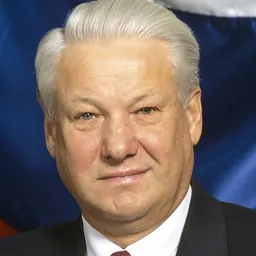




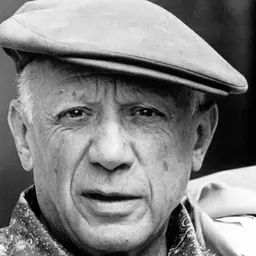
Related people
Same field, nearest in time



Contemporaries
People whose lives overlapped Slava Zaitsev's




Frequently asked questions
Who was Slava Zaitsev?
Soviet and Russian fashion designer, painter and graphic artist, teacher, professor
When was Slava Zaitsev born?
Slava Zaitsev was born on 2 March 1938 in Ivanovo.
When did Slava Zaitsev die?
Slava Zaitsev died on 30 April 2023 in Shchyolkovo.
What was Slava Zaitsev's occupation?
Slava Zaitsev was a costume designer, dressmaker, presenter, pedagogue, scenographer and television presenter.
What nationality was Slava Zaitsev?
Slava Zaitsev was Russian.
Sources & further reading
Cite this page
APA: Biography.guide. (2026). Slava Zaitsev. https://biography.guide/slava-zaitsev/
MLA: "Slava Zaitsev." Biography.guide, https://biography.guide/slava-zaitsev/.
Chicago: "Slava Zaitsev." Biography.guide. https://biography.guide/slava-zaitsev/.
Data last updated: 2026-09-20 · Spot an error? Report a correction.
Page generated 2026-09-27 05:32 UTC