
Skenderbeg Crnojević
Serbian noble
About Skenderbeg Crnojević
Lived 1457 – 1530 (aged 72–73). Skenderbeg Crnojević was an Italian and Turkish.
Staniša "Stanko" Crnojević (; 1457–1528) was a member of the Crnojević noble family that held the Lordship of Zeta; Stanko was the heir to Ivan I Crnojević, who ruled from 1465 to 1490. In 1482 his father Ivan sent him and several of his close friends to the court of the Ottoman sultan Bayezid in order to guarantee his loyalty. Stanko converted to Islam and received the name Skender (Turkish for 'Alexander'), hence he is also known as Skender-bey Crnojević , and became the Ottoman sanjakbey of the Sanjak of Montenegro in 1514–1528. He is enumerated in Serbian epic poetry, in which he is sometimes known as Maksim .
Life Staniša (nickname: Stanko) was born in Upper Zeta (corresponding roughly to the southern half of Cetinje municipality, Montenegro), which at the time was a nominal vassal of the Republic of Venice, under Great Voivode Stefan I Crnojević (r. 1451–1465), Stanko's grandfather.
His father Ivan I Crnojević succeeded as the Lord of Zeta from 1465 to 1490. His mother, Voisava Arianiti, was the second born daughter of the Albanian nobleman Gjergj Arianiti and his first wife Princess Maria Muzaka, who ruled in Southern Albania. Stanko was the youngest of three brothers, his elder brothers were Đurađ Crnojević (Đorđe) and Stefan II Crnojević. By 1474, the Ottomans, who had already conquered Serbia and much of Albania, took Upper Zeta. Ivan failed to obtain Venetian military supplies, and to sustain an alliance with Vlatko Vuković, which saw his domains in Herzegovina fell to the Turks with the siege of Herceg Novi. According to Zlatar, Ivan offered vassalage to Bayezid II, who accepted, but also took Stanko as his hostage.
Skender-bey Crnojević ruled from his court at Rijeka Crnojevića. During the reign of Selim I, he was known as one of the most prominent Muslim administrators of Slavic origins in the northern reaches of the Ottoman Empire. Staniša Crnojević is known to have commanded an army of approximately 3,000 Akıncı, and he maintained correspondence with neighboring contemporaries, such as Gazi Husrev-beg.
The last mention of Skender-bey Crnojević is the Vranjina edict (Vranjinska povelja) which he wrote in 1527, confirming the rights of the Vranjina Monastery.
Aftermath and legacy After his death in 1530, a Christian inquisition and conflict began against his followers. The uprising was eventually put down by Gazi Husrev-beg, who was killed in battle against Christian clans. His men, however, succeeded in maintaining order in the region.
Mahmud Pasha Bushatli of Shkodër, who launched offensives into Montenegro in the 18th century, claimed direct descent from Skender-bey Crnojević. He was beheaded during the Battle of Krusi against the forces of Petar I Petrović-Njegoš, the Exarch of the Serbian Orthodox Church in Cetinje.
Skenderbey Crnojević is a main character in King Nikola's play The Empress of the Balkans (Balkanska Carica), written in 1894.
Staniša is enumerated in Serbian epic poetry in songs such as Sons of Ivan-bey, Death of Maksim Crnojević and The Wedding of Maksim Crnojević which is by far the longest Serbian epic song recorded. The song was introduced to the western audiences by Polish poet Adam Mickiewicz during his lectures at Collège de France.
Inspired by the epic song Serbian playwright Laza Kostić wrote the drama Maksim Crnojević, which would later serve as a source material for opera The Prince of Zeta by Petar Konjović.
Family tree
Annotations
Don’t just read it —
keep it.
Full-length biographies made to live with: read them, listen on the way to work, watch them tonight.
- E-book
- Audio
- Video
Instant download · yours to keep · every purchase keeps this site free
Important facts
People in Skenderbeg Crnojević's life
Named in this biography and alive at the same time
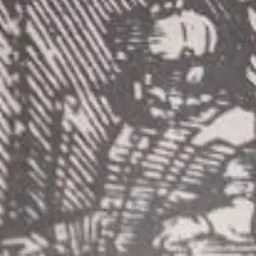
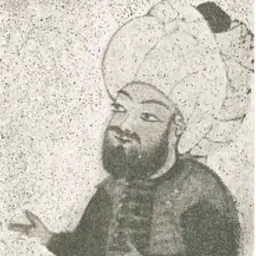

Contemporaries
People whose lives overlapped Skenderbeg Crnojević's
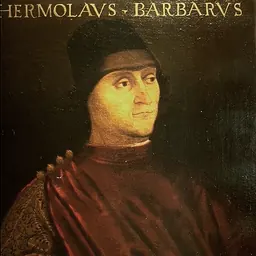
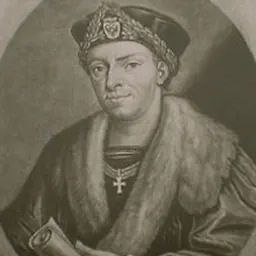


Frequently asked questions
Who was Skenderbeg Crnojević?
Serbian noble
When was Skenderbeg Crnojević born?
Skenderbeg Crnojević was born in 1457 in Montenegro.
When did Skenderbeg Crnojević die?
Skenderbeg Crnojević died in 1530.
What nationality was Skenderbeg Crnojević?
Skenderbeg Crnojević was Italian and Turkish.
Sources & further reading
· Wikipedia: Skenderbeg Crnojević
· DBpedia: Skender Bey Crnojević
Cite this page
APA: Biography.guide. (2026). Skenderbeg Crnojević. https://biography.guide/skenderbeg-crnojevic/
MLA: "Skenderbeg Crnojević." Biography.guide, https://biography.guide/skenderbeg-crnojevic/.
Chicago: "Skenderbeg Crnojević." Biography.guide. https://biography.guide/skenderbeg-crnojevic/.
Data last updated: 2026-09-20 · Spot an error? Report a correction.
Page generated 2026-09-27 05:30 UTC