
About Sis Cunningham
Lived 1909 – 2004 (aged 95). Sis Cunningham was an American singer, musicologist, singer-songwriter, composer and editing.
Agnes "Sis" Cunningham (February 19, 1909 – June 27, 2004) was an American musician, best known as a performer and publicist of folk music and protest songs. She was the founding editor of Broadside magazine, which she published with her husband Gordon Friesen and their daughters.
Early life Sis Cunningham was born in Watonga, Oklahoma in Blaine County. She was the daughter of Ada Boyce and William Cunningham, an amateur fiddler, and grew up on a small homestead farm situated on land that was once part of the Cheyenne-Arapaho Indian Reservation. Her father was a socialist and follower of Eugene Debs, the American Socialist Party leader. During her time there, she also studied labor journalism, labor-farmer union development, and social theatre. In late 1939, she was a founding member of the Red Dust Players, an agit-prop group in Oklahoma, that promoted propaganda and political agitation through short plays.
Sis Cunningham was also a songwriter. She wrote "How Can You Keep on Movin' (Unless You Migrate Too)?" which was featured on the New Lost City Ramblers' 1959 album Songs of the Depression. Ry Cooder later recorded the song as a strident march on his album Into the Purple Valley. The omission was pointed out to him; he and the label corrected the attribution on later pressings.
Her Dust Bowl tale, "My Oklahoma Home," written with her brother Bill Cunningham and performed by Seeger in 1961, fell into oblivion before it was revived by Bruce Springsteen in 2006 for his We Shall Overcome: The Seeger Sessions album and subsequent Seeger Sessions Band Tour.
After World War II, Cunningham and Friesen were among the first victims of the anti-communist blacklist. She secured a few bookings as part of the roster of Pete Seeger's booking agency, People's Songs, but due to ill health, poverty, and depression, she largely fell out of the music world for over a decade.
Broadside Magazine One of Cunningham and Friesen's most lasting contributions was Broadside, a small but influential magazine they published for twenty-six years. After years away from the music scene, Cunningham reemerged into the public eye as the founding editor of the magazine. They launched Broadside in 1962 with financial support from Pete Seeger and others.
A shoestring operation, the magazine was kept afloat by subsidies from Seeger and his wife, Toshi. Cunningham also served as a paid secretary for Seeger during a year-long world tour from 1963 through 1964. They mimeographed the magazine on a machine inherited from the American Labor Party and had to smuggle out copies, as their housing project prohibited domestic commercial ventures. Their apartment became a gathering place for young musicians, including Bob Dylan, Phil Ochs, and Gil Turner, who recorded songs there. Cunningham transcribed the lyrics and musical notation, while Gordon wrote the commentary. Though Broadside’s circulation never exceeded four figures, its influence spread nationwide. The magazine published the songs of many of the 1960s' most influential topical songwriters and accepted social and political pieces from artists including Dylan, Ochs, Janis Ian, Tom Paxton, The Freedom Singers, Buffy Sainte Marie, Len Chandler, and Malvina Reynolds. Both she and Broadside continued to inspire the topical music movement, with the magazine reaching its peak around 1970. Cunningham remained politically active, participating in events such as hootenannies even as she grew older. The magazine survived until 1988.
In 1976, Folkways Records released Broadside Ballads, Vol. 9: Sundown, Cunningham's only solo album on the label (though she had been featured on several other albums, including Seeger's Broadside Ballads, Vol. and Phil Ochs' Broadside Tapes 1).
In 2000, Smithsonian Folkways released The Best of Broadside: 1962-1988, a five-CD collection of eighty-nine songs first published in the magazine, honoring Cunningham's work. The collection went on to receive two Grammy Award nominations.
Later years Toward the end of their lives Cunningham and Friesen wrote Red Dust and Broadsides: A Joint Autobiography, published in 1999. Friesen died in 1996, and Cunningham followed in June 2004.
Discography
Sundown (Folkways FH 5319, 1976) Brownwater and Blood (with Jeff Ampolsk and Bob Norman) (Folkways FS 5261, 1979)
Don’t just read it —
keep it.
Full-length biographies made to live with: read them, listen on the way to work, watch them tonight.
- E-book
- Audio
- Video
Instant download · yours to keep · every purchase keeps this site free
Important facts
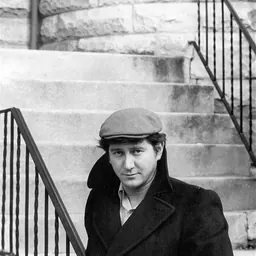
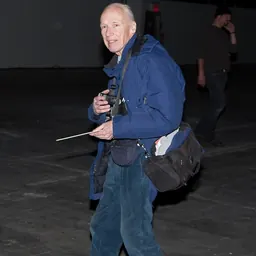
People in Sis Cunningham's life
Named in this biography and alive at the same time






Related people
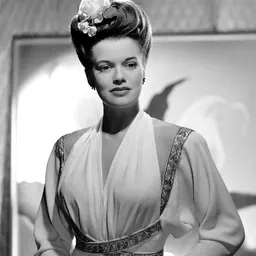
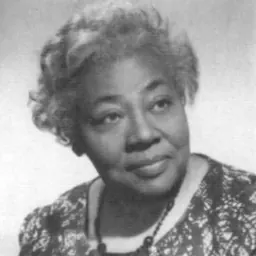
Same field, nearest in time



Contemporaries
People whose lives overlapped Sis Cunningham's



Frequently asked questions
Who was Sis Cunningham?
American musician (1909-2004)
When was Sis Cunningham born?
Sis Cunningham was born on 19 February 1909.
When did Sis Cunningham die?
Sis Cunningham died on 27 June 2004.
What was Sis Cunningham's occupation?
Sis Cunningham was a singer, musicologist, singer-songwriter, composer and editing.
What nationality was Sis Cunningham?
Sis Cunningham was American.
Sources & further reading
Cite this page
APA: Biography.guide. (2026). Sis Cunningham. https://biography.guide/sis-cunningham/
MLA: "Sis Cunningham." Biography.guide, https://biography.guide/sis-cunningham/.
Chicago: "Sis Cunningham." Biography.guide. https://biography.guide/sis-cunningham/.
Data last updated: 2026-09-20 · Spot an error? Report a correction.
Page generated 2026-09-27 05:07 UTC