
About Sir Thomas Lloyd, 1st Baronet
Lived 1820 – 1877 (aged 57). Sir Thomas Lloyd, 1st Baronet was a British politician and soldier.
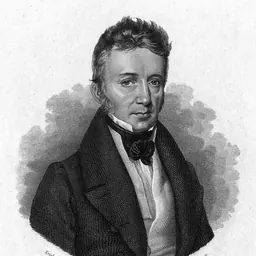
Sir Thomas Davies Lloyd, 1st Baronet (21 May 1820 – 21 July 1877) was a British Liberal Member of Parliament, for Cardiganshire (Ceredigion) 1865–1868 and Cardigan Boroughs 1868–1874. Although he coveted a peerage and spent a fortune in pursuit of that aim, he had to be content with a baronetcy.
Lloyd claimed descent from ancient Welsh families and placed great emphasis on these connections. He rebuilt Bronwydd as a Victorian Gothic fantasy 1853–1856. The house is now a ruin, in the process of clearance. Lloyd restored the old castle at Newport, Pembrokeshire as a seat for his Marcher Lordship of Cemais and Llangynllo Church. His chivalric fantasies left the estate deeply in debt.
Early life He was the son of Thomas Lloyd of Cilrhiwe and Bronwydd, Cardiganshire, who had been the High Sheriff of Cardiganshire in 1814. His mother, Ann, was the daughter of John Thomas of Llwydcoed, Carmarthenshire. He was educated at Harrow School and Christ Church, Oxford. In 1840, he joined the 13th Light Dragoons, and was a commander in Ottawa, Ontario, Canada with the 82nd Foot.
Landowner Upon the death of his father in 1845, Lloyd returned to Wales, and on 21 January 1846 he married Henrietta Mary, fourth daughter of George Reid, Esquire, of Watlington Hall, Norfolk, and Jamaica. He declined. In 1854, following the resignation of Colonel W.E. Powell who had served as MP for Cardiganshire for 38 years. The Earl of Lisburne emerged as the favoured candidate but given his Conservative political views, there was speculation that he would be opposed by a Liberal candidate. Lloyd was mentioned as the most likely to stand. However, support from the Pryse family of Gogerddan was not forthcoming and Lloyd chose not to contest the seat.
Lloyd was mentioned as a possible candidate for Cardigan Boroughs at the 1857 General Election, in opposition to John Lloyd Davies who had unexpectedly captured the seat at the 1855 by-election. However, Edward Pryse, a member of the influential Gogerddan family chose to contest the seat, and was supported by Lloyd.
Subsequently, a requisition was presented to Lloyd to contest the county seat in opposition to the Earl of Lisburne, and even at a late stage he was expected to go to the poll and is to have a chance of success. However, Lloyd withdrew and Lisburne was returned unopposed.
The 1859 General Election In 1859 it was again suggested that Lloyd would contest the county seat. Although scarcely a radical, Lloyd received strong support from the Welsh language radical press. The Aberdare-based Gwladgarwr, for example, deprecated the fact that two Conservatives, namely Colonel Powell of Nanteos and Arthur Saunders-Davies, were contesting Cardiganshire. In Baner Cymru, Thomas Gee was more strident, and strongly supported Lloyd. However, Lloyd again refused the invitation, citing a reluctance to take advantage of a division in the Conservative party in the county. Reluctance to oppose a fellow member of the landed gentry would be a charge levied against Lloyd at the subsequent election. Powell was returned by a fairly narrow margin.
Lloyd, meanwhile, became involved in Pembrokeshire county politics, proposing Sir Hugh Owen of Orielton as Liberal candidate at the by-election held in January 1861. Owen, like Lloyd was in favour of "a slow and safe reform" rather than more radical politics, but was defeated at the election by the Conservative candidate, George Lort Phillips.
The 1865 General Election Prior to the 1865 General Election, Colonel Powell, the sitting member for the Cardiganshire county constituency had indicated his intention to retire. As a leading landowner in the south of the county, Lloyd emerged as the Liberal candidate. However, when Powell reversed his decision, Lloyd issued an address stating that he would not oppose the sitting member. This reflected the fact that the Powell family, with one short interval in the 1850s, had held the county seat since 1816 and their claim to the seat had been widely accepted by the landowners of the county. The result was that both Henry Richard and David Davies, Llandinam offered themselves as alternative Liberal candidates. A selection meeting was arranged to be held at Aberaeron, but shortly before this took place, Powell again announced his retirement. Lloyd now stated that he would now fight the seat after all and Richard withdrew in his favour.
David Davies, however, did not withdraw, and proceeded to oppose Lloyd. Davies had a number of advantages, including the employment opportunities created by his railway building schemes. However, Lloyd was supported by those landowners who were associated with the Whig tradition, including Pryse family of Gogerddan who heavily influenced the politics of Aberystwyth. Also, a significant minority of nonconformists supported Lloyd.
Lloyd won the seat with a majority of 361 votes. Lloyd was ahead in four of the six polling districts, including Cardigan, where Lloyd polled 360 votes against a mere 65 for Davies. Lloyd trailed Lloyd by a narrow margin in the Lampeter district and was only heavily defeated in the Tregaron area, a result attributed to the coming of the railway and Davies's Calvinistic Methodist connections.
Despite his victory, the contest had been a costly one for Lloyd. His opponent was a wealthy man, who had deposited £10,000 in an Aberystwyth bank as "ale money for the battle". After the election, Davies made significant contributions to chapels in the north of the county where Lloyd had won by a small margin. As the next election approached, Lloyd announced that he would not bear the cost of another contested election for the county. He was however prepared to transfer to the borough seat in the event that the sitting member, Colonel Edward Pryse, decided to retire.
Member for Cardigan Boroughs, 1868-74 In 1868, Lloyd wished to avoid the financial burden of another contested election. When a Conservative, Ernest Vaughan, nephew of the Earl of Lisburne, announced that he would contest the county seat as a Conservative candidate, a contest was inevitable and Lloyd was determined not to stand even though his erstwhile opponent David Davies offered £500 to start a fund to contest the election.
A few weeks earlier, a Liberal meeting at Aberaeron offered him the opportunity of contesting the county again but at the same time the sitting member for Cardigan Boroughs, Edward Pryse, was obliged to step down to allow Lloyd to be returned for that constituency.
The county seat was in due course won by Evan Mathew Richards and Lloyd served as member for Cardigan until 1874.
By 1873 there were rumours of potential opposition to Lloyd by a wing of the Liberal Party that did not consider his views to be sufficiently advanced. However, David Davies indicated that he would not oppose Lloyd for the boroughs seat.
Lloyd died on 21 July 1877 and was buried six days later in the family vault at Llangunllo church. He was succeeded by his son, Sir Marteine Lloyd, 2nd Baronet.
Don’t just read it —
keep it.
Full-length biographies made to live with: read them, listen on the way to work, watch them tonight.
- E-book
- Audio
- Video
Instant download · yours to keep · every purchase keeps this site free
Important facts
People in Sir Thomas Lloyd, 1st Baronet's life
Named in this biography and alive at the same time




Related people
Same field, nearest in time





Contemporaries
People whose lives overlapped Sir Thomas Lloyd, 1st Baronet's




Frequently asked questions
Who was Sir Thomas Lloyd, 1st Baronet?
British politician (1820-1877)
When was Sir Thomas Lloyd, 1st Baronet born?
Sir Thomas Lloyd, 1st Baronet was born on 21 May 1820.
When did Sir Thomas Lloyd, 1st Baronet die?
Sir Thomas Lloyd, 1st Baronet died on 21 July 1877 in Bronwydd Castle.
What was Sir Thomas Lloyd, 1st Baronet's occupation?
Sir Thomas Lloyd, 1st Baronet was a politician and soldier.
What nationality was Sir Thomas Lloyd, 1st Baronet?
Sir Thomas Lloyd, 1st Baronet was British.
Sources & further reading
· Wikipedia: Sir Thomas Lloyd, 1st Baronet
· DBpedia: Sir Thomas Lloyd, 1st Baronet
Cite this page
APA: Biography.guide. (2026). Sir Thomas Lloyd, 1st Baronet. https://biography.guide/sir-thomas-lloyd-1st-baronet/
MLA: "Sir Thomas Lloyd, 1st Baronet." Biography.guide, https://biography.guide/sir-thomas-lloyd-1st-baronet/.
Chicago: "Sir Thomas Lloyd, 1st Baronet." Biography.guide. https://biography.guide/sir-thomas-lloyd-1st-baronet/.
Data last updated: 2026-09-20 · Spot an error? Report a correction.
Page generated 2026-09-27 05:26 UTC