
Sir Rupert Clarke, 2nd Baronet
Australian politician
About Sir Rupert Clarke, 2nd Baronet
Lived 1865 – 1926 (aged 61). Sir Rupert Clarke, 2nd Baronet was a military personnel and sir Rupert Clarke.
Sir Rupert Turner Havelock Clarke, 2nd Baronet (1865–1926) was a prominent Australian pastoralist, entrepreneur, politician and company director. He was the son of Sir William Clarke, 1st Baronet.
Early life and education Rupert Clarke was born on 16 March 1865 at Rupertswood, Sunbury, Victoria, the eldest son of William John Clarke and Mary Clarke (née Walker). His grandfather, William John Turner Clarke, was among the pioneer pastoralists of colonial Victoria. Clarke was educated at Wesley College and Hawthorn Grammar School in Melbourne, and later studied at the University of Oxford.
Career and inheritance In 1891 Clarke leased his father’s Cobram station near Deniliquin, New South Wales, and thereafter maintained a long association with pastoral interests in that State. Following his father’s death in May 1897, Clarke succeeded to the baronetcy and inherited extensive pastoral properties in Victoria, including Bolinda Vale, Red Rock and Rockbank, together comprising approximately 130,000 acres (52,600 ha). Over time he disposed of most of these holdings, retaining a reduced property at Bolinda Vale and approximately 800 acres (324 ha) near Rupertswood known as Kismet Park, on which he later built a residence after the sale of Rupertswood to his half-brother William Lionel Russell Clarke.
Clarke successfully continued his father’s stud enterprises, breeding English Leicester sheep and Derrimut Shorthorn cattle. As his Victorian holdings diminished, he expanded his pastoral interests elsewhere, particularly in Queensland, where he later owned Isis Downs in partnership with R. S. Whiting. In addition to pastoral activity, Clarke pursued a range of commercial ventures, not all of which proved successful. These included gold-mining at Coolgardie, Western Australia, in 1895; banana and peanut farming; and rubber and coconut plantations in the Territory of Papua, the latter also in partnership with Whiting. In 1914 he financed and led an expedition up the Fly River using his yacht Kismet. Mary Phyllis Clarke, who married Reginald Power in 1909.
Probate of Sir Rupert's will was granted in Victoria in 1927. His Victorian estate was valued at approximlately £300,000, including real property valued at £81,005 and personal property valued at £203,882,
His personal estate in New South Wales was valued at £91,114,
Under the terms of his will and codicil, Sir Rupert made structured provision for his widow and children, with trust funds set aside as follows: £100,000 for each surviving son, to be held in trust with income applied for maintenance and education, and to vest absolutely on attaining the age of 21. £50,000 to be set aside as a separate fund for the son who, upon attaining the age of 21, succeeded to the baronetcy. £60,000 for each surviving daughter, to be held in trust, with income payable for her sole and separate use.
In addition, Clarke provided his widow, Elsie, Lady Clarke with a life annuity of £5,000, as well a life interest in the income of hisresiduary estate, together with specified property interests in New South Wales.
After the death of his widow, the income from the residuary estate was to be held in trust for his children as tenants in common, with the daughters’ shares to remain settled so that income was paid to them for their separate use.
Don’t just read it —
keep it.
Full-length biographies made to live with: read them, listen on the way to work, watch them tonight.
- E-book
- Audio
- Video
Instant download · yours to keep · every purchase keeps this site free
Important facts
People in Sir Rupert Clarke, 2nd Baronet's life
Named in this biography and alive at the same time



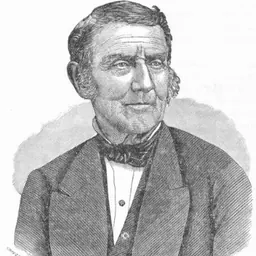
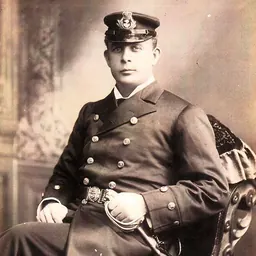

Related people
Same field, nearest in time


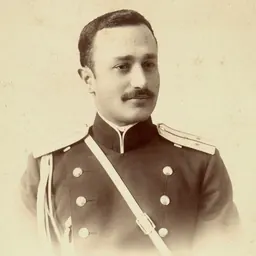



Contemporaries
People whose lives overlapped Sir Rupert Clarke, 2nd Baronet's
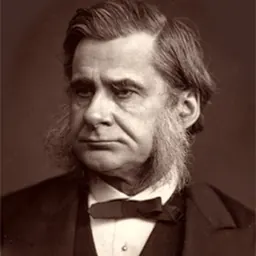


Frequently asked questions
Who was Sir Rupert Clarke, 2nd Baronet?
Australian politician (1865-1926)
When was Sir Rupert Clarke, 2nd Baronet born?
Sir Rupert Clarke, 2nd Baronet was born on 16 May 1865 in Sunbury, Victoria, Victoria (Australia).
When did Sir Rupert Clarke, 2nd Baronet die?
Sir Rupert Clarke, 2nd Baronet died on 25 December 1926 in Monte Carlo.
What was Sir Rupert Clarke, 2nd Baronet's occupation?
Sir Rupert Clarke, 2nd Baronet was a military personnel and sir Rupert Clarke.
Sources & further reading
· Wikipedia: Sir Rupert Clarke, 2nd Baronet
· DBpedia: Sir Rupert Clarke, 2nd Baronet
Cite this page
APA: Biography.guide. (2026). Sir Rupert Clarke, 2nd Baronet. https://biography.guide/sir-rupert-clarke-2nd-baronet/
MLA: "Sir Rupert Clarke, 2nd Baronet." Biography.guide, https://biography.guide/sir-rupert-clarke-2nd-baronet/.
Chicago: "Sir Rupert Clarke, 2nd Baronet." Biography.guide. https://biography.guide/sir-rupert-clarke-2nd-baronet/.
Data last updated: 2026-09-22 · Spot an error? Report a correction.
Page generated 2026-09-27 05:05 UTC