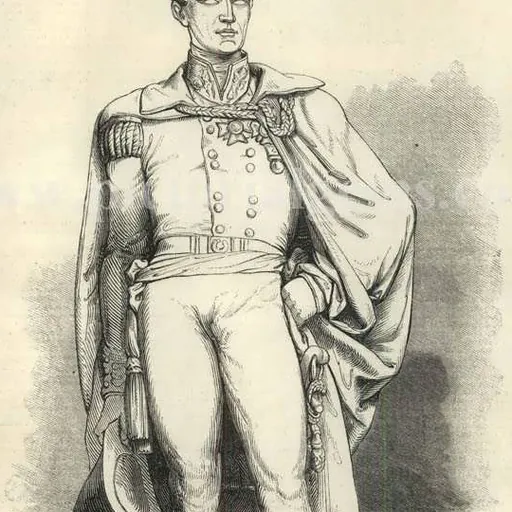
Sir John Thomas Jones, 1st Baronet
British major-general in the Royal Engineers
About Sir John Thomas Jones, 1st Baronet
Lived 1783 – 1843 (aged 59–60). Sir John Thomas Jones, 1st Baronet was a British cricketer, engineer and military commander.
Major-General Sir John Thomas Jones, 1st Baronet, (25 March 1783 – 26 February 1843) was a British Army officer in the Royal Engineers who played a leading engineering role in a number of European campaigns of the early nineteenth century. Jones was revered by the Duke of Wellington and asked to advise on fortifications including the modernisation of the defences in Gibraltar. He was also notable as an English amateur cricketer who made six appearances.
Biography Sir John Thomas Jones was eldest of five sons of John Jones, esq., general superintendent at Landguard Fort, Felixstowe, Suffolk, and of Cranmer Hall, Fakenham, Norfolk, by his wife Mary, daughter of John Roberts of the 29th foot. He was born at Landguard Fort on 25 March 1783. Sir Harry David Jones was his brother. He was educated at the grammar school at Ipswich, joined the Royal Military Academy, Woolwich in the spring of 1797, received a commission as second lieutenant in the Royal Engineers on 30 August 1798, and embarked in October for Gibraltar. Jones advised on improvements for Gibraltar's fortifications including Parson's Lodge Battery and Wellington Front. He was appointed adjutant of the corps, and remained at Gibraltar four years. While at Gibraltar he was employed on the defences of the north front and in constructing the famous galleries; he also studied seriously, and became a good French and Spanish scholar. He was promoted lieutenant on 14 September 1800 and in 1803 he returned to England. There he was employed on the eastern coast in constructing defence works to oppose the threatened invasion, and in the following year in throwing up field-works from Widford to Galleywood Common (known as the Chelmsford lines), to cover London on that team.
Malta, Naples, Sicily On 1 March 1805 Jones was promoted second captain, and soon after embarked at Portsmouth with the expedition under Sir James Craig. After some months' cruising the troops were disembarked in July at Malta, where Jones did garrison duty till the autumn. He then accompanied the expedition to Naples, and was detached with the commanding engineer to Calabria to retrench a position at Sapri for covering a re-embarkation. From Naples the troops sailed for Sicily, and, on the dethronement of the king, garrisoned Messina and Milazzo. Jones was employed under Major Lefebure in constructing works of defence. In the spring of 1806 Jones reported, under confidential instructions from the king of Naples, on the forts, harbours, and military condition of Sicily. His work was appreciated by the Neapolitan government, and was commended by Sir John Moore. In June 1806 Jones embarked at Messina with a force under Sir John Stuart, which landed in the bay of St. Euphemia. He was present at the battle of Maida, and marched with an advanced corps under General Oswald to sweep off the French detachments between Monteleone and Reggio, and to reduce . The castle was so ably defended that its capture required all the formalities of a siege. Jones directed the attack with much credit, and after the capture of the castle persuaded Stuart to retain and strengthen it instead of blowing it up. Jones carried out this work so successfully that it was held until February 1808, proving during that time an invincible bar to the invasion of Sicily. When it was reduced to ruins by the French, the garrison was withdrawn in boats, without the loss of a single man, by means of a covered gallery constructed by Jones. Jones always held the retention of Scylla to be the most meritorious effort of his professional life. In December 1806 Jones returned to England, visiting Algiers on the way, and on 1 January 1807 was appointed adjutant at Woolwich (the headquarters) of the royal military artificers. The increasing demand of the war necessitated the augmentation of the local and independent companies of engineer workmen, and Jones was occupied till the following year in reorganising them into one regular corps.
He died, after a day's illness, on 25 February 1843, at his residence, Pittville, Cheltenham.
Family On 20 April 1816 Jones married, in London, Catherine Maria, daughter of Effingham Lawrence of New York City. He had three sons and a daughter. His eldest son, Sir Lawrence, was murdered by robbers on 7 November 1845 when travelling between Macri and Smyrna, and was succeeded in the baronetcy by his brother Willoughby, who died in 1884, and whose eldest son, Lawrence, born in 1857, was the fourth baronet.
His brother George Matthew Jones was a Royal Navy captain.
Publications Jones was the author of a short account of Sir John Stuart's campaign in Sicily, published in 1808; Journal of Sieges carried on by the Army under the Duke of Wellington in Spain between the years 1811 and 1814, 1814; Account of the War in Spain, Portugal, and the South of France from 1808 to 1814 inclusive, 1817. He also printed in 1829 for private circulation Memoranda relative to the Lines thrown up to cover Lisbon in 1810; these were afterwards published in the Professional Papers of the Corps of Royal Engineers. A third edition of the Journal of the Sieges was published in 1843, and edited by his brother, Sir Harry David Jones, who added some valuable information, and incorporated in this edition the memoranda on the lines of Torres Vedras. Jones's Reports relating to the Re-establishment of the Fortresses in the Netherlands from 1814 to 1830 were also, by permission of the minister for war, edited by Sir Harry Jones, and printed for private circulation among the officers of the corps of royal engineers.
Don’t just read it —
keep it.
Full-length biographies made to live with: read them, listen on the way to work, watch them tonight.
- E-book
- Audio
- Video
Instant download · yours to keep · every purchase keeps this site free
Important facts
more
Sir Thomas JonesPeople in Sir John Thomas Jones, 1st Baronet's life
Named in this biography and alive at the same time

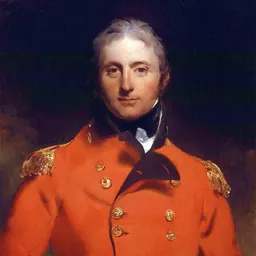
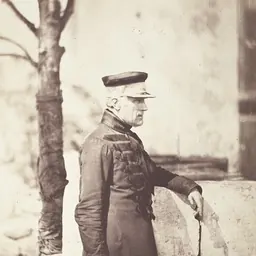

Related people
Same field, nearest in time


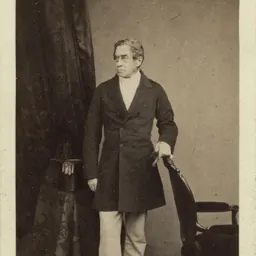

Contemporaries
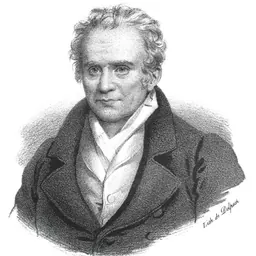
People whose lives overlapped Sir John Thomas Jones, 1st Baronet's



Frequently asked questions
Who was Sir John Thomas Jones, 1st Baronet?
British major-general in the Royal Engineers (1783-1843)
When was Sir John Thomas Jones, 1st Baronet born?
Sir John Thomas Jones, 1st Baronet was born in 1783 in Landguard Fort.
When did Sir John Thomas Jones, 1st Baronet die?
Sir John Thomas Jones, 1st Baronet died in 1843.
What was Sir John Thomas Jones, 1st Baronet's occupation?
Sir John Thomas Jones, 1st Baronet was a cricketer, engineer and military commander.
What nationality was Sir John Thomas Jones, 1st Baronet?
Sir John Thomas Jones, 1st Baronet was British.
Sources & further reading
· Wikipedia: Sir John Thomas Jones, 1st Baronet
Cite this page
APA: Biography.guide. (2026). Sir John Thomas Jones, 1st Baronet. https://biography.guide/sir-john-thomas-jones-1st-baronet/
MLA: "Sir John Thomas Jones, 1st Baronet." Biography.guide, https://biography.guide/sir-john-thomas-jones-1st-baronet/.
Chicago: "Sir John Thomas Jones, 1st Baronet." Biography.guide. https://biography.guide/sir-john-thomas-jones-1st-baronet/.
Data last updated: 2026-09-21 · Spot an error? Report a correction.
Portrait: Wikimedia Commons · author & licence
Page generated 2026-09-27 04:59 UTC