
About Sir James Lowther, 4th Baronet
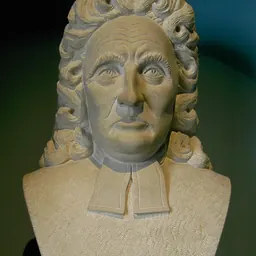
Lived 1673 – 1755 (aged 81–82). Sir James Lowther, 4th Baronet was a politician, industrialist and entrepreneur.
Sir James Lowther, 4th Baronet, FRS (1673 – 2 January 1755) was an English landowner, industrialist and Whig politician who sat in the House of Commons for 54 years between 1694 and 1755. His ownership and development of coal mines around Whitehaven in Cumberland gave him substantial revenues, and he was reputed the richest commoner in England.
Early life Lowther was baptised on 5 August 1673 at St Giles in the Fields, London, the second son of Sir John Lowther, 2nd Baronet and Jane Leigh. Educated privately in London, he attended Queen's College, Oxford and the Middle Temple. On the death of his father in 1706, the baronetcy was inherited by James's elder brother Christopher, but Christopher (whose drinking and gambling had led his father to disinherit him) was cut off with an annuity of about £100 a year and the family properties passed to James, who subsequently inherited the baronetcy in 1731, when his brother died without children. " He was sworn a Privy Counsellor in 1714. Politically, Lowther was a Whig, but with little interest in national affairs; his Parliamentary activity was primarily directed towards promoting local interests in Cumbria.
Source of wealth
The principal wealth of the estates was in coal mines, in West Cumberland (exporting about 35 thousand tons of coal a year and making a profit of about £1,000 a year when James inherited them). He used this income to extend and improve his holdings in the Cumberland coalfield, and to maintain his position as the dominant coal-owner there. Whitehaven produced most of the coal shipped from West Cumberland (which was largely sold into Ireland), and this made the Lowthers predominant in the coal field; the price of Whitehaven coals at Dublin being set by competition with other coal fields, not with other Cumberland ports such as Workington. Lowther's father had been worried that this predominance would be lost because of increased production elsewhere in the coal field (for example by the pits in the Workington area owned by the Curwen family) which Whitehaven would be unable to match because workable coal would soon be exhausted, and because of the limited capacity of Whitehaven harbour. On Tyneside, the leading coal-owners protected their profits by a price-setting cartel (the 'Grand Alliance'); Lowther instead adopted other strategies to maintain his dominance. " but the context of the remark is that Clerk was planning (and gathering material for) a learned dissertation on coal-mining The intention was to destroy his local competitors and establish a local monopoly; he failed to offer others high enough purchase prices to secure the properties needed for a monopoly, but by the 1740s Lowther was the dominant exporter at every harbour in the coalfield. To continue mining without the pits flooding, Sir John had had to use horse-powered gins to raise water mechanically, but this was expensive (and increasingly so as the seams were followed deeper): Sir John, and after him James, had concerns that there were little more reserves of economically retrievable coal. In 1712 John Spedding urged Lowther to consider the adoption of pumping by steam, by "Captain Savory's invention", but nothing seems to have come of this until in 1715 Lowther discussed the problem of recovering a flooded pit with Thomas Newcomen . Newcomen submitted proposals in October 1715, which Spedding found clear and businesslike; from them he concluded that a Newcomen engine would recover the pit in two-thirds the time that horse gins would take, and would do so at a quarter of the cost. A contract was signed (November 1715) for a small (17-inch diameter cylinder) Newcomen engine to be erected and leased from the consortium holding Savery's patent for £182 a year. Despite numerous teething problems, (principally rapid boiler corrosion (the boiler was made of both iron and copper, and was originally fed with the water pumped from the mine), steam leaks from flanges, and leakage of pumped water from the wooden pipes originally used.) More generally "it is worth knowing that only a few years ago an attempt to build a one-third-scale replica Newcomen engine ran into a great deal of difficulty. Even with good plans, even with plenty of technical expertise, even with a knowledge of what the end product was supposed to be and an absolute certainty that it could be made to work, it turned out that it took many months of tinkering and fiddling to get the engine to run properly". The licensees provided a commissioning engineer, but Carlisle Spedding was – so his brother asserted – the only other person who understood the engine; certainly the patent-holders tried to poach him as a commissioning engineer for engines being built elsewhere. Horses were still used to haul coal, and for winding of coal and men.
Working coal under the sea – Saltom pit
Lowther then exploited the greater ease with which water ingress could be coped with by sinking a pit at the western edge of the Howgill colliery, close to the sea shore at Saltom. Work began early in 1730, and the pit was officially opened in May 1732 with great celebration (an ox-roast in the street; a public dinner for the Justices of the Peace and the principal inhabitants (with many toasts...)). The Newcastle Courant thought the celebrations fully justified; because of the scale of the undertaking ('the Attempt being generous and great': a shaft twelve foot by ten had been sunk seventy-seven fathoms (the deepest a pit had been sunk in any part of Europe) to a three-yard thick coal seam (the Main Band) in twenty-three months, using thirty barrels of gunpowder, and without any loss of life or limb by the workforce); because of the difficulties overcome (which "would have discourag'd all common Undertakers" (a "blower" of firedamp had been encountered at forty-two fathoms) but had been overcome by the 'unparallel'd Conduct and Skill of Sir James Lowther's Managers, Messieurs John and Carlisle Spedding'); but above all 'The perfecting of this costly Undertaking renders a universal Joy to the Inhabitants...; because the consequence is such as makes certain a valuable Colliery for many Generations'.
Further improvements proved necessary; attempts to ship coal directly from Saltom were unsuccessful, and an underground roadway was driven to the bottom of another pit, from whose pithead a waggonway ran to Whitehaven harbour. The pumping engine originally installed at Saltom proved inadequate, and by 1739 two much larger ones were in use. The Society members elected Sir James a Fellow, but were unable to come up with any solution, or improve on the assertion (eventually found to be incorrect) of Carlisle Spedding, the paper's author, that "this sort of Vapour, or damp Air, will not take Fire except by Flame; Sparks do not affect it, and for that Reason it is frequent to use Flint and Steel in Places affected with this sort of Damp, which will give a glimmering Light, that is a great Help to the Workmen in difficult Cases." Spedding's "steel mill" Spedding invented a "steel mill", in which a flint was held against a rapidly rotated steel disc, producing a stream of sparks giving some illumination. A second worker was needed to operate the mill, since the disc was rotated by a hand crank, and its operation was tiring. The use of the mill as a safer alternative to naked flame spread to other coalfields; prior to the introduction of the Davy lamp, up to a hundred steel mills were in daily use at one Tyneside colliery despite a fatal firedamp explosion at Wallsend colliery in 1785 ignited by a steel mill.
Spedding also introduced the practice of "coursing the air". As in other pits, the working areas were ventilated by fresh air, drawn down one half of a partitioned shaft; the air was then exhausted up the other half of the shaft, the air circulation being driven by a furnace at the base of the return half of the shaft: wooden partitioning and doors were used to prevent short-circuiting between feed and exhaust flows within the mine. Spedding improved this by ensuring that after ventilating areas currently being worked the exhaust stream was routed through previously worked areas to eliminate any possibility of firedamp accumulation in unventilated volumes. This practice also spread from the Lowther pits to become standard practice in other coalfields.
Lowther also supported experimental work on firedamp by William Brownrigg, a local doctor (and a son of the local gentry; in due course he married a Spedding daughter) and presented papers by Brownrigg at the Royal Society. Brownrigg was elected an FRS, but his papers on the subject were held back by him from publication (he is said to have intended a History of Coal Mining), and have now been lost.
Harbours
Sir John had developed Whitehaven as a port for the export of his coal, and had opposed and obstructed the development of a rival harbour at Parton, little more than a mile to the north. James was used by his father to organise opposition in Parliament (1705-6) to a private bill brought in by Thomas Lamplugh, MP for Cockermouth, to allow repair of the facilities at Parton, but Sir John died as the bill came before committee; James was called away to bury his father and take over the estates, and Lamplugh got his act, the Parton Harbour Act 1705 (4 & 5 Ann. c. 5). This set up a committee of trustees to run the port, and gave them powers to build between the high and low water marks (over which Lowther otherwise would have had jurisdiction), and to levy tolls on coals loaded at the port.
In 1709, James obtained an act of Parliament, the Whitehaven Harbour Act 1708 (7 Ann. c. 9), to improve Whitehaven harbour, and collect tolls (on cargoes: for example d a ton
The substance of what I took the liberty to mention to you this morning was: You are on the borders of the grave, as well as I; shortly we must both appear before God. When it seemed to me, some months since, that my life was near an end, I was troubled that I had not dealt plainly with you. This you will permit me to do now, without any reserve, in the fear and in the presence of God.
I reverence you for your office as a magistrate; I believe you to be an honest, upright man; I love you for having protected an innocent people from their cruel and lawless oppressors. But so much the more am I obliged to say (though I judge not; God is the judge), I fear you are covetous, that you love the world. And if you do, as sure as the Word of God is true, you are not in a state of salvation.
The substance of your answer was: That many people exhort others to charity from self-interest; that men of fortune must mind their fortune; that you cannot go about to look for poor people; that when you have seen them your-self, and relieved them, they were scarce ever satisfied; that many make an ill use of what you give them; that you cannot trust the account people give of themselves by letters; that nevertheless you do give to private persons by the hands of Colonel Hudson and others; that you have also given to several hospitals an hundred pounds at a time, but that you must support your family; that the Lowther family has continued above four hundred years; that you are for great things -- for public charities and for saving the nation from ruin; and that others may think as they please, but this is your way of thinking, and has been for many years... Is not death at hand? And are not you and I just stepping into eternity? Are we not just going to appear in the presence of God, and that naked of all worldly goods ? Will you then rejoice in the money you have left behind you? or in that you have given to support a family, as it is called -- that is, in truth, to support the pride and vanity and luxury which you have yourself despised all your life long? Despite Wesley's admonitions, Lowther divided his estates and property largely among other Lowther baronets (although a thousand pounds was left to John Spedding, and five hundred pounds to Carlisle Spedding).
The late Sir James Lowther has left the Bulk of his great Fortune, amounting to near £600,000 to the two Baronets of his name, distant relations. His Estate in Cumberland, with the Coal-Mines, which produce £15,000 per AnnumAnnual profits of the Whitehaven mines were about £7,000 a year; Lowther also had (less profitable) collieries at Parton, Dearham, Scalegill, and Seaton;
Sir William died in 1756 and the properties he had inherited from Sir James Lowther of Whitehaven passed to Sir James Lowther of Lowther (Wicked Jimmy), with whom he is sometimes confused.
Works was presented by Lowther but without any explicit claim to authorship: probably written by Carlisle Spedding.
Don’t just read it —
keep it.
Full-length biographies made to live with: read them, listen on the way to work, watch them tonight.
- E-book
- Audio
- Video
Instant download · yours to keep · every purchase keeps this site free
Important facts
People in Sir James Lowther, 4th Baronet's life
Named in this biography and alive at the same time


Related people
Same field, nearest in time




Contemporaries
People whose lives overlapped Sir James Lowther, 4th Baronet's



Frequently asked questions
Who was Sir James Lowther, 4th Baronet?
English politician
When was Sir James Lowther, 4th Baronet born?
Sir James Lowther, 4th Baronet was born in 1673 in London.
When did Sir James Lowther, 4th Baronet die?
Sir James Lowther, 4th Baronet died on 2 January 1755 in London.
What was Sir James Lowther, 4th Baronet's occupation?
Sir James Lowther, 4th Baronet was a politician, industrialist and entrepreneur.
Sources & further reading
· Wikipedia: Sir James Lowther, 4th Baronet
· DBpedia: Sir James Lowther, 4th Baronet
Cite this page
APA: Biography.guide. (2026). Sir James Lowther, 4th Baronet. https://biography.guide/sir-james-lowther-4th-baronet/
MLA: "Sir James Lowther, 4th Baronet." Biography.guide, https://biography.guide/sir-james-lowther-4th-baronet/.
Chicago: "Sir James Lowther, 4th Baronet." Biography.guide. https://biography.guide/sir-james-lowther-4th-baronet/.
Data last updated: 2026-09-20 · Spot an error? Report a correction.
Page generated 2026-09-27 05:07 UTC