
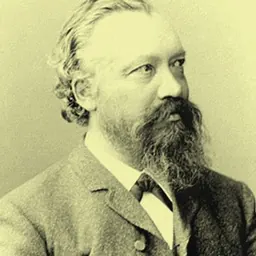
Sir James Lithgow, 1st Baronet
British businessman
About Sir James Lithgow, 1st Baronet
Lived 1883 – 1952 (aged 69). Sir James Lithgow, 1st Baronet was a British shipbuilder.
Sir James Lithgow, 1st Baronet, (27 January 1883 – 23 February 1952) was a Scottish industrialist who played a major role in restructuring the British shipbuilding and steelmaking industries in the 1930s in addition to playing an important role in formulating public policy and supervising wartime production.
Early life James was born in Port Glasgow, Scotland, the son of William Todd Lithgow; in the same year his parents moved to Langbank. His father was a partner in the shipbuilding firm of Russell & Co. and James was educated along with his brother Henry Lithgow, at first privately at home then at the Glasgow Academy before the two were apprenticed in the shipbuilding industry. William's health failed in 1907 and his two sons were made partners. William died the following year and the two brothers, who were very close, took control of the company.
Shipbuilding The brothers developed the business with James taking on a wider industry role in the Clyde Shipbuilders' Association where he met Andrew Rae Duncan. The brothers agreed that in the event of war, James would take on military service while Henry would run the shipyard so James joined the Royal Garrison Artillery, initially in the Volunteer Force, and at the creation of the Territorial Force he was a lieutenant in the Clyde Royal Garrison Artillery. During World War I, James served in a howitzer battery on the Western Front and was awarded the Military Cross, breveted lieutenant-colonel and awarded the Territorial Decoration. However, James became resentful of his military service, believing that he would contribute more to the war effort back at the shipbuilding yard. It was not until May 1917 that Sir Eric Campbell Geddes appointed him director of merchant shipbuilding with responsibility to ensure that production targets were achieved. This was James's first step into public life and policy, and introduced him to men such as Lords Pirrie and Weir.
James rejoined Henry in the business in 1919 at which point they restructured the partnership of Russell & Co into a private limited company, Lithgows Ltd. They then embarked on a rapid process of acquisition and expansion, adopting vertical integration and taking the company into coal mining and steelmaking. However, James was becoming increasingly involved in public affairs, being appointed a Deputy Lieutenant of Renfrewshire in 1919, and becoming president of the Shipbuilding Employers' Federation in 1920. James renewed his contacts with Lord Weir who was then president of the National Confederation of Employers' Organisations. James became vice-president of the National Confederation in 1922 and was the United Kingdom's representative at the International Labour Organization in Geneva between 1922 and 1927, making a connection with Horace Wilson. James was created a baronet by Stanley Baldwin in the 1923 King's Birthday Honours for this work. The brothers purchased the engine works of Rankine and Blackmore in 1923. He was appointed Honorary Colonel of its successor units, the Clyde Heavy Brigade, Royal Artillery, and 416th (Clyde) Coast Regiment, RA, from 1924.
This was the era of Red Clydeside and the brothers had strong views on shipbuilding and industry in general. James was the public spokesman of the two and was vocal in his criticism of organised labour. James believed in rigorous management control of costs and wages through the use of automation and technology, and efficient exploitation of manual labour. He further believed that there was overcapacity in the shipbuilding industry and that yard closures and job losses were inevitable. James saw organised labour as naturally opposed to his policies but claimed that a rationalised industry would provide sustainable jobs and provide a basis for growth. It was at Beardmores that James spotted young engineering manager Ian MacGregor who broke a strike by driving a crane himself for two weeks. James accelerated his career and MacGregor went on himself to be a major industrial figure.
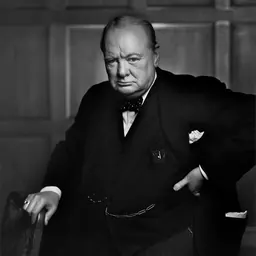
Steel James now focussed his rationalising zeal on the steel industry. The Lithgows owned James Dunlop & Co. and they opened talks with John Craig to merge their business with his Colville Group. The merger was finalised in 1931. In 1934 the Bank of England helped the Lithgows to buy the Steel Company of Scotland for £672,975 (£30.46 million at 2003 prices )). In 1936 the brothers sold the company to Colville for £951,750 {42.54 million at 2003 prices ). In 1940, just after the outbreak of World War II, Winston Churchill called James to London, again as Controller of Merchant Shipbuilding and Repair and as a Lord Commissioner of the Admiralty. He also had a brief responsibility for tank production and worked with Harold Macmillan on the industrial capacity committee of the production council. He served as President of The Institution of Engineers and Shipbuilders in Scotland from 1929 to 1931. From 1943 to 1945 he was president of the Iron and Steel Federation, while still remaining active in Beardmores and Fairfields. In the 1945 New Year Honours he was appointed a Knight Grand Cross of the Order of the British Empire (GBE), and in the 1947 King's Birthday Honours he was made a Companion of the Order of the Bath (CB). He was also awarded the Dutch Order of Orange-Nassau.
Private life James was very close to his brother Henry and they enjoyed shooting grouse and deer together at the family estate at Ormsary, Argyll. The two were both raised as staunch Presbyterians and James was very devout. The two brothers both lived with their mother at Drums, Langbank until James married shipowner's daughter Gwendolyn Amy Harrison in 1924 when the couple bought a house nearby at Langbank and a further house for entertaining at Ormsary. The couple had two daughters; Margaret and Ann, and a son, William who subsequently inherited the baronetcy.
Arms
Don’t just read it —
keep it.
Full-length biographies made to live with: read them, listen on the way to work, watch them tonight.
- E-book
- Audio
- Video
Instant download · yours to keep · every purchase keeps this site free
Important facts
People in Sir James Lithgow, 1st Baronet's life
Named in this biography and alive at the same time





Related people
Same field, nearest in time

Contemporaries
People whose lives overlapped Sir James Lithgow, 1st Baronet's


Frequently asked questions
Who was Sir James Lithgow, 1st Baronet?
British businessman (1883–1952)
When was Sir James Lithgow, 1st Baronet born?
Sir James Lithgow, 1st Baronet was born on 27 January 1883 in Port Glasgow.
When did Sir James Lithgow, 1st Baronet die?
Sir James Lithgow, 1st Baronet died on 23 February 1952 in Langbank.
What was Sir James Lithgow, 1st Baronet's occupation?
Sir James Lithgow, 1st Baronet was a shipbuilder.
What nationality was Sir James Lithgow, 1st Baronet?
Sir James Lithgow, 1st Baronet was British.
Sources & further reading
· Wikipedia: Sir James Lithgow, 1st Baronet
· DBpedia: Sir James Lithgow, 1st Baronet
Cite this page
APA: Biography.guide. (2026). Sir James Lithgow, 1st Baronet. https://biography.guide/sir-james-lithgow-1st-baronet/
MLA: "Sir James Lithgow, 1st Baronet." Biography.guide, https://biography.guide/sir-james-lithgow-1st-baronet/.
Chicago: "Sir James Lithgow, 1st Baronet." Biography.guide. https://biography.guide/sir-james-lithgow-1st-baronet/.
Data last updated: 2026-09-20 · Spot an error? Report a correction.
Page generated 2026-09-27 05:18 UTC