
About Sir Henry Willink, 1st Baronet
Lived 1894 – 1973 (aged 79). Sir Henry Willink, 1st Baronet was a British politician.
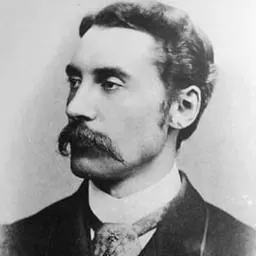
Sir Henry Urmston Willink, 1st Baronet, (7 March 1894 – 20 July 1973) was a British politician and public servant. A Conservative Member of Parliament from 1940, he became Minister of Health in 1943. During his time in power he was appointed Special Commissioner for those made homeless by the London Blitz and was involved with the production of the Beveridge Report.
The details of the report proposed a comprehensive free healthcare system, this led to the white paper A National Health Service, published in 1944, suggesting the creation of such a service, which did not include the nationalisation of hospitals. Such a policy was later implemented by the Labour Party through the creation of the National Health Service which differed from the proposals suggested by Willink. At the time he claimed the nationalisation of voluntary hospitals "will destroy so much in this country that we value".
Early life and wartime service Willink was born in Liverpool. He was educated as a King's Scholar at Eton College, where he won the Newcastle Scholarship in 1912, and at Trinity College, Cambridge. Before he could take his Cambridge degree, he volunteered for service in the Royal Field Artillery during the First World War. When aged only 22, Willink commanded a battery at the 1916 Battle of the Somme. Willink received the Military Cross and the Croix de Guerre. Post-war, he was called to the Bar by the Inner Temple in 1920, was appointed to the rank of King's Counsel in 1935 and became a Bencher in 1942.
Political career In 1938 Willink stood as a Conservative in Ipswich to replace the incumbent MP John Ganzoni, but lost to Richard Stokes.
Willink was elected as Member of Parliament (MP) for Croydon North in a wartime by-election on 19 June 1940. From 1955 to 1971, he held the office of Dean of Arches, the senior ecclesiastical judge of England.
Honours He was made a baronet, of Dingle Bank in the City of Liverpool, in 1957, and was awarded an honorary LLD by the University of Melbourne in 1955. His papers are held at Churchill College, Cambridge.
Arms
Don’t just read it —
keep it.
Full-length biographies made to live with: read them, listen on the way to work, watch them tonight.
- E-book
- Audio
- Video
Instant download · yours to keep · every purchase keeps this site free
Important facts
People in Sir Henry Willink, 1st Baronet's life
Named in this biography and alive at the same time


Related people
Same field, nearest in time





Contemporaries
People whose lives overlapped Sir Henry Willink, 1st Baronet's


Frequently asked questions
Who was Sir Henry Willink, 1st Baronet?
British politician and public servant (1894-1973)
When was Sir Henry Willink, 1st Baronet born?
Sir Henry Willink, 1st Baronet was born on 7 March 1894 in Liverpool.
When did Sir Henry Willink, 1st Baronet die?
Sir Henry Willink, 1st Baronet died on 20 July 1973.
What was Sir Henry Willink, 1st Baronet's occupation?
Sir Henry Willink, 1st Baronet was a politician.
What nationality was Sir Henry Willink, 1st Baronet?
Sir Henry Willink, 1st Baronet was British.
Sources & further reading
· Wikipedia: Sir Henry Willink, 1st Baronet
Cite this page
APA: Biography.guide. (2026). Sir Henry Willink, 1st Baronet. https://biography.guide/sir-henry-willink-1st-baronet/
MLA: "Sir Henry Willink, 1st Baronet." Biography.guide, https://biography.guide/sir-henry-willink-1st-baronet/.
Chicago: "Sir Henry Willink, 1st Baronet." Biography.guide. https://biography.guide/sir-henry-willink-1st-baronet/.
Data last updated: 2026-09-26 · Spot an error? Report a correction.
Page generated 2026-09-27 05:16 UTC