
About Sir Arthur Haselrige, 2nd Bt
Lived 1601 – 1661 (aged 59–60). Sir Arthur Haselrige, 2nd Bt was a politician.
Sir Arthur Haselrig, 2nd Baronet (1601 – 7 January 1661) was an English politician and military officer. A major critic of Charles I of England during the period of Personal Rule from 1629 to 1640, he was one of the Five Members whose attempted arrest sparked the First English Civil War in August 1642. As a leading Parliamentarian, he held various military and political posts during the Wars of the Three Kingdoms.
Haselrig approved the execution of Charles I in January 1649, although he refused to participate in his trial, but later opposed Oliver Cromwell's creation of The Protectorate in 1653. In the political struggle which ended with the Stuart Restoration in May 1660, he sought to prevent the return of Charles II of England. Viewed as an opponent of the new regime, he was arrested and held in the Tower of London, where he died on 7 January 1661.
Personal details Descended from Leicestershire landed gentry, Haselrig was the eldest son of Sir Thomas Hesilrige, 1st Baronet of Noseley Hall, Leicestershire, and of Frances Gorges, daughter of Sir William Gorges, of Alderton, Northamptonshire.
Haselrig married firstly Frances Elmes, daughter of Thomas Elmes of Lilford Hall, Northamptonshire, by whom he had two sons and two daughters. He married secondly Dorothy Greville, sister of Robert Greville, 2nd Baron Brooke, by whom he had three sons and five daughters. He was heavily involved in the Act of Attainder against Thomas Wentworth, Earl of Strafford, the Root and Branch Bill and the Militia Bill of 7 December 1641. Charles I tried to arrest him for treason on 3 January 1642, along with John Hampden, Denzil Holles, John Pym and William Strode. However the so-called "Five Members", together with the peer Edward Montagu, 2nd Earl of Manchester who was also due to be arrested, were tipped off by Robert Devereux, 3rd Earl of Essex. The king marched with his guards into the House of Commons chamber only to find that the Five Members had fled.
Civil War Haselrig was very active in the First English Civil War on the Parliamentarian side. He raised a troop of horse for the Earl of Essex and fought at the Battle of Edgehill. He was a commander in the West under William Waller, being nicknamed his fidus Achates, and led his cuirassiers, who were known as the London lobsters. He and his troops distinguished themselves at the Battle of Lansdowne on 5 July 1643, where his men defeated Sir Beville Grenville's Pikemen, although the battle is traditionally seen as indecisive. At the Battle of Roundway Down, on 13 July, Haselrig's force met a Royalist cavalry charge at the halt and after a brief clash, retreated in disorder, the Parliamentarian army losing the battle to Lord Wilmot. Haselrig was shot three times at Roundway Down, with the bullets apparently bouncing off his armour. After firing a pistol at Haselrig's helmeted head at close range without any effect Richard Atkyns described how he attacked him with his sword, but it too caused no visible damage; Haselrig was under attack from several people and succumbed only when Atkyns attacked his unarmoured horse. After the death of his horse Haselrig tried to surrender, but as he fumbled with his sword, which was tied to his wrist, he was rescued. He suffered only minor wounds from his ordeal. This incident was related to Charles I and elicited one of his rare attempts at humour. The king said that if Haselrig had been as well supplied as he was fortified he could have withstood a siege.
At the Battle of Cheriton, his men defeated Sir Henry Bard's cavalry charge, seriously weakening Ralph Hopton's army in the west. This battle was a turning point in the war and the king's secretary Sir Edward Walker said that after Cheriton, instead of an offensive war they were forced to make a defensive war.
Governor of Newcastle Haselrig supported Oliver Cromwell in his dispute with the Earl of Manchester and the Earl of Essex. When the Self-denying Ordinance was approved by Parliament he gave up his commission and became one of the leaders of the Independent party in Parliament. On 30 December 1647 he was appointed governor of Newcastle upon Tyne, which he successfully defended, besides defeating the Royalists on 2 July 1648 and regaining Tynemouth. In October he accompanied Cromwell to Scotland, and gave him valuable support in the Scottish expedition in 1650. Between 1647 and 1650 Haselrig and his son bought a large amount of property in the north east which included the manors of Bishop Auckland, Middleham, Easingwoodborough and Wolsingham at a total cost of over £22,500.
Despite Monck's guarantee of a pardon, Haselrig was targeted by the Royalist Silius Titus, who was also responsible for disinterring the bodies of Cromwell, Bradshaw and Ireton and having them ritually executed at Tyburn. His life was spared but he was imprisoned in the Tower of London where he died on 7 January 1661.
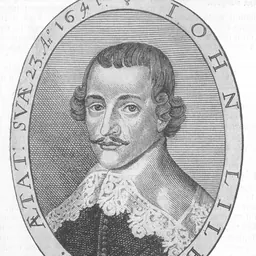
Character Clarendon described Haselrig as "an absurd, bold man." He was rash, "hare-brained," and devoid of tact and had little claim to the title of a statesman, but his energy in the field and in parliament was often of great value to the parliamentary cause. He exposed himself to considerable obloquy by his exactions and appropriations of confiscated landed property, though the accusation brought against him by John Lilburne was examined by a parliamentary committee and adjudged to be false.
Footnotes
Don’t just read it —
keep it.
Full-length biographies made to live with: read them, listen on the way to work, watch them tonight.
- E-book
- Audio
- Video
Instant download · yours to keep · every purchase keeps this site free
Important facts
more
Sir Arthur Hazelrig, Arthur HazelrigPeople in Sir Arthur Haselrige, 2nd Bt's life
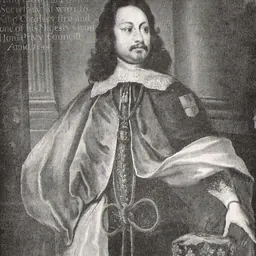
Named in this biography and alive at the same time


Related people
Same field, nearest in time

Contemporaries
People whose lives overlapped Sir Arthur Haselrige, 2nd Bt's






Frequently asked questions
Who was Sir Arthur Haselrige, 2nd Bt?
English politician and army officer
When was Sir Arthur Haselrige, 2nd Bt born?
Sir Arthur Haselrige, 2nd Bt was born in 1601 in Noseley Hall.
When did Sir Arthur Haselrige, 2nd Bt die?
Sir Arthur Haselrige, 2nd Bt died on 7 January 1661 in London.
What was Sir Arthur Haselrige, 2nd Bt's occupation?
Sir Arthur Haselrige, 2nd Bt was a politician.
Sources & further reading
· Wikipedia: Sir Arthur Haselrige, 2nd Bt
Cite this page
APA: Biography.guide. (2026). Sir Arthur Haselrige, 2nd Bt. https://biography.guide/sir-arthur-haselrige-2nd-bt/
MLA: "Sir Arthur Haselrige, 2nd Bt." Biography.guide, https://biography.guide/sir-arthur-haselrige-2nd-bt/.
Chicago: "Sir Arthur Haselrige, 2nd Bt." Biography.guide. https://biography.guide/sir-arthur-haselrige-2nd-bt/.
Data last updated: 2026-09-20 · Spot an error? Report a correction.
Page generated 2026-09-27 05:21 UTC