
About Sipo Mzimela
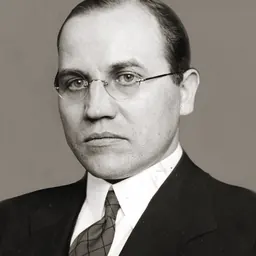
Lived 1935 – 2013 (aged 77). Sipo Mzimela was a South African politician.
Sipho Elijah Mzimela (19 June 1935 – 2 February 2013) was a South African politician, anti-apartheid activist, and Christian minister. He was the first post-apartheid Minister of Correctional Services from 1994 to 1998. Originally a member of the African National Congress (ANC), he joined the Inkatha Freedom Party (IFP) in 1990 and then the United Democratic Movement (UDM) in 1999.
Mzimela went into exile with the ANC after the Sharpeville uprising and spent three decades in exile, primarily in the United States. Upon his return to South Africa in 1990, his strident anti-communism led him to join the rival IFP, which he represented in the National Assembly from 1994 to 1999. He also represented the IFP as a minister in Nelson Mandela's Government of National Unity and was the party's deputy chairperson from 1995 to 1998.
Following a fallout with the IFP leadership under Mangosuthu Buthelezi, Mzimela lost each of his positions: he resigned from his party office in April 1998, was fired from the cabinet shortly afterwards, and was expelled from the party entirely in February 1999. He returned to the National Assembly in June 1999 as a member of the UDM, but the UDM, in turn, expelled him in June 2001. Thereafter Mzimela retired to Atlanta, Georgia, where he died in 2013.
Early life and political career Mzimela was born on 19 June 1935 in Durban in the former Natal province. Born to a carpenter father, he had three sisters and was raised in the Anglican Church. Although he had inspired to become a priest as a child, he became a teacher instead. The interim constitution entitled the IFP to representation in a multi-party Government of National Unity, and newly elected President Nelson Mandela appointed Mzimela to his cabinet as Minister of Correctional Services. He also continued to represent the IFP at constitutional negotiations.
Correctional Services Minister: 1994–1998 Mzimela's performance as Minister of Correctional Services was not admired by the Mail & Guardian, which gave him an "E" grade in 1997, saying, "If [Safety and Security Minister Sydney] Mufamadi is too soft on crime, Mzimela is too hard on criminals". The newspaper also criticised his lack of commitment to affirmative action in correctional services facilities, an issue which brought Mzimela into conflict with ANC MP Carl Niehaus, who chaired the Portfolio Committee on Correctional Services during the first democratic Parliament. President Mandela ultimately stepped in on two occasions, in 1995 and 1996, to mediate the dispute between Mzimela and Niehaus. Other IFP leaders responded with hostility: at a press conference, Buthelezi told the press, "I don’t think any party will tolerate a member doing what he [Mzimela] is doing", and he told the Mail & Guardian that Mzimela was "out of order" and had "embarrassed the party by shooting his mouth [off]". A week later, at Buthelezi's request, President Mandela dismissed Mzimela from his cabinet, replacing him with the IFP's Ben Skosana. Although Mzimela remained an ordinary Member of Parliament and of the IFP, there was rampant speculation that he would leave the party, possibly to join the ANC. Mzimela said that he had been expelled because of his insistence that the party should handle matters in a free and open way.
Representative for the UDM: 1999–2001 The day after his expulsion from the IFP, Mzimela announced that he would join the United Democratic Movement (UDM), which had recently been founded by Bantu Holomisa as a breakaway from the ANC. Holomisa said that Mzimela's recruitment had been initiated by Sifiso Nkabinde, who had held several meetings with Mzimela before his death. He served as the UDM's chief whip.
However, Mzimela soon fell out with the leadership of his new party. In June 2001, he was suspended from the UDM, pending a disciplinary inquiry into the misappropriation of the UDM's parliamentary funds. Mzimela said that his suspension was unconstitutional, called for a parliamentary and police investigation into the UDM, and insisted that he would continue to appear at Parliament. Mzimela had apparently used the UDM's parliamentary funds to pay his domestic worker's salary, as well as to make out a total of R12,000 in cheques to his wife. The UDM said that it would also lay criminal charges against him, and Holomisa told a press conference, "There is only one way for him and that [is] that he must be taken to the prison ships he once proposed when he was Minister of Correctional Services".
Mzimela maintained his innocence. He claimed that, while he was a lengthy sick leave, acting chief whip Tommy Abrahams and UDM treasurer Nilo Botha had doctored the UDM's audited financial statements. In the aftermath of his expulsion from the National Assembly, he announced his retirement from politics.
Personal life and death While living in Germany during apartheid, Mzimela married his first wife, Esther Mzimela, with whom he had two daughters. In 1989 in Atlanta, he married his second wife, Gail DeCosta, and became stepfather to her daughter. After leaving Parliament in 2001, he retired to the suburbs of Atlanta, where he was an associate priest at St Bartholomew's Church and a lecturer in religious studies at Agnes Scott College.
Mzimela had diabetes, which led to the amputation of his leg in 2000 and to health problems later in life. He died on 2 February 2013 at a hospice in Decatur, Georgia after several months of illness.
Don’t just read it —
keep it.
Full-length biographies made to live with: read them, listen on the way to work, watch them tonight.
- E-book
- Audio
- Video
Instant download · yours to keep · every purchase keeps this site free
Important facts
People in Sipo Mzimela's life
Named in this biography and alive at the same time




Related people
Same field, nearest in time




Contemporaries
People whose lives overlapped Sipo Mzimela's




Frequently asked questions
Who was Sipo Mzimela?
South African politician and activist (1935–2013)
When was Sipo Mzimela born?
Sipo Mzimela was born on 19 June 1935.
When did Sipo Mzimela die?
Sipo Mzimela died on 2 February 2013.
What was Sipo Mzimela's occupation?
Sipo Mzimela was a politician.
What nationality was Sipo Mzimela?
Sipo Mzimela was South African.
Sources & further reading
Cite this page
APA: Biography.guide. (2026). Sipo Mzimela. https://biography.guide/sipo-mzimela/
MLA: "Sipo Mzimela." Biography.guide, https://biography.guide/sipo-mzimela/.
Chicago: "Sipo Mzimela." Biography.guide. https://biography.guide/sipo-mzimela/.
Data last updated: 2026-09-20 · Spot an error? Report a correction.
Page generated 2026-09-27 05:24 UTC