
About Simon Vollant
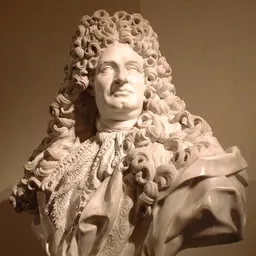
Lived 1622 – 1696 (aged 74). Simon Vollant was a French architect and military engineer.
Simon Vollant (1 February 1622 – 1694) was a 17th-century French engineer, entrepreneur and architect ennobled in 1685.
Vollant built the citadel of Lille and became the most renowned fortifications builder for Vauban, Louvois and Louis XIV. He directed or controlled the principal works of fortifications of the cities, inspected the various fortresses of the north of the country and advised the generals.
As a civil architect, he built the in Lille, considered by some to be a masterpiece. He drew the plans of the new district Saint-André de Lille. His advice was sought and followed for the channelling works of the Deûle and to bring the waters of the Eure to Versailles. He also designed and built hôtels particuliers, houses like those in , various buildings and squares.
Biography
Vollant came from an old Lille family of entrepreneurs and architects, then called "master masons". Born in 1622, he was the son of Jean Vollant, master mason (architect), and Jeanne Pronier and the brother of François Vollant, architect of the . For the construction of the citadel, he employed 6,000 workers and reported to Vauban and to Louvois. On the recommendation of Marshal d'Humières, Vollant was appointed engineer to the king and ordinary architect of his armies, in reward for his services, according to a letter from Louvois of April 1668.
Simon Vollant drew the plans for the new district of Saint-André, on a very regular basis, around two main streets, the other streets being perpendicular to each other. At the same time, he was responsible for building the new defensive wall of Lille, from 1671 to 1676, again after plans by Vauban.
During the Franco-Dutch War, Vollant's opinions were sought during the war councils preparing the strongholds attacks, and "his favourably listened opinions did not contribute little to the taking of these places", according to Louis XIV.
Then Vollant directed the work of the fortifications of Menen, in liaison with Louvois, and to the satisfaction of the king.
To celebrate the return to France of Lille and the Walloon Flanders, on order from Louvois and Louis XIV, Vollant transformed from 1685 to 1694 the Porte de Paris (then called the "gate of the Sick"), in triumphal arch.
The plan he made was approved in September 1684 by Louis XIV and Louvois. The work on the triumphal arch was carried out in stages, according to financial possibilities, and was not completed until about 1695, one year after Vollant's death.
The Porte de Paris thus answered more to imperatives of prestige than to any military concern. It was decorated with large doric columns, trophies and statues. But the gate itself was only a small opening following the draw-bridge, which still gave the whole a defensive role, and made it considered as "one of the last masterpieces of military history".
Other works
Vollant was also responsible for the design and construction in 1687 of the houses of the "Rang de Beauregard" (or Rang de Beau regard) on the Place du Théâtre in Lille. The harmonization imposed by the city included alignment rules, a two-storey plan with a mansarded attic and a large cellar, all built only in dimension stones and bricks. Vollant respected these rules and made a synthesis between the French classical architecture of the time and the local Flemish architecture.
He also drew the plans for the Hôtel de Métilly, rue du Gros-Gérard, which was completed in 1695, one year after his death.
He was also appointed Grand Argentier (treasurer) of Lille from 1671, which displeased Lille residents who considered it abnormal that their treasurer was at the same time, by his status as director of fortifications or contractor, one of the main spenders.
Coat of arms
He was ennobled in 1685. The rules of heraldry accompanying his letters of nobility attributed to him the arms This were canting arms with the semi-vols for "Vollant".
Family Vollant married Marie Villain, originally from Tournai, daughter of André Villain, dean of the master masons (architects) of Tournai.
Their children were: François Pasquier Vollant, received as master mason (architect) in 1656. Jean François Vollant, received like his brother as master mason in 1656. Jean Vollant. Marie-Catherine Vollant, wife of (1658–1734), lieutenant général and combat engineer. Marie-Jeanne Vollant.
Vollant married Marguerite-Félicité Haccou for a second marriage.
Homages Ennoblement in 1685. Plaque on the citadel of Lille: Louis le Grand la voulut / Vauban la dessina / Simon Vollant l'édifia. Place Simon-Vollant, in Lille, place where is located the Gate of Paris that he built. Rue Simon-Vollant in Lambersart.
Notes and references L. Quarré-Reybourbon, La porte de Paris, à Lille, et Simon Vollant son architecte, Paris, Plon, 1891 Read online
Other references and notes
Don’t just read it —
keep it.
Full-length biographies made to live with: read them, listen on the way to work, watch them tonight.
- E-book
- Audio
- Video
Instant download · yours to keep · every purchase keeps this site free
Important facts
Related people
Same field, nearest in time





Contemporaries
People whose lives overlapped Simon Vollant's




Frequently asked questions
Who was Simon Vollant?
French architect (1622-1696)
When was Simon Vollant born?
Simon Vollant was born on 1 February 1622 in Lille.
When did Simon Vollant die?
Simon Vollant died on 30 May 1696 in Lille.
What was Simon Vollant's occupation?
Simon Vollant was an architect and military engineer.
What nationality was Simon Vollant?
Simon Vollant was French.
Sources & further reading
Cite this page
APA: Biography.guide. (2026). Simon Vollant. https://biography.guide/simon-vollant/
MLA: "Simon Vollant." Biography.guide, https://biography.guide/simon-vollant/.
Chicago: "Simon Vollant." Biography.guide. https://biography.guide/simon-vollant/.
Data last updated: 2026-09-20 · Spot an error? Report a correction.
Page generated 2026-09-27 05:19 UTC