
About Simon Schreiber
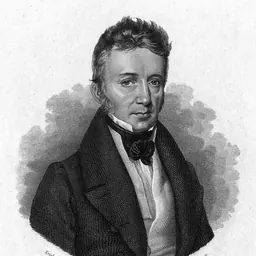
Lived 1820 – 1883 (aged 62). Simon Schreiber was an Austrian rabbi, politician and chief Rabbi.
Shimon Sofer (; 1820–1883) was a prominent Austrian Orthodox Jewish rabbi in the 19th century. He was Chief Rabbi of Kraków, Poland after serving as Chief Rabbi of Mattersdorf. He was the second son of Rabbi Moshe Sofer (Chassam Sofer) of Pressburg.
As president of the Orthodox Jewish party Machzikei HaDas, Sofer was a member of the Polenklub at the Reichsrat under the Austria-Hungary monarch Franz Joseph I. He was elected as Deputy of the Kolomyia's election district of Galicia.
He became the foremost leader of the Orthodox Jews of Galicia in religious as well as in worldly matters.
Early life Rabbi Shimon Sofer was born 13 Tevet 5581 (December 18, (1820) in the city of Pressburg, Kingdom of Hungary (now Bratislava, Slovakia), where his father, Rabbi Moses Schreiber (1762-1839), was serving as chief rabbi. His mother, Sarah-Sorele Schreiber (1790–1832), was the daughter of Rabbi Akiva Eger, the rabbi of Poznań, and the sister of Rabbi Abraham Moses Kalischer (1788–1812), the rabbi of Piła. She had ten other children beside him, and he lost her when he was eleven years old. He was named Shimon after his ancestor, the author of Yalkut Shimoni.
Shimon was recognized as a child prodigy at a very early age. His father would seat him on his lap whilst delivering his weekly Chumash shiur at the Pressburg Yeshiva, where he expounded on Rashi and Ramban commentaries.
At the age of 9, he was fluent in the works of the Shlah HaKadosh and the Baal HaAkeida. He displayed great interest in Jewish Poetry, a talent which is noticeable in his later Torah works. His favorite piyyut was Ya Ribon of Rabbi Israel ben Moses Najara, a Shabbat song which his father would not sing.
His father would affectionately call him Shimon Chassida (the pious), and at the age of 13, at his Bar Mitzva, ordained him with the Ashkenazi title “Chaver”.
Shimon matured quickly and at the age of 17 he married Miriam Sternberg, a daughter of philanthropist Rabbi Dov Ber Sternberg (Reb Ber Sighet) of Carei (also known as Nagykároly).
After his marriage, he moved back to Pressburg, and upon instruction from his father, started learning Kaballa with Pressburg Dayan Rabbi Natan Binyamin Lieber (1805–1880) (Yiddish: נטע וואלף סג"ל)
During Rabbi Sofer's rabbinate, Jews in Kraków numbered between 15,000 and 20,000 adults over the age of 15. In one of his letters written in 1879, Sofer states that there were over 80 minyanim in Kraków alone.
At this time, the Haskalah movement had made an impression on the general Jewish Population of the Austria-Hungarian empire with many Jews assimilating or rejecting the traditional orthodox approach to Judaism.
The Jews enjoyed freedom and rights under the rule of the Emperor Franz Joseph I who sympathized with them. Franz Joseph had even made a visit to Jerusalem in 1869 where he was welcomed warmly by the Orthodox Jewish community and leaders. He had donated the dome on the Tiferes Yisrael Synagogue in Jerusalem.
The Hasidim and the Austrian-Hungarian rabbis of the Sofer Dynasty made a joint effort to strengthen traditional Orthodox Judaism and opposed the Reform both socially and politically.
A major challenge for the traditional Orthodox Jews was opposing the Shomer Israel Society, a strong and influential reform group. Shomer Israel supported assimilation of Jews with the general population and sought legislation forcing Yeshiva's to study philosophy and secular studies, something which the Orthodox staunchly opposed. In 1880, Rabbi Shimon Sofer founded a Hebrew-Yiddish weekly newspaper named מחזיקי הדת (Machzikei Hadas or Maḥaziḳe ha-Dat; Zeitung fur das Wahre Orthodoxische Judentum), published in Lemberg, describes Sofer in his memoir A World Apart: quote| The Krakow Rabbi was an unusually attractive person with a handsome face and rosy cheeks. He carried himself like a true aristocrat and did not like to get excited.
Rabbi Sofer and Franz Joseph I
Emperor of Austria; Apostolic King of Hungary; King of Bohemia; King of Croatia; King of Galicia and Lodomeria; Grand Duke of Kraków
In 1880 (כ"ה אלול תר"ם), The Emperor of the Austria-Hungarian Empire Franz Joseph I made a 3-day visit to Kraków. Amongst the general population who greeted the Emperor at the train station, was the Orthodox Jewish community headed by Rabbi Shimon Sofer and his son-in-law, Rabbi Akiva Kornitzer.
In a letter written the next morning (יום ה' ה' דסליחות תר"ם) to his son and daughter-in-law, Rabbi Shlomo and Hinda Sofer, he writes with great awe of his encounter with the emperor:
The Jewish delegation awaited the emperor in a line under chuppa canopies with the leaders holding Torah scrolls adored with gold and silver accessories. His Excellency Franz Joseph sat in a carriage together with Prince Albrecht. Upon passing the Jewish delegation, he acknowledged the Torah scrolls by rising and bowing down at their sight. The Emperor continued to his lodging prepared by Potocki (probably; Alfred Józef Potocki). Rabbi Sofer and twelve delegates of the Jewish community formally welcomed the Emperor at the lodging. Rabbi Sofer requested the emperor's permission to don his hat in order to bless the Emperor, which was granted cordially. Rabbi Sofer made the traditional blessing (שנתן מכבודו) to which the Emperor answered "Amen". Sofer described the welcoming as "splendid", writing that he was invited to the "ball" that evening but was not planning on attending.
The Machzikei HaDas newspaper of 19 September 1880 carried a front-page report heralding the Emperor's visit to Kraków and Lwóv, comparing him to an "Angel sent by God". Articles bestowed Franz Joseph with titles such as "our father, our king, the almighty, righteous and merciful". The report describes the joy and happiness of the Jewish community and the respect they and Rabbi Sofer received from the Emperor, an unprecedented event in Diaspora Jewish history.
On 10 May 1881, Rabbi Sofer sent a parchment scroll to the Emperor Franz Joseph on the occasion of the wedding of his son Rudolf. The scroll, containing blessings and good wishes, was decorated with pure gold. It was written on behalf of the Orthodox Jewish community in Galicia and signed by Rabbi Sofer (signed; Simon Schreiber). It was received with gratitude.
One line of the Lamentation Eulogy which was authored after Rabbi Shimon's death by his son Rabbi Yisrael David Simcha (Bunim) Sofer and printed in Machzikei Hadas newspaper reads: שמח מלכו עמו ובאות נתכבד (Happy was the King with him, and with an award was dignified). In a footnote he explains this passage:
Death of his brother Avraham Shmuel Binyamin Rabbi Shimon was not informed of the death of his brother Avraham Shmuel Binyamin on December 31, 1871 and did not take part in his burial. Rabbi Azriel Hildesheimer, who took part and recorded a memoir of the burial, mentions that the Kraków community withheld three telegrams sent by the Pressburg community and family from reaching him. Hildersheimer writes that the Kraków community feared that the Pressburg community would appoint him as their Chief Rabbi.
Death of Rabbi Shimon On Purim 1883 (5643), Rabbi Sofer celebrated with his congregation as usual, festivities continued into the late hours of the night.
On the eve of 17 Adar II, 1883 (5643), he started to feel unwell. The next morning doctors examined him and prescribed medicine. He prayed with Tallit and Tefillin until 10:00am. Thereafter he sent for his son-in-law, Rabbi Akiva Kornitzer, and said to him, These were his last words before he died.
His son-in-law, Rabbi Akiva Kornitzer succeeded him as Chief Rabbi of Kraków.
Don’t just read it —
keep it.
Full-length biographies made to live with: read them, listen on the way to work, watch them tonight.
- E-book
- Audio
- Video
Instant download · yours to keep · every purchase keeps this site free
Important facts
Family & relationships
People in Simon Schreiber's life
Named in this biography and alive at the same time


Related people
Same field, nearest in time


Contemporaries
People whose lives overlapped Simon Schreiber's


Frequently asked questions
Who was Simon Schreiber?
Austrian rabbi (1820-1883)
When was Simon Schreiber born?
Simon Schreiber was born on 18 December 1820 in Bratislava.
When did Simon Schreiber die?
Simon Schreiber died on 26 March 1883 in Kraków.
What was Simon Schreiber's occupation?
Simon Schreiber was a rabbi, politician and chief Rabbi.
What nationality was Simon Schreiber?
Simon Schreiber was Austrian.
Sources & further reading
Cite this page
APA: Biography.guide. (2026). Simon Schreiber. https://biography.guide/simon-schreiber/
MLA: "Simon Schreiber." Biography.guide, https://biography.guide/simon-schreiber/.
Chicago: "Simon Schreiber." Biography.guide. https://biography.guide/simon-schreiber/.
Data last updated: 2026-09-22 · Spot an error? Report a correction.
Page generated 2026-09-27 05:20 UTC