
About Simon Byrne
Lived 1806 – 1833 (aged 26–27). Simon Byrne was a boxer.
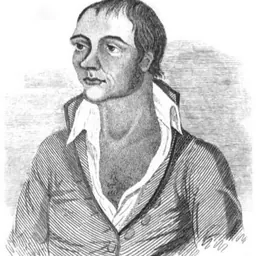
Simon Byrne (1806 – 2 June 1833), nicknamed "The Emerald Gem", was an Irish bare-knuckle prize fighter. The heavyweight boxing champion of Ireland, he was drawn to England by the larger sums of prize money on offer and his hopes of becoming the heavyweight champion there as well. He became one of only six fighters ever to have been involved in fatal fights as both survivor and deceased since records began in 1741.
Byrne fought in an era when English boxing, although illegal, was patronised by many powerful individuals. Its patronage and popularity did not, however, free it from corruption, heavy betting, and staged fights. Byrne fought eight recorded matches, but accounts of his career focus on the last three, against the Scottish champion Alexander McKay, the English champion Jem Ward, and James Burke for the vacant championship of England. The injuries McKay received in his fight with Byrne resulted in his death the following day, and rioting in his home country of Scotland. Byrne went on to lose his next match against Jem Ward, which some commentators believed he was not sufficiently in condition to fight. His final contest in May 1833 was a gruelling 99 rounds against James Burke that lasted for 3 hours and 6 minutes, the longest ever recorded prize fight. Byrne died three days later as the result of damage to his brain caused by the beating he had received. Burke was arrested and tried for manslaughter but was acquitted. Following the death in 1838 of another fighter, William Phelps, also known as Brighton Bill, the London Prize Ring Rules were introduced to more clearly define the rules of prize fighting and to introduce certain safety measures, rules that still form the basis for the modern sport of boxing.
Early 19th-century English boxing A typical 19th-century boxing match, often held in warehouses, courtyards of inns, or in open fields away from the eyes of local authorities. This painting was by Byrne's friend Jem Ward.
During the first half of the 19th century pugilism, better known as prize-fighting, held a curious position in British society. Although supported by members of the establishment from the royal princes downwards, it was considered illegal under the terms of the Riot Act of 1715, which defined a riot as "a tumultuous disturbance of the peace by three or more persons assembling together, of their own authority, with intent mutually to execute a violent enterprise to the terror of the people".
The boxer George Stevenson had died a few days after his 35-minute fight with the English champion Jack Broughton in 1741, an event that triggered Broughton to draw up a set of rules with the help of some of his patrons to prevent a recurrence. Published on 16 August 1743, Broughton's Rules outlawed hitting or seizing any part of an opponent's body below the waist, or striking him when he was down, but otherwise left much to the discretion of referees. Rounds were not of a fixed length but continued until one of the fighters was knocked or thrown to the ground, after which those in his corner were allowed 30 seconds to return him to the "scratch" – the middle of the ring – failing which his opponent was declared the victor. who was the English champion for 18 years.
Boxing had become a nest of "gambling related corruption" by the 1820s. As of 2008 that would be the equivalent of about £13,600.
Byrne versus McKay
The fight against Alexander McKay was Byrne's first brush with notoriety. On 2 June 1830, Byrne, billed as "Champion of Ireland", fought McKay, the "Champion of Scotland", for the right to challenge Jem Ward, the heavyweight champion of England.
McKay's boxing relied on brute strength rather than scientific pugilistic theory, but the fight still lasted for 47 rounds before McKay collapsed under a left-handed punch to the throat that did not seem particularly powerful. He was carried to his corner, where he regained consciousness, complaining of severe headache. He was bled by a surgeon on the scene and taken to a local inn, the Watts Arms, where he died at 9:00 pm the following evening. A post mortem examination found the cause of death to be brain damage. In Glasgow, four people died, and the Dragoons were called out to quell rioting after a Roman Catholic church was burned and looted (the mob would have assumed Byrne, an Irishman, to be a Roman Catholic). Byrne was arrested three days later on board the ferry to Ireland as he tried to leave the country.
Trial The trial was held at the Assizes in the small rural market town of Buckingham. More used to the trials of local poachers and sheep thieves, Buckingham had never before seen such a spectacle. The town was inundated with journalists and the merely curious. Byrne was charged with manslaughter. Tom Cribb, Reuben Martin, Thomas Reynolds, and George Cooper were charged with aiding and abetting manslaughter.
As the "wealthy monsters" patronising boxing included King George IV (who had asked Gentleman Jackson and the country's leading pugilists to act as pages at his coronation in 1821) and his heir, the Duke of Clarence,
Byrne versus Ward
Cleared of any responsibility for McKay's death, Byrne collected his £200 prize money, and as the winner earned the right to fight the English heavyweight champion Jem Ward. The fight was originally scheduled to take place at Leicester on 10 March 1829, but at the last minute Ward claimed that he was unfit and too ill to fight, much to the disapproval of his backers and friends. Rumours circulated that Ward had refused to enter the ring unless he received a prize money of £250 plus an additional £250 if he lost; the event became known in some quarters as the Leicester Hoax. Ward did not fight again for two years, but he and Byrne finally met on 12 July 1831 at Willeycott, near Stratford upon Avon. Each fighter was paid £200. Although Ward was the older man he prevailed in the contest after one hour and seventeen minutes, when Byrne's seconds, Tom Spring and Tom Reynolds, withdrew their man in the 33rd round.
An observer commented that Byrne may not have been in the best of condition for the fight, as "his appearance failed to favour the impression that he possessed active vigour"; boxing historian Gilbert Odd describes the fight as "disgraceful". Another commentator noted that "it is a singular fact that neither of the men had a black eye; neither had an external cut worth mentioning".
Byrne versus Burke
Jem Ward announced his retirement from the ring in a letter published in the 29 January edition of Bell's Life in London. Ward, who had faced public criticism for his refusal to fight Burke, felt that Byrne was the better fighter and promised to acknowledge the victor of a fight between Burke and Byrne as the new champion. The match took place on 30 May 1833 on Nomansland, a tract of common land between the villages of Sandridge and Wheathampstead in Hertfordshire, Burke weighed in at , and started the contest as the marginal favourite at odds of 5–4.
Byrne was carried to "The Woolpack" inn in nearby St Albans, where he was attended to by Tom Spring. On the evening of the fight Byrne was considered to be close to death, but over the course of the following two days he seemed to be recovering, and was sufficiently conscious to thank his friends for their ministrations. But his condition worsened during the afternoon of Saturday 1 June 1833, and he died the following day; the cause of death was given as "congestion of blood in the brain". Byrne himself was reportedly of a different opinion, telling a chambermaid shortly before his death that "If I should die, it will not be from the beating I received but from mortification. I would rather have died than been beaten in that fight." He left behind a wife and four children in Dublin.
Aftermath One contemporary view of Byrne's fatal fight, and of his earlier contest against Ward, was expressed in a popular poem written by James Catnach, the catchpenny publisher of Seven Dials, London:
On Thursday, 30 May day, Brave Simon took the ring, Back'd by Jem Ward the champion, likewise by Gallant Spring, To fight Burke for two hundred pounds, a man of courage bold, To stop reports that with Ward the battle he had sold.
Burke was arrested and tried for manslaughter. He was acquitted on 11 July 1833, but avoided competitive fights for some time afterwards, only taking part in exhibition matches. He retired in 1843 and died of tuberculosis less than two years later in 1845, having by then been reduced to poverty. Butting, gouging, biting, scratching, kicking were all forbidden as was the use of stones or any hard object in the hand. Thirty-second breaks were introduced between rounds, at the end of which each fighter had to walk to the scratch unaided within 8 seconds. The wearing of spiked boots was prohibited, and boxers who went to ground without being hit were disqualified. These rules still form the basis for the modern sport of boxing.
Don’t just read it —
keep it.
Full-length biographies made to live with: read them, listen on the way to work, watch them tonight.
- E-book
- Audio
- Video
Instant download · yours to keep · every purchase keeps this site free
Important facts
People in Simon Byrne's life
Named in this biography and alive at the same time




Related people
Same field, nearest in time

Contemporaries
People whose lives overlapped Simon Byrne's





Frequently asked questions
Who was Simon Byrne?
Irish boxer
When was Simon Byrne born?
Simon Byrne was born in 1806.
When did Simon Byrne die?
Simon Byrne died on 2 June 1833.
What was Simon Byrne's occupation?
Simon Byrne was a boxer.
Sources & further reading
Cite this page
APA: Biography.guide. (2026). Simon Byrne. https://biography.guide/simon-byrne/
MLA: "Simon Byrne." Biography.guide, https://biography.guide/simon-byrne/.
Chicago: "Simon Byrne." Biography.guide. https://biography.guide/simon-byrne/.
Data last updated: 2026-09-20 · Spot an error? Report a correction.
Page generated 2026-09-27 05:19 UTC