
Šime Budinić
Venetian-Croatian priest and writer (ca. 1530/5–1600)
About Šime Budinić
Lived 1530 – 1600 (aged 69–70). Šime Budinić was an Italian catholic priest, religious writer and poet, known for Diacritics, Glagolitic and Latin script.
Petar Šimun "Šime" Budinić Zadranin (1535 – 13 December 1600) was a 16th-century Venetian-Croatian Catholic priest and writer from Zadar, Venetian Dalmatia (today Croatia). He was a translator of psalms and catechetical texts, promoter of post-Tridentine Catholicism, and a poet.
Early life Budinić was born in Zadar in the period between 1530 and 1535 in a family that originated from the Zadar hinterland. His father was a goldsmith whose name was Mihovil and his mother Klara was from the De Sanctis family. He was most likely educated by the Franciscans from Zadar, and knew both the Glagolitic and Cyrillic scripts well. It is assumed that he completed elementary and humanist education in Zadar, and higher education in Padua.
Budinić became a Catholic priest in Zadar and advanced to the position of canon in 1560. and chancellor in the Roman Catholic Archdiocese of Zadar. As chancellor he wrote official documents using the Glagolitic script. While Budinić was a notary he had a lot of spare time which he used to read love songs. He is first mentioned in documents in 1556. Between 1559 and 1561 he wrote verses of love songs in dodecasyllable, seven of them still preserved, some of them in honor of Pelegrinović's Jeđupka. At that time he also authored one short Latin satire on the subject of cheated husbands.
Budinić was a light-headed young priest who was even temporary expelled from Catholicism because of his misconduct, after he was reported for beating one of his fellow priests who swore his parents. According to one 1626 letter, Pope Gregory XIII invited Budinić to Rome to translate the Catechesis of Peter Canisius into Illyrian using Illyrian characters. Pope Gregory XIII ordered Budinić to prepare the Roman Catholic Catechism using Illyrian and its characters. It is unclear if Pope ordered any particular script. Although it is confirmed by many contemporary documents that the Pope indeed ordered Budinić to prepare the Roman Catholic Catechism using Illyrian and its characters it remain unclear if the Pope ordered any particular script. When Budinić arrived to Rome he became a confessor in Pontifical Croatian College of St. Jerome where he worked on the improvement of the Glagolitic missals and breviaries.
During his stay in Rome Budinić wrote his first two books on Croatian with the Chakavian dialect. According to one 1581 Vatican document, Budinić was preparing a translation into Serbian , which at that time in the Vatican and Dubrovnik was a term used for Cyrillic script, the preferred language for Vatican documents to be published regarding Slavic language.
Shtokavian period and orthographic reform
Budinić's intention was, from reasons of propaganda, to employ language and orthography that could penetrate and be understood in all of what was then the southern reaches of the Slavic people. Budinić attempted a daring orthographic reform and authored a version of the Latin script based on the Cyrillic and Glagolitic scripts, using diacritics (namely č and ž) from the Czech orthography of Jan Hus in his 1582 work. Some authors believed that Budinić, being promoter of Counter-Reformation, would never use orthography of Jan Hus who was a key predecessor to the Protestant Reformation.
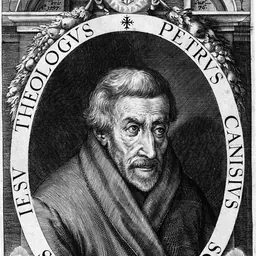
Under the influence of Jesuit priest Peter Canisius, Budinić abandoned the language he had been using in his 1582 work, and instead used a mixture of Shtokavian Serbo-Croatian, Church Slavonic, Czech, and Polish. Budinić referred to the language of his work as Slavonic. Budinić then published translations of Canisius' work in 1583 (Summa nauk Kristjanski) in two versions, Cyrillic and Latin, and created a complex script based on Ijekavian Shtokavian pronunciation. The Latin script edition was published for clergy while Cyrillic script edition was published for population. Budinić published Cyrillic script edition with intention to spread this kind of book among South Slavs who were adherents of the Eastern Orthodox Church.
Legacy Budinić died in Zadar on 13 December 1600, around the age of 65. The elementary school in Zadar bears Budinić's name. A square in Zadar was named Šime Budinić´s Square .
Don’t just read it —
keep it.
Full-length biographies made to live with: read them, listen on the way to work, watch them tonight.
- E-book
- Audio
- Video
Instant download · yours to keep · every purchase keeps this site free
Important facts
People in Šime Budinić's life
Named in this biography and alive at the same time
Related people
Same field, nearest in time



Contemporaries
People whose lives overlapped Šime Budinić's






Frequently asked questions
Who was Šime Budinić?
Venetian-Croatian priest and writer (ca. 1530/5–1600)
When was Šime Budinić born?
Šime Budinić was born in 1530 in Zadar.
When did Šime Budinić die?
Šime Budinić died on 13 December 1600 in Zadar.
What was Šime Budinić's occupation?
Šime Budinić was a catholic priest, religious writer and poet.
What was Šime Budinić known for?
Šime Budinić was known for Diacritics, Glagolitic and Latin script.
What nationality was Šime Budinić?
Šime Budinić was Italian.
Sources & further reading
Cite this page
APA: Biography.guide. (2026). Šime Budinić. https://biography.guide/sime-budinic/
MLA: "Šime Budinić." Biography.guide, https://biography.guide/sime-budinic/.
Chicago: "Šime Budinić." Biography.guide. https://biography.guide/sime-budinic/.
Data last updated: 2026-09-25 · Spot an error? Report a correction.
Page generated 2026-09-27 05:12 UTC