
About Sigurd Hoel
Lived 1890 – 1960 (aged 69). Sigurd Hoel was a Norwegian writer, literary critic, translator and author.
Sigurd Hoel (December 14, 1890 – October 14, 1960) was a Norwegian author and publishing consultant, born in Nordre Odalen Municipality. A prolific writer and critic, during the World War II he was a member of the Norwegian resistance movement.
In his early years, Hoel was deeply interested in psychoanalysis, for some years he was a dedicated follower of Sigmund Freud, but after 1932 he became close to Wilhelm Reich who deeply influenced subsequent works and views of Hoel.
As a writer, he debuted with the collection of short stories (The Way We Go) in 1922. His breakthrough came with (Sinners in Summertime, 1927), which was made into a film in 1932 and in 2002.
Hoel's prose is largely autobiographical. In his books he contemplates on the impact of childhood on adulthood and overall man’s character, and the protective mechanisms of the psyche as a result of childhood trauma. Hoel's novels raise questions of morality and sexual freedom as well as themes of betrayal and guilt.
Life
Childhood and education
Sigurd Hoel was born in Nordre Odalen Municipality, Norway, in 1890. He was the son of teacher Lars Anton and Elisa Dorothea Hoel and grew up in Odalen. Lars Anton, was a village teacher and sang in the church choir. Although Sigurd received a fairly mild upbringing by the standards of the time, his father was strict, authoritarian and emotionally distant. Sigurd's childhood in a strictly patriarchal family and his father's harsh, often unjust attitude had a strong influence on the writer-to-be, and became one of the central themes of his works: feelings of guilt and shame, which were permanently instilled in the child, not only made Hoel's childhood an unhappy period in his life, but also shaped its subsequent course.
In his time at college he was the editor of the periodical Minerva. His literary career began with the short story "" ('The Idiot') from 1918 that he write in one day for a writing contest. The same year he became an employee of as a literature and theater critic. In 1919, Hoel had a child born out of wedlock who was put up for adoption.
Hoel contributed to Reich's German language periodical (Journal for Political Psychology and Sex Economy) and was the editor-in-chief of issues nos. 13 to 15. One of his major essays deals with the Moscow Trials.
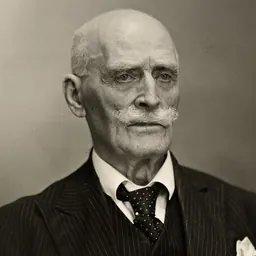
During World War II Hoel and his wife returned to Odalen. He joined the Norwegian resistance movement and wrote for the illegal opposition press, publishing at least 50 articles. Journalists in Nazi Germany called Hoel the "evil spirit" of the Norwegian intellectuals and he was abused on German radio. He was constantly facing the threat of arrest, when in 1943 the danger became too high, he was forced to flee to Sweden. The war shocked Hoel, and for many years thereafter he reflected on collaborationism and treason, trying to understand how such a significant number of Norwegians - including Norway's greatest writer, Knut Hamsun, could support Nazism. Topics of guilt and betrayal became central in his 1950s prose.
In 1935, going through a mid-life crisis, Hoel published the novel 14 Days to Frosty Nights (Fjorten dager før frostnettene). Based on the author's own life, it again demonstrates the considerable influence of Reich's theories: the protagonist, a well-known doctor, on his 40th birthday looks back and tries to evaluate the years he has lived. Although his life seems to be a model of success, the emotional side of it turns out to be a disaster: he is unable to love himself or accept the feelings of others. Memories of his childhood and adolescence are shown as the cause of his later failures in life, and the taste of betrayal and bitterness of his own mistakes is a major theme. The hero has a mistress, but eventually returns to his wife, haunted by a sense of constantly going in circles. Deceived love and stolen happiness become the main features in the portrait of a life lived in vain.
In 1947, he released the novel Meeting at the Milestone . The main theme of the novel is betrayal. Once again drawing on the events of his own life and developing the theme of sexual freedom and Reich's early ideas, the author puts the hero in the shoes of himself as a young man. When the young beloved tells him that she is expecting a child, the hero's face reflects all his thoughts. He thinks that they are young and poor, and "there is no point in getting married". He says nothing for a full minute, only the betrayal is reflected in his face, in his eyes. Although after a minute he manages to overcome his cowardice and tells his beloved words of love and promises her to be faithful, she still walks out of his life. Years later, as a fighter of Norwegian resistance the hero meets his son, a Nazi, follower of Quisling and a collaborator, who leads the arrest of his father.
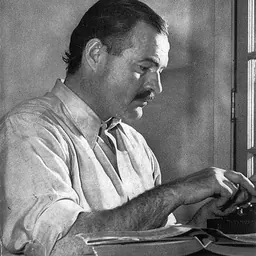
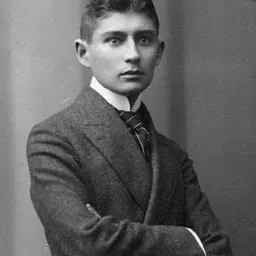
As the main consultant for Norwegian and translated literature for Gyldendal publishing, Hoel made an impression on a whole generation of Norwegian literature. From 1929 to 1959 Hoel was the editor of the publisher's "Gold Series", where he introduced a number of foreign authors, often with an astounding foresight for which works would remain. The series comprised 101 books — including works from authors such as Ernest Hemingway, F. Scott Fitzgerald and Franz Kafka. Hoel wrote prefaces for all of the books, and the preferences are collected in the books 50 gold (1939) and The last 51 gold (1959).
Hoel explores the theme of guilt in his last novel The Troll Circle, published in 1958. The author analyzes the psychology of a middle-aged Norwegian village in the nineteenth century and shows the roots of the vices — anger, distrust, narrow-mindedness — that become a fruitful soil for totalitarian ideology.
Works
Non-fiction Biography Knut Hamsun, O. Norlis, 1920.
Articles 50 gule, Gyldendal, 1939. De siste 51 gule, Gyldendal, 1959.
Essays Tanker i mærketid, Gyldendal, 1945 Tanker fra mange tider, Gyldendal, 1948 Tanker mellom barken og veden, Gyldendal, 1952 Tanker om norsk diktning, Gyldendal, 1955
Posthumous Articles and Essays Ettertanker, Gyldendal, 1980. Left behind essays and articles, published by Leif Longum. Litterære essays, Dreyer, 1990. Published by Helge Nordahl.
Short Stories Veien vi gaar, Gyldendal, 1922 Prinsessen på glassberget, Gyldendal, 1939
Novels Syvstjernen, Gyldendal, 1924 Syndere i sommersol, Gyldendal, 1927 Ingenting, Gyldendal, 1929 En dag i oktober, Gyldendal, 1931 Veien til verdens ende, Gyldendal, 1933 Fjorten dager før frostnettene, Gyldendal, 1935 Sesam sesam, Gyldendal, 1938 Arvestålet, Gyldendal, 1941 Møte ved milepelen, Gyldendal, 1947 Jeg er blitt glad i en annen, Gyldendal, 1951 Stevnemøte med glemte år, Gyldendal, 1954 Ved foten av Babels tårn, Gyldendal, 1956 Trollringen, Gyldendal, 1956
Drama Mot muren, Gyldendal, 1930 Don Juan, Gyldendal, 1930, written together with Helge Krog.
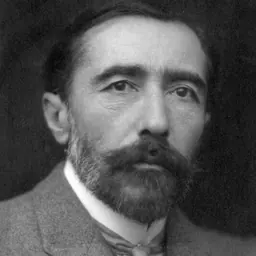
Translations Anita Loos, Gentlemen Prefer Blondes, Gyldendal, 1926. Joseph Conrad, The Nigger of the Narcissus, Gyldendal, 1928 Joseph Conrad, Heart of Darkness, Gyldendal, 1929 Joseph Conrad, Lord Jim, Gyldendal, 1932 William Faulkner, Light in August, Gyldendal, 1934 Arthur Koestler, Arrival and Departure, Gyldendal, 1946
Awards and distinctions Gyldendal's Endowment (Gyldendal's Legacy) 1940 Bokhandlerprisen (Bookseller Award) 1948
Don’t just read it —
keep it.
Full-length biographies made to live with: read them, listen on the way to work, watch them tonight.
- E-book
- Audio
- Video
Instant download · yours to keep · every purchase keeps this site free
Important facts
Family & relationships
People in Sigurd Hoel's life
Named in this biography and alive at the same time


Related people
Same field, nearest in time




Contemporaries
People whose lives overlapped Sigurd Hoel's




Frequently asked questions
Who was Sigurd Hoel?
Norwegian writer (1890–1960)
When was Sigurd Hoel born?
Sigurd Hoel was born on 14 December 1890 in Nord-Odal Municipality.
When did Sigurd Hoel die?
Sigurd Hoel died on 14 October 1960 in Oslo.
What was Sigurd Hoel's occupation?
Sigurd Hoel was a writer, literary critic, translator and author.
What nationality was Sigurd Hoel?
Sigurd Hoel was Norwegian.
Sources & further reading
Cite this page
APA: Biography.guide. (2026). Sigurd Hoel. https://biography.guide/sigurd-hoel-writer/
MLA: "Sigurd Hoel." Biography.guide, https://biography.guide/sigurd-hoel-writer/.
Chicago: "Sigurd Hoel." Biography.guide. https://biography.guide/sigurd-hoel-writer/.
Data last updated: 2026-09-22 · Spot an error? Report a correction.
Page generated 2026-09-27 05:20 UTC