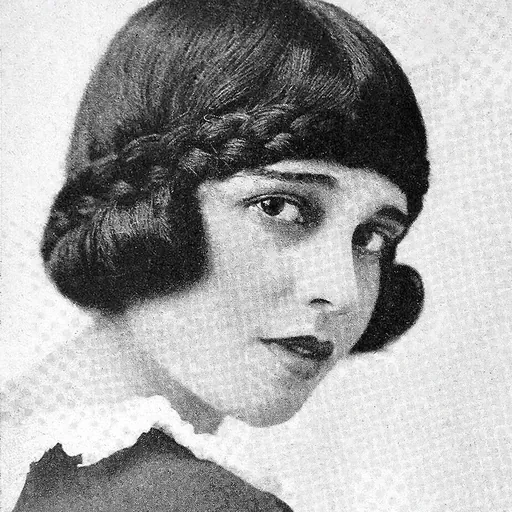
About Anita Loos
Lived 1889 – 1981 (aged 92). Anita Loos was an American writer, screenwriter, novelist, autobiographer, film actor and memoirist.
Corinne Anita Loos (April 26, 1888 – August 18, 1981) was an American actress, novelist, playwright and screenwriter. In 1912, she became the first female staff screenwriter in Hollywood, when D. W. Griffith put her on the payroll at Triangle Film Corporation. She is best known for her 1925 comic novel, Gentlemen Prefer Blondes, her screenplay of the 1939 adaptation of The Women, and her 1951 Broadway adaptation of Colette's novella Gigi.
Early life Loos was born in Sisson (now Mount Shasta), California, to newspaper publisher Richard Beers Loos and Minerva Ellen "Minnie" Loos . She had one sister, Gladys Loos, and one brother, Harry Clifford Loos, a physician and a co-founder of the Ross-Loos Medical Group.
About pronouncing her name, Loos said, "The family has always used the correct French pronunciation which is lohse. However, I myself pronounce my name as if it were spelled luce, since most people pronounce it that way and it was too much trouble to correct them."
Her father founded Sisson Mascot, a tabloid newspaper, for which her mother did most of the work of a publisher. In 1892, when Anita was three years old, the family moved to San Francisco, where her father bought the newspaper Music and Drama, with money that her mother "wheedled"
Career
1897–1915: Early career In 1897, at their father's urging, Loos and her sister performed in a San Francisco stock company production of Quo Vadis? Gladys died at age eight of appendicitis,
Anita continued appearing on stage, being the family's breadwinner. Her father's spendthrift ways caught up with them, and in 1903 he took an offer to manage a theater company in San Diego. The New York Hat, starring Mary Pickford and Lionel Barrymore and directed by D. W. Griffith, was her third screenplay and the first to be produced. Loos dredged real life, including her own, for scenarios: she dished up her father's cronies and brother's friends, also using the rich vacationers from the San Diego resorts; eventually every experience became grist for her script mill. She wrote 200 scenarios before she ever visited a film studio.
1915–1917: Hollywood
In 1915, trying to escape her mother's influence and objections to a career in Hollywood, Loos married Frank Pallma, Jr., the son of the band conductor. But Frank proved to be penniless and dull – after six months, she sent him out for hair pins, and while he was gone she packed her bags and went home to her mother. she traveled to New York City for the first time to attend its premiere. Instead of returning to Hollywood, Loos spent the fall of 1916 in New York and met with Frank Crowninshield of Vanity Fair. They had an instant rapport and Loos remained a Vanity Fair contributor for several decades. He would readily admit that he "had never been, nor could be, faithful to any one female." Loos convinced herself he would see that she was different from all his other girls, and that behind his outwardly dull exterior was a great mind. She would later consider herself misled on both counts, writing: "I had set my sights on a man of brains, to whom I could look up", she lamented, "but what a terrible let down it would be to find out that I was smarter than he was."
The pictures for Famous Players–Lasky were not as successful as their previous films, partly because they starred Broadway headliners not adept at screen acting and their contract was not renewed. The scripts carried both names but were mostly products of Loos alone. Later Loos would claim that Emerson took all the money and most of the credit, though his contribution usually consisted of observing from bed as she worked. Much to the chagrin of her friends, her adoration of Emerson had manifested as subservience. When William Randolph Hearst offered Loos a contract to write a picture for his mistress, Marion Davies, Loos included the unnecessary Emerson in the deal. Hearst liked the picture and Getting Mary Married (1919) was one of the first Marion Davies pictures that didn't lose money. In 1925, on the train to Hollywood with Mencken, she became keenly aware of this fact when he solicited the attention of a blonde in the dining car. published in Harper's Bazaar, known as the "Lorelei" stories. They were satires on the state of sexual relations that only vaguely alluded to sexual intimacy; the magazine's circulation quadrupled overnight. The heroine of the stories, Lorelei Lee, was a bold, ambitious flapper, who was much more concerned with collecting expensive baubles from her conquests than any marriage licenses, in addition to being a shrewd woman of loose morals and high self-esteem. She was a practical young woman who had internalized the materialism of the United States in the 1920s and equated culture with cold cash and tangible assets.
When asked who the models for her characters were, Loos would almost always say they were composites of various people. But when pressed, she admitted that toothless flirt Sir Francis Beekman was modeled after writer Joseph Hergesheimer and producer Jesse L. Lasky. Dorothy Shaw was modeled after herself and Constance Talmadge and Lorelei most closely resembled acquisitive Ziegfeld showgirl Lillian Lorraine, who was always looking for new places to display the diamonds bestowed by her suitors.
Emerson first attempted to suppress its publication and then settled for a personal dedication. Loos continued to be overworked throughout 1926, sometimes working many projects at once. In the spring of 1926 she completed the stage adaptation, which opened a few weeks later in Chicago and ran for 201 performances on Broadway. Emerson had developed a serious case of hypochondria by this time, affecting laryngitis attacks to divert attention from her work; ), Broadway debut in September 1926, running for 199 performances in two theaters, closing at the Times Square Theater, in April 1927.
1927–1931: Leisure time
When But Gentlemen Marry Brunettes was published in 1927, Emerson proposed another European vacation and went ahead of Loos. A seriously ill Loos followed him, coming down with a sinus attack in Vienna. She and the ear, nose and throat specialist who was treating her came up with a method of fixing Emerson's hypochondria. From 1927 to 1929, Loos and Emerson traveled extensively, which was hard on Loos's health. All their winters were spent in Palm Beach, where Emerson would indulge in social climbing. Loos was starved of intellectual male companionship and met Wilson Mizner there, a witty and charming real estate speculator, and in some quarters – confidence man.
"She was a very valuable asset for MGM, because the studio had so many femmes fatales – Garbo, Crawford, Shearer, and Harlow – that we were always on the lookout for 'shady lady' stories. But they were problematic because of the censorship code. Anita, however, could be counted on to supply the delicate double entendre, the telling innuendo. Whenever we had a Jean Harlow picture on the agenda, we always thought of Anita first." – MGM producer Samuel Marx Thalberg had taken ill again and gave Emerson a two-year contract as a producer at $1,250 a week. By mid-1937 Loos had decided not to renew her contract with MGM; since friend and supporter Thalberg's death in September 1936, things had not been going well at the studio and every film felt like a struggle. She signed with Samuel Goldwyn, formerly of MGM and now head of United Artists, for $5,000 a week and almost immediately regretted it. Loos soldiered on, working on "unworkable" scripts.
1936–1945: Life alone In October Loos and her brother Clifford checked Emerson into a very expensive sanatorium where he was diagnosed with schizophrenia.
She was interviewed in the television documentary series Hollywood: A Celebration of the American Silent Film (1980).
After spending several weeks with a lung infection, Anita Loos suffered a heart attack and died in Manhattan's Doctors Hospital in New York City at the age of 93.
In popular culture Loos is portrayed in a thinly disguised manner by Tatum O'Neal, as the character Alice Forsyte, in Peter Bogdanovich's look back at early silent filmmaking in the film Nickelodeon. In the second season of HBO's Perry Mason (2020 TV series) the character Anita St. Pierre, played by Jen Tullock, is based on Loos.
Works
Anita Loos Rediscovered: Film Treatments and Fiction by Anita Loos, Creator of Gentlemen Prefer Blondes Author: Anita Loos Editors: Cari Beauchamp, Mary Loos Publisher : University of California Press, 2003
Fiction Gentlemen Prefer Blondes: The Intimate Diary of a Professional Lady. NY: Boni & Liveright, 1925 But Gentlemen Marry Brunettes. NY: Boni & Liveright, 1927 A Mouse Is Born. NY: Doubleday & Company, 1951 No Mother to Guide Her. NY: McGraw Hill, 1961 London: Arthur Barker Ltd., 1961 Fate Keeps On Happening: Adventures Of Lorelei Lee And Other Writings. NY: Dodd, Mead & Company, 1984
Nonfiction
w/John Emerson How to Write Photoplays NY: James A McCann, 1920 w/John Emerson. Breaking Into the Movies. NY: James A McCann, 1921 "This Brunette Prefers Work", Woman's Home Companion, 83 (March 1956) A Girl Like I. NY:Viking Press, 1966 w/Helen Hayes. Twice Over Lightly: New York Then and Now. NY: Harcourt Brace Jovanovich, 1972 Kiss Hollywood Good-by. NY: Viking Press, 1974 Cast of Thousands: a pictorial memoir of the most glittering stars of Hollywood. NY: Grosset and Dunlap, 1977 The Talmadge Girls. NY: Viking Press, 1978
Broadway credits The Whole Town's Talking (1923) The Fall of Eve (1925) Gentlemen Prefer Blondes (1926) The Social Register (1931) Happy Birthday (1946) Gentlemen Prefer Blondes (1949) Gigi (1951) Chéri (1959) The King's Mare (1967) Lorelei (1974)
Film credits
My Baby (1912; writer) The Musketeers of Pig Alley (1912; writer) The New York Hat (1912; writer) A Narrow Escape (1913; scenario) (1913; scenario) His Hoodoo (1913; scenario; story "The Making of a Masher") (1913; story "The Queen of the Carnival") A Cure for Suffragettes (1913; story) (1913; story) (1913; story) (1913; story) (1913; story) (1913; story) (1913; story) (1913; story) (1913; story) (1913; story) His Awful Vengeance (1913; writer) (1913; writer) The Mistake (1913; writer) The Telephone Girl and the Lady (1913; writer) (1913; writer) The Sisters (1914/I; scenario) A Lesson in Mechanics (1914; scenario) Nearly a Burglar's Bride (1914; scenario) Some Bull's Daughter (1914; scenario) The Deceiver (1914; scenario) The Road to Plaindale (1914; scenario) The Saving Grace (1914; scenario) The Saving Presence (1914; scenario) A Corner in Hats (1914; story) A Flurry in Art (1914; story) Gentleman or Thief (1914; story) Nell's Eugenic Wedding (1914; story) The Fatal Dress Suit (1914; story) The Man on the Couch (1914; story) The Million Dollar Bride (1914; story) (1914; uncredited) (1914; writer) Billy's Rival (1914; writer) For Her Father's Sins (1914; writer) Izzy and His Rival (1914; writer) The Girl in the Shack (1914; writer) The Hunchback (1914; writer) The Last Drink of Whiskey (1914; writer) The White Slave Catchers (1914; writer) (1914; writer) (1915; scenario) Mixed Values (1915; scenario) The Deacon's Whiskers (1915; scenario) The Lost House (1915; scenario) The Fatal Finger Prints (1915; writer) Stranded (1916/I; writer) Macbeth (1916; intertitles) A Calico Vampire (1916; scenario) (1916; scenario) (1916; scenario) The Americano (1916; scenario; titles) The Wharf Rat (1916; screenplay; story) A Corner in Cotton (1916; story) American Aristocracy (1916; story) Intolerance: Love's Struggle Throughout the Ages (1916; titles) The Mystery of the Leaping Fish (1916; titles) A Wild Girl of the Sierras (1916; writer) His Picture in the Papers (1916; writer) The Children Pay (1916; writer)
The Half-Breed (1916; writer) The Little Liar (1916; writer) (1916; writer) (1916; writer) In Again, Out Again (1917/II; writer) A Daughter of the Poor (1917; writer) Down to Earth (1917; writer) Reaching for the Moon (1917; writer) Wild and Woolly (1917; writer) Good-Bye, Bill (1918; screenplay; producer; story Gosh Darn the Kaiser) Hit-The-Trail Holliday (1918; writer) Let's Get a Divorce (1918; writer) Come on In (1918; writer; producer) A Virtuous Vamp (1919; scenario) A Temperamental Wife (1919; scenario; producer) Oh, You Women! (1919; scenario; story) Under the Top (1919; story) Getting Mary Married (1919; writer) The Isle of Conquest (1919; writer) The Branded Woman (1920; adaptation) Dangerous Business (1920; producer; writer) Two Weeks (1920; scenario) The Perfect Woman (1920; screenplay; story) The Love Expert (1920; writer; producer) In Search of a Sinner (1920; writer; producer; uncredited) Woman's Place (1921; story) Mama's Affair (1921; writer) Polly of the Follies (1922; screenplay; story) Red Hot Romance (1922; screenplay; story; executive producer) Dulcy (1923; writer) Three Miles Out (1924; writer) Learning to Love (1925; screenplay; story) The Whole Town's Talking (1926; play) Stranded (1927; story) Gentlemen Prefer Blondes (1928; novel; screenplay; titles) The Fall of Eve (1929; story) Ex-Bad Boy (1931; story "The Whole Town's Talking") The Struggle (1931; writer) Blondie of the Follies (1932; dialogue) Red-Headed Woman (1932; writer) Hold Your Man (1933; screenplay; story) Midnight Mary (1933; story) The Barbarian (1933; writer) The Girl from Missouri (1934; original screenplay) The Cat and the Fiddle (1934; screenplay contributor; uncredited) Social Register (1934; story) Biography of a Bachelor Girl (1935; writer) Riffraff (1936; screenplay) San Francisco (1936; writer) Saratoga (1937; screenplay; story) Mama Steps Out (1937; writer) The Cowboy and the Lady (1938; contributing writer; uncredited) Another Thin Man (1939; contributing writer; uncredited) The Women (1939; screenplay) Babes in Arms (1939; uncredited) Strange Cargo (1940; adaptation; uncredited) Susan and God (1940; screenplay) Blossoms in the Dust (1941; screenplay) When Ladies Meet (1941; screenplay) They Met in Bombay (1941; writer) I Married an Angel (1942; screenplay) A Tree Grows in Brooklyn (1945 uncredited) The Buick Circus Hour (1952; teleplays) Gentlemen Prefer Blondes (1953; play) Gentlemen Marry Brunettes (1955; novel "But Gentlemen Marry Brunettes") Producers' Showcase "Happy Birthday" (1956; writer)
Loos.
Don’t just read it —
keep it.
Full-length biographies made to live with: read them, listen on the way to work, watch them tonight.
- E-book
- Audio
- Video
Instant download · yours to keep · every purchase keeps this site free
Important facts
Family & relationships
People in Anita Loos's life
Named in this biography and alive at the same time





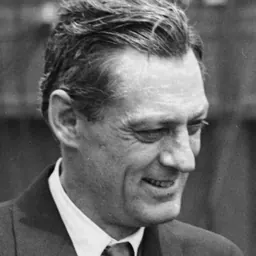

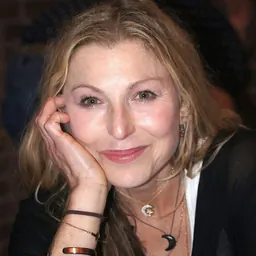
Related people
Same field, nearest in time


Contemporaries
People whose lives overlapped Anita Loos's



Frequently asked questions
Who was Anita Loos?
American actress and writer (1888–1981)
When was Anita Loos born?
Anita Loos was born on 26 April 1889 in Mount Shasta.
When did Anita Loos die?
Anita Loos died on 18 August 1981 in New York City.
What was Anita Loos's occupation?
Anita Loos was a writer, screenwriter, novelist, autobiographer, film actor and memoirist.
What nationality was Anita Loos?
Anita Loos was American.
Sources & further reading
Cite this page
APA: Biography.guide. (2026). Anita Loos. https://biography.guide/anita-loos/
MLA: "Anita Loos." Biography.guide, https://biography.guide/anita-loos/.
Chicago: "Anita Loos." Biography.guide. https://biography.guide/anita-loos/.
Data last updated: 2026-09-22 · Spot an error? Report a correction.
Portrait: Wikimedia Commons · author & licence
Page generated 2026-09-27 05:01 UTC