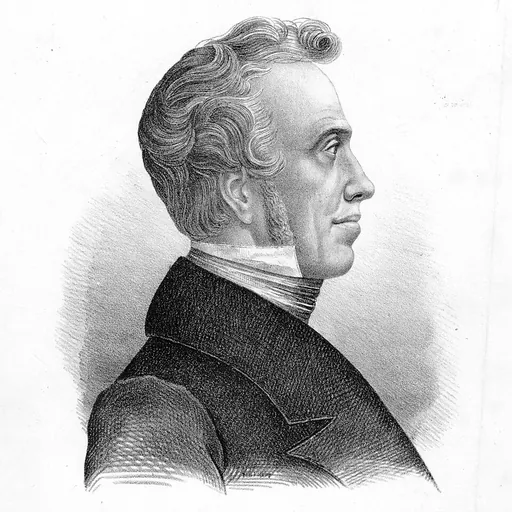
About Sigismund von Neukomm
Lived 1778 – 1858 (aged 79). Sigismund von Neukomm was an Austrian conductor, composer, pianist, music arranger, diplomat and organist.
Sigismund Neukomm or Sigismund Ritter von Neukomm [after ennoblement as a knight] (10 July 1778 – 3 April 1858) was an Austrian composer, conductor and pianist. He was a transitional figure between the Classical and Romantic periods of music.
In 1814 Neukomm was responsible for erecting a tombstone to the memory of Haydn over his first grave in the Hundsturm cemetery in Vienna. The inscription included a puzzle canon composed by Neukomm himself. He was in regular contact with the composer in the last months of his life, visiting him every day between mid-November 1808 and February 1809. In 1816 he travelled to Rio de Janeiro with the Duke of Luxemburg and stayed there as court music director to John VI of Portugal until the revolution forced his return to Lisbon in 1821. He maintained his connection to Talleyrand until 1826 and then embarked on an extended trip to Italy, visiting Genoa, Florence, Rome, Naples, Bologna, Venice and Milan. In England his Symphony in E♭ was put on by the Philharmonic Society (on March 21, 1831) and his oratorios gained popularity. Mount Sinai received repeated performances in London, Worcester, Derby and elsewhere, and David was composed especially for the 1834 Birmingham Festival. Two songs - 'Napoleon's Midnight Review' and 'The Sea', both setting words by Barry Cornwall, achieved particular popularity. However, the success of his friend Mendelssohn at the 1837 Birmingham Festival with the oratorio St Paul quickly eclipsed his fame. Despite this Neukomm felt at home in England and claimed to have set more English words than any other foreign composer.
Final years Neukomm continued to travel widely until the end of his life, while maintaining his homes in England and France. In 1838 he returned to Salzburg for the first time in three decades. He was also there for the unveiling of the Mozart Monument in September 1842, for which he delivered the panegyric, composed a hymn (Österreich), and conducted Mozart's Coronation Mass (k317) and Requiem. Neukomm's sister Elisabeth (1789–1816) was a soprano, renowned in Vienna. One of his nephews, Edmond Neukomm (1840–1903), was a French writer on music.
Don’t just read it —
keep it.
Full-length biographies made to live with: read them, listen on the way to work, watch them tonight.
- E-book
- Audio
- Video
Instant download · yours to keep · every purchase keeps this site free
Important facts
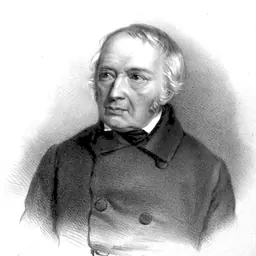
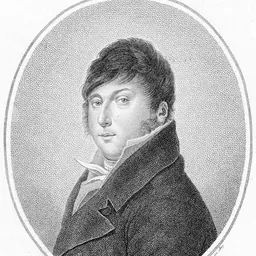
People in Sigismund von Neukomm's life
Named in this biography and alive at the same time
Related people
Same field, nearest in time


Contemporaries
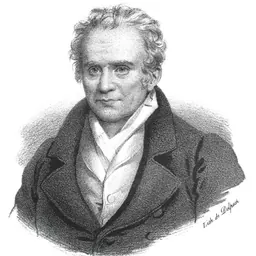
People whose lives overlapped Sigismund von Neukomm's



Frequently asked questions
Who was Sigismund von Neukomm?
Austrian composer and pianist (1778–1858)
When was Sigismund von Neukomm born?
Sigismund von Neukomm was born on 10 July 1778 in Salzburg.
When did Sigismund von Neukomm die?
Sigismund von Neukomm died on 3 April 1858 in Paris.
What was Sigismund von Neukomm's occupation?
Sigismund von Neukomm was a conductor, composer, pianist, music arranger, diplomat and organist.
What nationality was Sigismund von Neukomm?
Sigismund von Neukomm was Austrian.
Sources & further reading
· Wikipedia: Sigismund von Neukomm
· DBpedia: Sigismund von Neukomm
Cite this page
APA: Biography.guide. (2026). Sigismund von Neukomm. https://biography.guide/sigismund-von-neukomm/
MLA: "Sigismund von Neukomm." Biography.guide, https://biography.guide/sigismund-von-neukomm/.
Chicago: "Sigismund von Neukomm." Biography.guide. https://biography.guide/sigismund-von-neukomm/.
Data last updated: 2026-09-20 · Spot an error? Report a correction.
Portrait: Wikimedia Commons · author & licence
Page generated 2026-09-27 04:58 UTC