
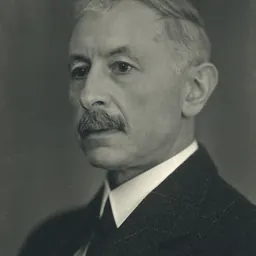
Siegfried Geißler
German conductor, composer and politician
About Siegfried Geißler
Lived 1929 – 2014 (aged 85). Siegfried Geißler was a German conductor, composer, politician, conducting and hornist.
Siegfried Rudolf Geißler (26 March 1929 – 10 July 2014) was a German composer, conductor, hornist and politician. He founded the Thüringen Philharmonie Suhl in 1979. After the Wende, he was a member of the New Forum who was elected to the first Landtag of Thuringia in 1990. As its senior, he was its Father of the House and opened the inaugural session.
Career Composer, conductor and hornist Born in Dresden, Geißler was born the son of a working-class family in Dresden, attended elementary school from 1935 to 1943 and then studied piano and horn at the Hochschule für Musik Carl Maria von Weber Dresden until 1946. Already at this time he made some minor appearances as hornist with the Staatskapelle Dresden, the Semperoper and the Dresden Philharmonic. He then worked as principal hornist at the municipal theatre of Cottbus. In 1947, he escaped to the West and became principal hornist in the symphony orchestra of Speyer. During this time he first appeared as a conductor. After his return to the DDR in 1951 he became solo hornist of the Kreiskulturorchester of Sonneberg. From 1953 he was conductor of the Erzgebirgsphilharmonic of Aue, in 1956 of the Thüringisches Kreiskulturorchester Mühlhausen and from 1958 to 1962 under Heinz Bongartz in the Dresden Philharmonic. With this orchestra, he was the first European orchestra after 1945 to undertake a concert tour to China. of the Thuringia State Symphony Orchestra Gotha, then chief conductor of the Suhl State Symphony Orchestra based in Hildburghausen, and elevated to Thüringen Philharmonie Suhl in 1979. In addition to numerous guest tours in Europe and Asia, he formed the Philharmonie into an ensemble of international reputation. In 1980 Geißler retired from the position of chief conductor of the Suhl Philharmonic. According to his Stasi documents, his friendship with the painter was no longer tolerated by the cultural policy of the SED.
From 1980, Geißler worked as a freelance composer and conductor. He created 52 compositions, including eight symphonies, solo concertos, chamber music, choral works and electronic music. In his last creative period, he composed in twelve-tone technique. He dedicated his Sixth Symphony to his friend Streubel. In 1969, together with the composer and personal friend Hans-Jürgen Thiers (1929), Geißler composed the oratorium "Der Mensch" (1912–1986) in whose works he found inspiration for his compositions.
Politics Political commitment until 1990 Already after his return from the Federal Republic to the GDR in 1951, Geißler intervened critically and arguably - much to the displeasure of the political leadership. In 1958, Geißler joined the SED. However, his attitude to party ideology prompted the MfS to launch a comprehensive surveillance and observation process (OV "Antipode") on Geißler.
Geißler became a member of the Volkskammer committee for the dissolution of the MfS/AfNS and district representative for the dissolution of the MfS/AfNS under the chairmanship of Joachim Gauck. After his withdrawal from the SED on 30 September 1989, Geißler was co-founder of the Citizens' Committee of Suhl, founder of the Citizens' Committee of the State of Thuringia, co-founder of the New Forum Suhl and South Thuringia and appointed citizen of the Round Table of the City of Thuringia.
Political commitment from 1990 Geißler ran for the 1990 Thuringian state election on the common of the New Forum, the East German Green Party and Democracy Now and won a mandate. As the oldest elected member of parliament he chaired the constituent session of the first Landtag of Thuringia on 25 October 1990 in the Deutsches Nationaltheater and Staatskapelle Weimar.
Geißler died in Suhl on 10 July 2014. Eight symphonies and one unfinished symphony
Double Concerto for cello, mezzo-soprano and orchestra
Violin Concerto No. 1 Violin Concerto No. 2 Horn Concerto Lieder
Legacy In 1994, Geißler gave the his entire personal registry as a member of the state parliament. In 2009, the State Archives took over the second part of his political estate as a deposit, to which ten files with personal documents from the period from 1989 to 2005 belong. The artistic legacy, which consists mainly of sheets music in the form of original manuscripts and sound recordings, is kept in the Saxon State and University Library Dresden.
Publications Interviews were published: – The interview with Siegfried Geißler can also be found online at starting on page 30 in the e-Book of this book.
Siegfried Geißler: Wer sich nicht engagiert, hat auch kein Recht zu schimpfen. Conversation ( in Holger Zürch Thüringens Gründerjahre. Gespräche mit Thüringer Abgeordneten über ihre Zeit im Landtag zwischen 1990 und 1999. Erfurt 2004, (volume 20 of the series Thüringen gestern & heute, published by the Bundesverband Deutscher Liebhaberorchester)
Don’t just read it —
keep it.
Full-length biographies made to live with: read them, listen on the way to work, watch them tonight.
- E-book
- Audio
- Video
Instant download · yours to keep · every purchase keeps this site free
Important facts
People in Siegfried Geißler's life
Named in this biography and alive at the same time


Related people
Same field, nearest in time


Contemporaries
People whose lives overlapped Siegfried Geißler's



Frequently asked questions
Who was Siegfried Geißler?
German conductor, composer and politician (1929-2014)
When was Siegfried Geißler born?
Siegfried Geißler was born on 26 March 1929 in Dresden.
When did Siegfried Geißler die?
Siegfried Geißler died on 10 July 2014 in Suhl.
What was Siegfried Geißler's occupation?
Siegfried Geißler was a conductor, composer, politician, conducting and hornist.
What nationality was Siegfried Geißler?
Siegfried Geißler was German.
Sources & further reading
· Wikipedia: Siegfried Geißler
Cite this page
APA: Biography.guide. (2026). Siegfried Geißler. https://biography.guide/siegfried-geissler/
MLA: "Siegfried Geißler." Biography.guide, https://biography.guide/siegfried-geissler/.
Chicago: "Siegfried Geißler." Biography.guide. https://biography.guide/siegfried-geissler/.
Data last updated: 2026-09-22 · Spot an error? Report a correction.
Page generated 2026-09-27 05:18 UTC