
About Sidney Rittenberg
Lived 1921 – 2019 (aged 98). Sidney Rittenberg was an American writer, journalist, businessperson, linguist and interpreter.
Sidney Rittenberg (Chinese: 李敦白; pinyin: Lǐ Dūnbái; August 14, 1921 – August 24, 2019) was an American journalist, scholar, and Chinese linguist who lived in China from 1944 to 1980. He worked closely with Mao Zedong, Zhu De, Zhou Enlai, and other leaders of the Chinese Communist Party (CCP) during the Chinese Communist Revolution, staying with them at Yan'an. Working for the Xinhua News Agency and Radio Peking afterwards, much of his time in China was spent in long periods of solitary confinement. According to his book, The Man Who Stayed Behind, Rittenberg was the second American citizen to join the CCP, the first being Ma Haide.
Early life Rittenberg was born into a Jewish family in Charleston, South Carolina and he lived there until his college studies. He was the son of Muriel (Sluth) and Sidney Rittenberg, During his college years he was very active in advocating for social causes and organized protests and pickets. He was drafted for the army, studied for a role as a linguist, and sent to China. When he arrived in China, he was sent to bring a $26 check to the family of a girl who was killed by a drunken US soldier. Despite the family's devastation, they gave Rittenberg $6 for his help.
Interpreting for Mao After World War II ended, Rittenberg chose to stay in China and tried to aid the Chinese Communist Party as he had witnessed the injustices committed under the Chinese Nationalist Party.
They drew a circle that shut me out Heretic, rebel, a thing to flout But love and I had the wit to win; We drew a circle that took them in.
This first imprisonment lasted six years and resulted in his wife Wei Lin whom he had met in China divorcing him as she was told nothing about his disappearance.
In 1957, he delivered a eulogy at the funeral of Manya Reiss.
He used his identity as an American-turned-communist in many speeches denouncing capitalism and imperialism and promoting Mao's policies. Later he was a supporter of the Cultural Revolution and briefly associated with Mao's inner circle, leading a group of rebels to take over the state broadcasting institution. On April 8, 1967, the People's Daily published a long article written by him.
Career as business advisor In the United States after his release, he used his extensive knowledge and contacts in China to advise corporate leaders on how to benefit from China's vast, growing economy. Still welcome in China, he took entrepreneurs on guided tours, introducing them to the country's influential figures.
Don’t just read it —
keep it.
Full-length biographies made to live with: read them, listen on the way to work, watch them tonight.
- E-book
- Audio
- Video
Instant download · yours to keep · every purchase keeps this site free
Important facts
People in Sidney Rittenberg's life
Named in this biography and alive at the same time
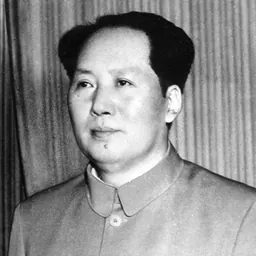

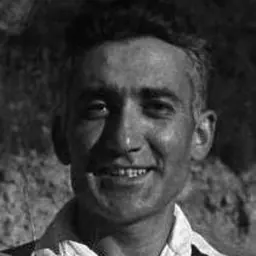

Related people
Same field, nearest in time
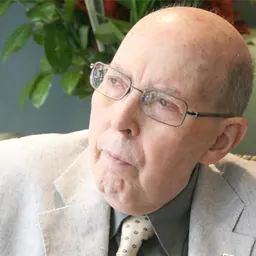


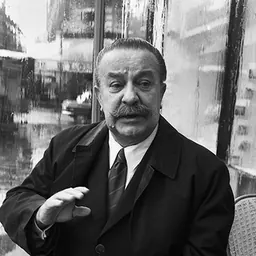
Contemporaries
People whose lives overlapped Sidney Rittenberg's

Frequently asked questions
Who was Sidney Rittenberg?
American academic (1921-2019)
When was Sidney Rittenberg born?
Sidney Rittenberg was born on 14 August 1921 in Charleston.
When did Sidney Rittenberg die?
Sidney Rittenberg died on 24 August 2019 in Scottsdale.
What was Sidney Rittenberg's occupation?
Sidney Rittenberg was a writer, journalist, businessperson, linguist and interpreter.
What nationality was Sidney Rittenberg?
Sidney Rittenberg was American.
Sources & further reading
· Wikipedia: Sidney Rittenberg
Cite this page
APA: Biography.guide. (2026). Sidney Rittenberg. https://biography.guide/sidney-rittenberg/
MLA: "Sidney Rittenberg." Biography.guide, https://biography.guide/sidney-rittenberg/.
Chicago: "Sidney Rittenberg." Biography.guide. https://biography.guide/sidney-rittenberg/.
Data last updated: 2026-09-20 · Spot an error? Report a correction.
Page generated 2026-09-27 05:25 UTC