
About Sidney Finkelstein
Lived 1909 – 1974 (aged 64). Sidney Finkelstein was an American music critic, critic, art critic, writer and literary critic.
Sidney Finkelstein (1909–1974) was an American cultural critic with wide-ranging interests in literature, music and fine arts, which he analyzed from a Marxist perspective. His area of particular expertise was popular music: its history, and the relationship between music and society. His best-known books include Jazz: A People's Music, How Music Expresses Ideas (1952), and Composer and Nation (1960). Along with Charles Seeger (father of Pete Seeger), Finkelstein is considered "one of two American Marxist musical theoreticians of consequence." He has also been compared to British jazz writer "Francis Newton," pseudonym for British Marxist historian Eric Hobsbawn.
Background Sidney Walter Finkelstein was born on July 4, 1909, in Brooklyn, New York. In 1929, he received a BA from the City College of New York. In 1932, he received an MA from Columbia University. which succinctly captures the arc of his career. In the 1930s, while working for the U.S. Postal Service, he became a book reviewer for the Brooklyn Daily Eagle. In the 1940s, he was hired by the New York Herald Tribune as a music reviewer. He meanwhile started contributing essays on the history and theory of art to leftist publications including New Masses and its successor Masses & Mainstream, where he remained until its close in 1963. In the late 1940s, he began writing a series of books on art, the royalties from which were his principal source of income.
In 1951, he joined the staff of Vanguard Records, a New York record label known for its recordings of jazz and classical music. Finkelstein worked at the record label until 1973, mostly writing liner notes on their classical LPs.
For many years, Finkelstein was an active member of the Communist Party USA (CPUSA), serving as the Party's musical and cultural theoretician. He applied the doctrine of socialist realism in his analysis of art, as evidenced by his first book, Art and Society (1947), which maintained that the arts had evolved over the centuries in response to the changing needs of audiences. Because Finkelstein's books on art and jazz started to appear as the Second Red Scare intensified, Michael Denning has suggested that the books "received—and continue to receive—far less attention than the Marxist works of the 1930s, despite the fact that Finkelstein is a far more interesting Marxist critic than [Mike] Gold, [Joseph] Freeman, [Granville] Hicks, or [V.F.] Calverton."
In one of his last essays, "Beauty and Truth", Finkelstein wrote that art at its best seeks to "humanize reality":
HUAC investigation In April 1957, the House Un-American Activities Committee (HUAC) held hearings in New York City about the Metropolitan Music School, which HUAC claimed was "controlled by identified Communists." The committee questioned the school's director, Lilly Popper, and several board members who all invoked the Fifth Amendment when asked about their Communist Party affiliation, which was banned at the time under the Smith Act.
Francis E. Walter chaired HUAC when Finkelstein testified in 1957
The HUAC then questioned Finkelstein. The committee identified him as "cultural spokesman for the Communist Party" and a member of the Metropolitan Music School's board of directors. He confirmed he'd been on the board from 1955-57 and had taught a Music Appreciation class at the school. When asked about Communist Party affiliation, he too invoked the Fifth Amendment.
The HUAC inquisitors were particularly interested in Finkelstein's connection with the Jefferson School of Social Science, which they classified as subversive according to the Attorney General's List of Subversive Organizations. When Congressman Richard Arens asked Finkelstein where else he had taught besides the Metropolitan Music School (seeking information about the Jefferson School), Finkelstein replied:
At one point in his testimony, Congressman Clyde Doyle quoted the following passage from Finkelstein's writings: "The FBI has its paid informers everywhere, and almost any lodge, church, political meeting, or labor organization may be victimized by these peeping toms." Rep. Doyle then asked, "Where in God's name would our Nation be if the FBI wasn't able to get patriotic American citizens to go into these organizations in which Commies, crooks, cheats, and traitors infiltrate? Would you tell me where our Nation would land if we did not have the FBI?" Finkelstein responded, "The Nation might be reduced to the terrible procedure of having to jail people for crimes, only if it found that they actually committed them or found that they did something criminal, not just thinking."
Soon after his HUAC testimony, Finkelstein's name was listed in three issues of the anti-communist newsletter Counterattack. The newsletter labeled him the "Daily Worker music critic" and a member of the board of directors of the Metropolitan Music School. In 1964, the Christian publication The Weekly Crusader cited the 1957 HUAC hearings when calling Finkelstein "the cultural spokesman for the communist conspiracy": ...on October 2, 1920, Lenin informed the conspirators that they must re-work "the culture created by the whole development of mankind..." He told these young communists that "only by re-working this culture, is it possible to build proletarian (communist) culture..." Music, of course, is misused as a part of this communist "cultural" war against mankind. In a book published by the communist publishing house, International Publishers, during 1952, and entitled How Music Expresses Ideas, the author Sidney Finkelstein used the above quote by Lenin in relation to music.
Personal life and death Finkelstein was a private man. Even his close friends Phillip Bonosky and Herbert Aptheker did not know whether he had a family of his own.
Daniel Rosenberg was a young jazz enthusiast who had an opportunity to meet with Finkelstein several times in the early 1970s. In a tribute piece written decades later, Rosenberg noted that Finkelstein's house in Brooklyn had floor-to-ceiling books, along with thousands of 78s and LPs. They listened together to Lester Young, Charlie Parker and other favorite jazz artists, and Finkelstein lent Rosenberg several records. Jazz (1951) How Music Expresses Ideas (1952) Realism in Art (1954) Charles White: Ein Künstler Amerikas (1955) Composer and Nation: The Folk Heritage of Music (1960) Existentialism and Alienation in American Literature (1965) Sense and Nonsense of McLuhan (1968) The Young Picasso (1969) Who Needs Shakespeare? (1973)
Contributions James Fenimore Cooper: Short Stories from His Novels (1970)
Selected Articles "How Marx and Engels Looked at Art", New Masses (December 1947) "The Folk Song's Back to Stay", Worker Magazine (March 1949) "Answering Attack on Marxism – New York City", Daily Worker (October 1949) "How Art Began", Masses & Mainstream (June 1954) "Notes on Contemporary Music", Political Affairs (March 1957) "Jazz: National Expression or International Folk Music?", Mainstream (November 1960) "Ezra Pound's Apologists", Mainstream (January 1961) "Beauty and Truth", Weapons of Criticism (1976) In 2018, Culture Matters wrote an appreciation of him, which concluded: "Analyses of jazz and society will therefore run aground if they fail to consult Jazz: A People’s Music."
The University of Massachusetts Amherst houses Finkelstein's papers, which include correspondence with publisher Angus Cameron, artist Rockwell Kent, playwright and screenwriter John Howard Lawson, educator Howard Selsam, and music composer Virgil Thomson.
Don’t just read it —
keep it.
Full-length biographies made to live with: read them, listen on the way to work, watch them tonight.
- E-book
- Audio
- Video
Instant download · yours to keep · every purchase keeps this site free
Important facts
People in Sidney Finkelstein's life
Named in this biography and alive at the same time
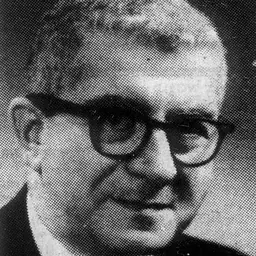

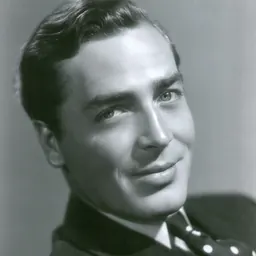

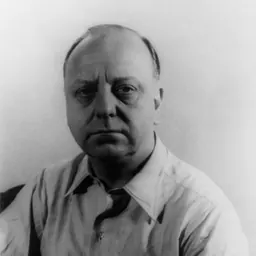

Related people
Same field, nearest in time

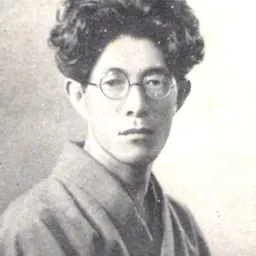


Contemporaries
People whose lives overlapped Sidney Finkelstein's





Frequently asked questions
Who was Sidney Finkelstein?
American writer (1909–1974)
When was Sidney Finkelstein born?
Sidney Finkelstein was born on 4 July 1909 in Brooklyn.
When did Sidney Finkelstein die?
Sidney Finkelstein died on 14 January 1974 in Brooklyn.
What was Sidney Finkelstein's occupation?
Sidney Finkelstein was a music critic, critic, art critic, writer and literary critic.
What nationality was Sidney Finkelstein?
Sidney Finkelstein was American.
Sources & further reading
· Wikipedia: Sidney Finkelstein
Cite this page
APA: Biography.guide. (2026). Sidney Finkelstein. https://biography.guide/sidney-finkelstein/
MLA: "Sidney Finkelstein." Biography.guide, https://biography.guide/sidney-finkelstein/.
Chicago: "Sidney Finkelstein." Biography.guide. https://biography.guide/sidney-finkelstein/.
Data last updated: 2026-09-20 · Spot an error? Report a correction.
Page generated 2026-09-27 05:21 UTC