
About Shoucheng Zhang
Lived 1963 – 2018 (aged 55). Shoucheng Zhang was an American and Chinese physicist, university teacher and professor, known for Field theory (physics), Quantum spin Hall effect and SO(5).
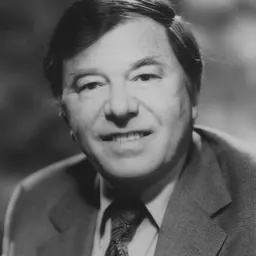
Shoucheng Zhang (; February 15, 1963 – December 1, 2018) was a Chinese-American physicist who was the JG Jackson and CJ Wood professor of physics at Stanford University. He was a condensed matter theorist known for his work on topological insulators, the quantum Hall effect, the quantum spin Hall effect, spintronics, and high-temperature superconductivity. According to the National Academy of Sciences: He discovered a new state of matter called topological insulator in which electrons can conduct along the edge without dissipation, enabling a new generation of electronic devices with much lower power consumption. For this ground breaking work he received numerous international awards, including the Buckley Prize, the Dirac Medal and Prize, the Europhysics Prize, the Physics Frontiers Prize and the Benjamin Franklin Medal.
Zhang founded the venture capital firm Danhua Capital.
In 2009, Zhang was chosen to be a part of an expert panel for the Thousand Talents Program. In 2013, Zhang created Danhua Capital, a venture capital firm, which raised $434.5 million across two funds. Danhua Capital's major investors include state-owned Beijing government enterprise Zhongguancun Development Group (ZDG), which has been linked to the Chinese technology transfer program Made in China 2025. He also served as an independent non-executive director at Lenovo Group and at Meitu.
Zhang's wife Barbara is a software engineer at IBM. They met in kindergarten, in Shanghai. Together they have two children, a son Brian and a daughter Stephanie.
Zhang died in San Francisco on December 1, 2018, at the age of 55, in an apparent suicide. His family said in a statement that he died "after fighting a battle with depression."
Scientific achievements Zhang was one of the founders of the field of topological insulators. He made one of the first theoretical proposals of the quantum spin Hall effect. Soon after the initial theoretical proposal, his group theoretically predicted the first realistic quantum spin Hall material in HgTe quantum wells. This prediction was soon confirmed experimentally, launching worldwide research activities. Subsequently, his group predicted numerous novel topological states of matter and topological effects, including the Bi2Se3 family of 3D topological insulators, the topological magneto-electric effect, the quantum anomalous Hall effect in magnetic topological insulators, time-reversal invariant topological superconductors, and the realization of a chiral topological superconductor and of chiral Majorana fermions using the quantum anomalous Hall state in proximity with a superconductor. Most of these predicted properties have now been experimentally observed.
Earlier, Zhang also made significant contributions to other areas of physics. He and collaborators derived a topological (Chern–Simons form) quantum field theoretic description of the novel properties of fractional quantum Hall liquids, and proposed a global phase diagram for the quantum Hall states with many features that have had since been experimentally observed. He generalized the theory of fractional quantum Hall effect to higher dimensions and related it to fundamental particle physics. He also proposed an influential theory of high-temperature superconductivity based on an extended symmetry principle.
In early 2000, Zhang and collaborators revitalized the field of spintronics by proposing an intrinsic spin Hall effect and relating it to geometrical phases in quantum mechanics. This proposal stimulated extensive theoretical and experimental work, and also contributed to later developments concerning the quantum spin Hall effect and topological insulators more generally.
Between the years 2010–2015, Zhang and his group of physicists at Stanford University wrote three theoretical papers where they successfully showed how to test Ettore Majorana's theory of Majorana fermion, or what had previously been only a scientific hypothesis that a particle can be its own antiparticle, without the need of external forces having the same mass with the opposite charge of the electron.
Honors and awards Zhang was a fellow of the American Physical Society and a fellow of the American Academy of Arts and Sciences. He received the Guggenheim fellowship in 2007, the Alexander von Humboldt Research Prize in 2009, the Europhysics Prize in 2010, the Oliver Buckley Prize in 2012, the Dirac Medal and Prize in 2012, the Physics Frontiers Prize in 2013, the "Nobel-class" Citation Laureates by Thomson Reuters in 2014, and the Benjamin Franklin Medal in 2015. He was identified as one of the top candidates for the Nobel Prize by Thomson Reuters in 2014. He was elected as a member of the US National Academy of Sciences in 2015.
Fellow, American Physical Society Fellow, American Academy of Arts and Sciences Guggenheim Fellow, 2007 Alexander von Humboldt Research Prize, 2009 Europhysics Prize, 2010 Dirac Medal of the ICTP, 2012 Physics Frontier Prize, 2013 "Nobel-class" Citation Laureates by Thomson Reuters, 2014 Benjamin Franklin Medal, 2015 Member, National Academy of Sciences (NAS) "Quantum spin hall effect in HgTe quantum well experimentally demonstrated" "Topological field theory of time-reversal invariant insulators" "Topological insulators and superconductors". Reviews of Modern Physics
Don’t just read it —
keep it.
Full-length biographies made to live with: read them, listen on the way to work, watch them tonight.
- E-book
- Audio
- Video
Instant download · yours to keep · every purchase keeps this site free
Important facts
People in Shoucheng Zhang's life
Named in this biography and alive at the same time
Related people
Same field, nearest in time



Contemporaries
People whose lives overlapped Shoucheng Zhang's


Frequently asked questions
Who was Shoucheng Zhang?
Chinese American physicist (1963–2018)
When was Shoucheng Zhang born?
Shoucheng Zhang was born on 15 February 1963 in Shanghai.
When did Shoucheng Zhang die?
Shoucheng Zhang died on 1 December 2018 in San Francisco.
What was Shoucheng Zhang's occupation?
Shoucheng Zhang was a physicist, university teacher and professor.
What was Shoucheng Zhang known for?
Shoucheng Zhang was known for Field theory (physics), Quantum spin Hall effect, SO(5) and Topological insulator.
What nationality was Shoucheng Zhang?
Shoucheng Zhang was American and Chinese.
Sources & further reading
Cite this page
APA: Biography.guide. (2026). Shoucheng Zhang. https://biography.guide/shoucheng-zhang/
MLA: "Shoucheng Zhang." Biography.guide, https://biography.guide/shoucheng-zhang/.
Chicago: "Shoucheng Zhang." Biography.guide. https://biography.guide/shoucheng-zhang/.
Data last updated: 2026-09-20 · Spot an error? Report a correction.
Page generated 2026-09-27 05:30 UTC