
Shondor Birns
American mobster
About Shondor Birns
Lived 1907 – 1975 (aged 68).
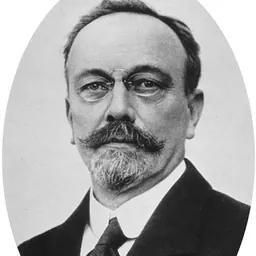
Alex Birns (February 21, 1905 – March 29, 1975), best known as Shondor Birns, was an American gangster and crime boss who was a leading figure of the Jewish Mob in Cleveland, Ohio, between the 1930s and 1970s. Once labeled by the local newspapers as the city's "Public enemy No. 1", Birns was actively involved in a wide variety of racketeering and other organized crime related activities such as prostitution, theft, and numbers, from the days of Prohibition until his death in a car bombing in 1975, which is often attributed as a hit put onto Danny Greene.
Early life Birns was born in Lemes, in the Sáros section of the Kingdom of Hungary in Austria-Hungary which later went to Czechoslovakia after the Treaty of Trianon. His birth name is given as either Szandor Birnstein or Sándor Birn, while his birth year is reported between 1905 and 1907. but his age given during his 1907 immigration into the United States was stated as ten months, indicating a birthdate in May 1906.
Birns attended Outhwaite School (now Alfred A. Bensch Elementary) and later Kennard Junior High School, where he was noted as an exceptional athlete by age thirteen, excelling at baseball, basketball, and swimming.
Then his major brushes with the law began. Birns was prolific in his criminal activities, having several stacks of arrest records that are currently located in the Cuyahoga County Archives. Birns was convicted of car theft on November 14, 1925, for which he served 18 months in the Mansfield Reformatory. He soon acquired an assault conviction in which Birns broke the jaw of a motorist who had taken too long to make his turn in front of Birns. With 18 arrests in a 12-year period, Birns was on his way to notoriety in northeast Ohio. During this period, he gloried in his fame and enjoyed the attention which he received from local law enforcement as well as fellow gangsters. He soon developed a knack for beating legal charges.
While serving his sentence at the Warrensville Workhouse after being convicted for the bribery charges, Birns granted his first newspaper interview. Birns told the reporter that he was serving his time happily and enjoying the hard work. In the years to come, he became close to many of the city's newspaper reporters and could sometimes be found chatting with one over a cocktail. To them, he was an excellent source of news tips. He was soon labeled as "Cleveland's Public Enemy No. 1" by the local press.
During the late 1930s, Birns became heavily involved in extorting protection money from whorehouses, or "vice resorts" as they were dubbed by the media. With the backing of the Cleveland crime family, Birns operated freely. Many of Birns's clients were judges, politicians and police officers of high rank. They would serve as important contacts for him in the future and vice versa. In 1938, Birns visited Canada for a vacation. Upon his re-entry to the United States, he was questioned briefly about his criminal history and answered honestly. At the time, Birns was unaware of the Immigration Act of 1917 which required any alien convicted of a crime of moral turpitude to gain permission prior to entering or leaving the country. It would take a couple of years of paperwork to catch up.
Muscling in the numbers operations and policy games During the 1940s, Birns made a longstanding alliance and had become closely involved with the local Cleveland crime family mobsters such as Angelo Lonardo. Lonardo had already taken over the "black lottery" and numbers operations. Birns was determined to firmly keep this traditionally Afro-American racket under his control.
In October 1956, Birns sent an emissary to King and his colleagues demanding that they pay $200 a week as street tax, or suffer the consequences. They initially agreed but by December deemed the price too high. King eventually began holding out on the protection money being paid on a regular basis to Birns, Lonardo and their associates.
When the trial began, King was cast as the star witness in the trial. The judge and jury had difficulty understanding King and his rapid, inarticulate speech leading the local newspapers to dub him "The Talker". The jury deliberated 11 hours and the trial resulted in Birns' and the other defendants' acquittals.
A month later, Coleman changed his mind and told police that he had only speculated that it was Birns in the car. However, the police arrested Coleman as a material witness. He changed his mind again and reluctantly agreed to testify. At the trial, a neighbor backed Birns's alibi. He said he saw Birns arrive home at 12:07 a.m., about the time of the shooting several miles away. It took the jurors four hours to reach a verdict, which resulted in Birns's acquittal. They expressed their refusal to believe the changing testimony of Coleman, who had been a dope peddler and police informant. Police predicted what the press called "a fresh outbreak of shootings and violence in Cleveland's multi-million-dollar numbers racket".
Birns was taken to Central Station for questioning by the head of the Homicide Unit, Lieutenant Carl Delau. Amid aggressive interrogation by Delau, Birns insisted he had been dining on frog legs in a Garfield Heights steakhouse at the night of Gold's murder. Birns claimed that he was at home with a woman of fine character. He did not name her, but said she was willing to testify for him. His bail was set at $50,000, which he posted with ease.
Self-appointed peacemaker and mediator of disputes In the 1960s, Birns was having trouble with some Afro-American numbers operators. It was during this time that he came into contact with a brash, ambitious, young Irish-American upstart named Danny Greene. Impressed with his fearless attitude and abilities, Birns hired Greene to be an enforcer for his various numbers operators. It was a decision which Birns would eventually regret. or 70. was demolished and smoking heavily, his state-of-the-art burglar system survived. A leather gym bag and gym shoes had been blown from the trunk. Amazingly, a paper bag of clothing from inside his car survived. It read: "Diamond's of Ohio - Fashions for men which women love". Police said the blast was among the most powerful they had ever investigated. Police and bomb squad members worked an entire day examining the bombing scene. Coroners workers spent hours collecting as many pieces of skin and bones that they could find. A total of $843 in cash was found on or around Birns's body. The Internal Revenue Service promptly claimed the money to be put toward back taxes that Birns owed. Crnic was later killed while attempting to attach a car bomb to a vehicle belonging to Cleveland crime family associate John "Johnny Del" Delzoppo on April 5, 1977.
In the Cleveland Press, Dick McLaughlin summed up his career: "A muscleman whose specialty was controlling numbers gambling on the East Side, keeping the peace among rival operators and getting a cut from each of them, Birns was a feared man because of his violent reaction to any adversary. Yet he was popular, had an engaging personality, was known by many newsmen because he was good copy and was ever ready to buy them a drink. He was a feared man, but a genial and generous man, holding court almost daily at the Theatrical Lounge where he lunched."
The relationship between Danny Greene and Shondor Birns exemplifies the volatile and often deadly nature of organized crime relationships. Initially allies with shared interests, their relationship deteriorated into one of mutual animosity and lethal retribution. Their violent conflict left a lasting mark on Cleveland's criminal history. Greene himself survived a little while longer (although the Birns - allied Licavoli faction continued trying to kill him due to his alliance with John Nardi) but, like Nardi, was later killed in a car bombing.
Don’t just read it —
keep it.
Full-length biographies made to live with: read them, listen on the way to work, watch them tonight.
- E-book
- Audio
- Video
Instant download · yours to keep · every purchase keeps this site free
Important facts
People in Shondor Birns's life
Named in this biography and alive at the same time
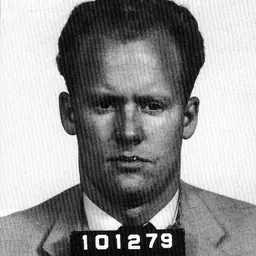



Contemporaries
People whose lives overlapped Shondor Birns's
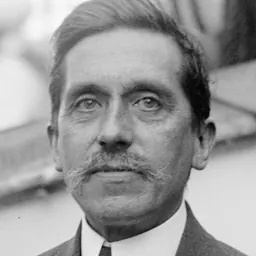
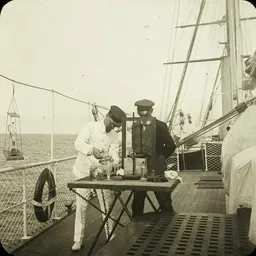
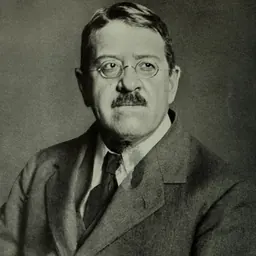


Frequently asked questions
Who was Shondor Birns?
American mobster (1907–1975)
When was Shondor Birns born?
Shondor Birns was born on 21 February 1907 in Austria-Hungary, Lemešany.
When did Shondor Birns die?
Shondor Birns died on 29 March 1975 in Cleveland.
Sources & further reading
Cite this page
APA: Biography.guide. (2026). Shondor Birns. https://biography.guide/shondor-birns/
MLA: "Shondor Birns." Biography.guide, https://biography.guide/shondor-birns/.
Chicago: "Shondor Birns." Biography.guide. https://biography.guide/shondor-birns/.
Data last updated: 2026-09-20 · Spot an error? Report a correction.
Page generated 2026-09-27 05:19 UTC